Collar Types Compared: Troubleshooting Rear Delt Raises with Dumbbells
Compare barbell and spinlock collar types. Troubleshoot loose plates during dynamic moves like rear delt raises with dumbbells to prevent gym injuries.

The Hidden Hazard: Why Collars Fail During Dynamic Movements
When outfitting a home or commercial gym, lifters obsess over plate calibration and barbell whip, yet frequently ignore the most critical safety component: the collar. A failed clamp doesn't just ruin a set; it causes catastrophic weight shifts that can lead to severe joint, tendon, or crush injuries. According to the ExRx Weight Room Safety guidelines, unsecured plates are among the top causes of preventable free-weight accidents in both commercial and garage gyms.
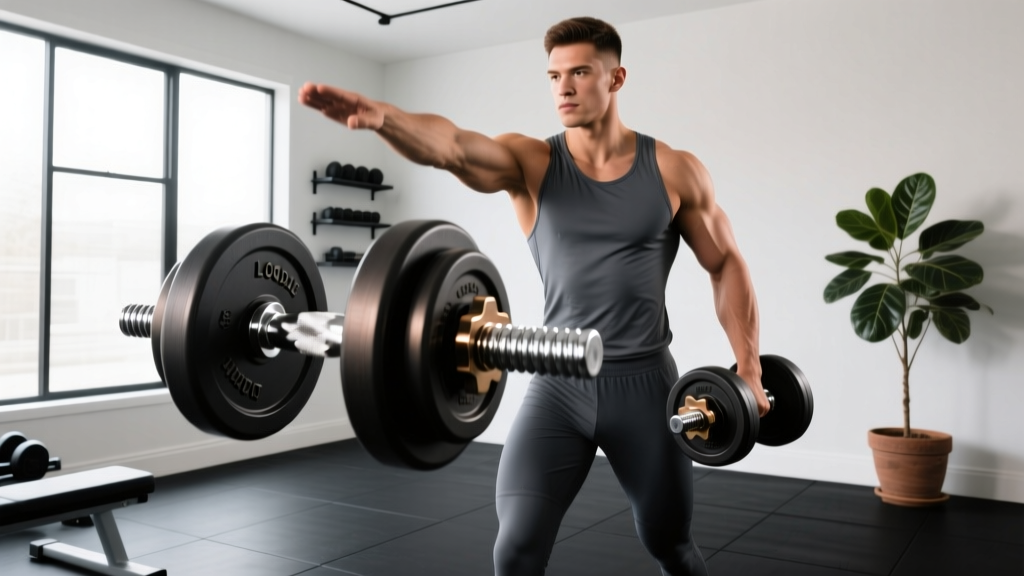
The danger is most pronounced during off-axis, dynamic movements. While heavy squats keep the barbell sleeve relatively horizontal, isolation exercises introduce extreme angles. Take, for example, rear delt raises with dumbbells using adjustable spinlock handles. When you hinge at the hips and raise the dumbbell to the apex of the movement, the sleeve often tilts past 45 degrees. If you are relying on cheap, worn-out threaded star nuts or low-tension spring clamps, the micro-vibrations of the eccentric phase will loosen the collar. The result? A 25-pound iron plate slides off the sleeve mid-rep, instantly torquing your wrist and shoulder out of alignment.
In this guide, we compare the engineering, failure modes, and troubleshooting protocols for both barbell and dumbbell collars in 2026, ensuring your gear survives the most awkward angles in your programming.
The Biomechanics of Sleeve Tilt and Plate Shift
To troubleshoot collar failure, you must understand the physics of plate shift. Plates move laterally along a sleeve due to two forces: momentum (rapid directional changes) and gravity acting on an inclined plane (sleeve tilt).
⚠️ The 45-Degree Danger Zone: During bent-over rear delt raises with dumbbells, the neutral or pronated grip forces the dumbbell sleeve into a steep decline at the bottom of the movement, and a steep incline at the top. Standard spring clamps, which rely on outward radial tension, lose up to 40% of their gripping force when the sleeve is tilted beyond 30 degrees, allowing gravity to pull the plates against the collar until it slips.Barbell Collar & Clamp Types Matrix
Not all collars are created equal. The market has evolved significantly, moving away from basic wire springs toward precision-machined and magnetic locking mechanisms. Below is a comparison of the primary barbell collar types used in modern training facilities.
| Collar Type | Mechanism & Material | Best Application | Avg. Price (Pair) | Primary Failure Mode |
|---|---|---|---|---|
| Wire Spring | High-carbon steel wire; radial tension | Light accessories, technique work | $15 - $25 | Tension fatigue; slips on tilted sleeves |
| Clamp / Lever | Aluminum body, nylon/rubber inner lining, lever action | Powerlifting, heavy Olympic lifts | $30 - $50 | Lever snapping; rubber lining compression set |
| Precision Machined | 6061-T6 Aluminum, thrust bearings, internal locking | Dynamic Olympic lifting, CrossFit | $70 - $95 | Bearing seizure if dropped repeatedly |
| Magnetic / Hybrid | Neodymium magnets + mechanical latch | High-volume circuits, rapid changes | $60 - $80 | Magnet demagnetization from heavy impacts |
For heavy, high-impact barbell work, precision machined collars like the OSO Pro Aluminum Collars remain the gold standard. Weighing 2.5 lbs each, they utilize internal thrust bearings that allow the collar to spin independently of the barbell sleeve, preventing the collar from unscrewing or loosening during explosive movements like cleans or snatches.
The Quick-Release Clamp Alternative
If you are on a budget, lever-action clamps (such as the widely used Rogue Ahn Collars or standard HG clamps) offer excellent static grip. However, they are highly susceptible to "compression set." Over 12 to 18 months of heavy use, the rubberized inner lining permanently deforms to the diameter of your specific barbell. If you switch from a 28.5mm Olympic bar to a 29mm power bar, the clamp will fail to secure the plates adequately.
Troubleshooting Spinlock Dumbbell Collars (The Hidden Hazard)
While barbell collars get the engineering spotlight, adjustable dumbbell collars are the unsung villains of the home gym. If you are performing rear delt raises with dumbbells using traditional plate-loaded spinlock handles, you are likely relying on one of two systems:
1. The Threaded Star Nut
Star nuts screw onto the threaded ends of the dumbbell handle. They are cheap and ubiquitous, but they are a massive troubleshooting headache.
- The Thread Pitch Problem: Most imported 1-inch spinlock handles use a coarse 10 TPI (Threads Per Inch) pitch. Under the vibration of high-rep rear delt raises, the nut acts like a tuning fork, slowly unscrewing itself.
- The Fix: You must implement the "Double-Tighten" protocol. Screw the nut flush against the plate, back it off one millimeter, and then torque it down again. This binds the threads asymmetrically, reducing vibrational loosening by up to 70%.
2. Quick-Release Dumbbell Clamps
These are essentially miniature versions of barbell lever clamps, designed for 1-inch or 2-inch Olympic dumbbell handles (like York or CAP Barbell Olympic dumbbell handles).
- The Sleeve Length Issue: Olympic dumbbell sleeves are notoriously short (often only 3.5 to 4 inches of usable space). A standard quick-release clamp takes up 1 inch of that space. If you load the dumbbell heavily for floor presses or RDLs, the clamp might not sit flush against the plate, leaving a gap that allows plates to rattle and shift during the apex of a rear delt raise.
- The Fix: Use ultra-slim magnetic dumbbell collars or specialized low-profile aluminum clamps specifically machined for short-sleeve Olympic dumbbells.
4-Step Troubleshooting Protocol for Loose Plates
If you are experiencing plate shift during off-axis movements, run through this diagnostic checklist before your next session:
- Measure the Sleeve Tolerance: Use digital calipers to measure your barbell or dumbbell sleeve. Standard Olympic sleeves are 50mm (1.96 inches). If your sleeve has worn down to 48.5mm from years of plate friction, standard 50mm clamps will never achieve a secure lock. You must buy collars with adjustable tension screws.
- Inspect the Inner Lining: Remove your clamp and look at the rubber or urethane insert. If you see deep, permanent grooves or cracking, the durometer (hardness) of the rubber has failed. Replace the insert or the entire collar.
- Perform the 15-Degree Tilt Test: Load your dumbbell for rear delt raises. Secure the collar. Hold the dumbbell and tilt it to 15 degrees, then sharply tap the end of the sleeve with a rubber mallet. If the plate shifts more than 1 millimeter, the collar tension is insufficient for dynamic movements.
- Check Plate Hub Dimensions: Sometimes the collar isn't the problem; the plate is. Cheap cast-iron plates have uneven center holes. If a plate wobbles on the sleeve, it creates lateral momentum that will blow past any spring collar. Upgrade to machined steel-hub plates for your dynamic accessory work.
"In 2026, there is no excuse for using wire spring collars on any free weight movement that involves a change of direction or an off-axis sleeve angle. The cost of a machined aluminum collar is less than a single physical therapy copay for a crushed metatarsal or a torn rotator cuff."
Expert Verdict & Budget Allocation
Securing your weights is not an area to cut corners. For your primary barbell lifts (squats, deadlifts, bench press), invest $75–$100 in a pair of precision-machined aluminum collars with internal bearings. They will outlast your barbell.
For adjustable dumbbells used in isolation work like rear delt raises with dumbbells, lateral raises, and tricep extensions, abandon the traditional threaded star nut if possible. If you are using 2-inch Olympic dumbbell handles, purchase low-profile, quick-release aluminum clamps. If you are locked into 1-inch spinlock handles, upgrade to premium steel star nuts with integrated rubber O-rings, which provide the necessary friction to prevent vibrational backing-out during high-rep, angled movements. Treat your collars with the same respect as your lifting belt or wrist wraps—they are vital pieces of safety equipment that bridge the gap between your effort and the iron.
More gear to consider
All reviews
Bumper vs Iron Plates: Space Layouts & Wide Dumbbell Curl Zones

Barbell Clamps Compared: Upper Arm Dumbbell Exercises & Safety

Cast Iron vs Competition Kettlebells & Dumbbell Biceps Curl Exercise

Barbell Collar Types: One Arm Dumbbell Bench Press Alternatives

Close Grip Press with Dumbbells: Loadable Set Value Guide