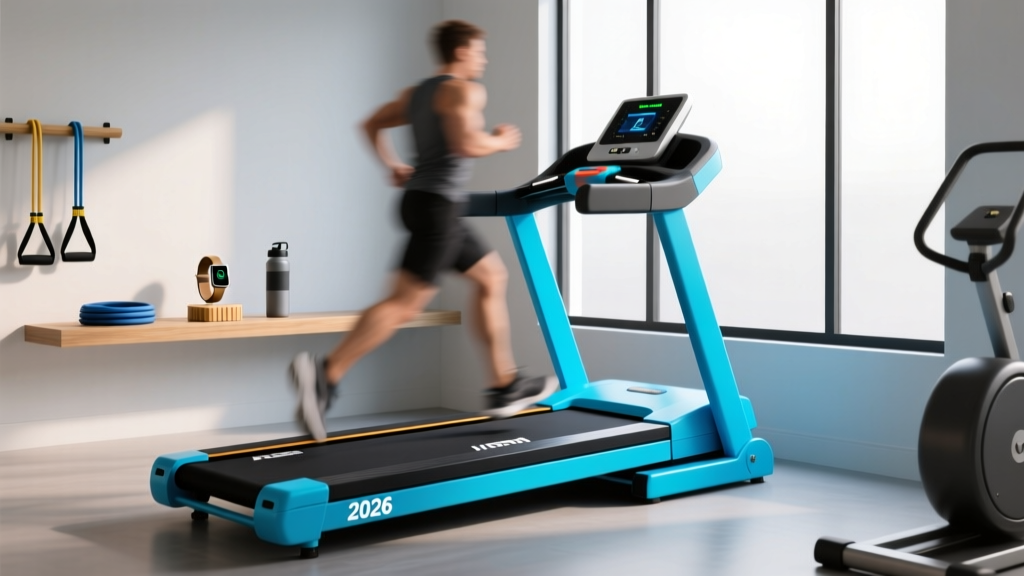
Stair Climber Troubleshooting & Treadmill Skipping Fixes
Master your home stair climber with our expert troubleshooting guide. Fix pedal stutter, avoid user mistakes, and resolve treadmill skipping issues.

The Home Cardio Mechanical Divide: Stair Climbers vs. Treadmills
As home gym setups in 2026 become increasingly sophisticated, multi-machine cardio rooms are now standard for serious fitness enthusiasts. Stair climbers—ranging from hydraulic mini-steppers to commercial-grade StepMills—offer unmatched MET (Metabolic Equivalent of Task) outputs and glute activation. However, their complex drivetrains and high-impact pivot points make them prone to specific mechanical failures. Furthermore, home gym owners often misdiagnose rhythmic machine jolts, confusing a worn stair climber drive chain with the infamous treadmill skipping caused by belt friction. This comprehensive troubleshooting guide will help you identify user errors, diagnose mechanical stuttering, and maintain a seamless hybrid cardio environment.
Top 3 Biomechanical Mistakes Ruining Your Stair Climber
Before reaching for a wrench, evaluate your form. According to biomechanical analyses, improper stair climber usage doesn't just reduce caloric burn; it actively destroys machine components.
1. The 'Rail Lean' Posture Error
Leaning heavily on the handrails shifts your center of gravity backward. This reduces your caloric expenditure by up to 30% and, more importantly, places uneven lateral torque on the pedal pivot bearings. Over time, this asymmetric load causes the nylon bushings in the pedal arms to wear out prematurely, resulting in a noticeable 'clunk' at the bottom of each step.
2. Cadence Overloading the Magnetic Brake
On magnetic resistance models like the Bowflex Max Trainer M9 (approx. $1,999), users often attempt to sprint at 120+ steps per minute (SPM). These machines are engineered for high-torque, low-RPM climbing. Over-spinning the alternator generates excess heat in the eddy-current brake, which can eventually demagnetize the internal brake pads, leading to sudden, unfixable resistance drop-offs.
3. Ignoring Hydraulic Heat Limits
Budget hydraulic steppers (such as the Sunny Health & Fitness SF-S902, approx. $150) rely on fluid-filled cylinders. These cylinders are not designed for continuous use beyond 15 to 20 minutes. As the internal fluid heats up, its viscosity drops, causing the seals to blow and hydraulic fluid to leak onto your floor. Fix: Strictly limit hydraulic stepper sessions to 15 minutes, or upgrade to a pneumatic or magnetic drivetrain for longer endurance sessions.
Mechanical Troubleshooting: Diagnosing Stair Climber Stutter
When your machine hesitates or jolts, use this diagnostic matrix to identify the root cause.
| Symptom | Probable Component Failure | Required Tool / Fix | Estimated Cost |
|---|---|---|---|
| Pedal drops suddenly without resistance | Hydraulic cylinder seal blowout | Replace cylinder (12mm wrench) | $35 - $55 |
| Rhythmic chain rattle or 'slap' | Drive chain stretch / slack | Adjust rear tensioner (1/2' socket) | $0 (Labor only) |
| Resistance surges or stutters mid-climb | Alternator fin dust buildup | 30 PSI compressed air blowout | $0 |
| Pedal squeaks at the apex of the step | Dry pivot bushings | PTFE dry lubricant spray | $12 |
When adjusting the drive chain on a continuous-loop StepMill (like the StairMaster SM916), never over-tension. A chain that is too tight will destroy the lower sprocket bearings within 50 hours of use. You should have exactly 1/4 inch of vertical play at the midpoint of the chain guide.
Cross-Machine Diagnostics: Differentiating Stutter from Treadmill Skipping
Home gym owners who utilize both a stair climber and a treadmill frequently experience a phenomenon known as treadmill skipping and mistakenly attribute the sensation to their stair climber's drivetrain. It is vital to differentiate the two, as the mechanical fixes are entirely different.
What is Treadmill Skipping?
Treadmill skipping occurs when the running belt loses traction against the deck or the front drive roller. Under the heavy load of your footstrike, the belt 'catches' and then violently snaps forward. This is incredibly dangerous and can lead to severe falls. It is caused by three factors:
- Low Belt Tension: The rear roller needs adjustment. Using a 3/16' Allen wrench, tighten both rear bolts by exactly 1/4 turn until the belt cannot be lifted more than 2 inches off the deck.
- Dry Deck Friction: The walking belt requires 100% liquid silicone lubricant. Never use WD-40 or petroleum-based oils, as they will melt the belt backing and destroy the deck.
- Worn Drive Belt: The internal ribbed belt connecting the motor to the roller may have stripped teeth. This requires removing the motor hood and replacing the drive belt (typically a $25 part).
How Stair Climber Stutter Feels Different
Unlike the horizontal snap of treadmill skipping, stair climber stutter is a vertical hesitation. It feels like the pedal briefly 'gives way' before the magnetic brake or chain catches again. If the jolt happens horizontally under your foot, check your treadmill's deck lubrication. If the jolt happens vertically during a climb, check your stair climber's chain tensioner and alternator.
2026 Preventative Maintenance Matrix for Hybrid Cardio Gyms
To keep your equipment out of the repair shop, follow this strict maintenance schedule tailored for modern home cardio setups.
- Weekly: Wipe down stair climber handrails and console with a non-corrosive, alcohol-free cleaner. Sweat contains high levels of sodium and urea, which rapidly oxidize the chrome plating on pedal arms and console uprights.
- Monthly: Inspect the stair climber pedal tethers and cleats. If the rubber grip tape is worn smooth, replace it immediately to prevent foot slippage during high-cadence intervals.
- Bi-Annually: Vacuum the internal motor and alternator housings of both your treadmill and stair climber. Dust acts as a thermal insulator, causing control boards to overheat and throw E1 or E2 error codes.
- Annually: Re-lubricate the treadmill deck and check the stair climber's main pivot bearings for lateral play. If you can wiggle the pedal side-to-side by more than 3 millimeters, the bronze bushings must be pressed out and replaced.
Safety Standards and Joint Health Considerations
While stair climbers provide an exceptional cardiovascular workout, they must be used safely and in accordance with health guidelines. The American Heart Association recommends at least 75 minutes of vigorous-intensity aerobic activity per week, a benchmark easily met through high-resistance stair climbing. However, maintaining proper form is critical to avoiding joint degradation.
'Proper alignment on a stair climber ensures that the load is distributed through the glutes and hamstrings rather than placing excessive shear force on the patellofemoral joint. Leaning forward or gripping the rails tightly compromises this kinetic chain.' — Biomechanics principles supported by the Consumer Product Safety Commission (CPSC) guidelines on exercise equipment posture and fall prevention.
Furthermore, if you are recovering from lower-body injuries or dealing with osteoarthritis, the repetitive vertical impact of a stair climber might be contraindicated. In such cases, transitioning to an elliptical or a recumbent bike is advisable. For a deeper understanding of how different cardio machines impact long-term joint health, refer to the cardiovascular exercise analyses published by Harvard Health Publishing.
Expert Verdict: Repair vs. Replace
When troubleshooting fails, you must decide whether to repair or replace. As a general rule for 2026 home gym economics: if the cost of parts and labor exceeds 40% of the machine's current replacement value, it is time to upgrade. For example, if a $2,499 NordicTrack FS14i Freestride trainer suffers a catastrophic mainboard failure out of warranty (a $900+ fix), investing in a new unit with an updated digital ecosystem and fresh bearings is the smarter financial play. However, for simple issues like chain tension, hydraulic seal replacements, or resolving treadmill skipping with a bottle of silicone and an Allen wrench, DIY troubleshooting will save you hundreds of dollars and keep your cardio routine uninterrupted.
More gear to consider
All reviews
How Much Are Woodway Treadmills vs. Under Desk Office Models?

Is It Bad to Walk Barefoot on a Treadmill? Best 2026 Folding Models

What Do Treadmills Do For Your Body? 2026 Under-Desk Trends
Beyond NordicTrack Treadmill Disassembly: Compact Cardio Swaps
Hydro Treadmill Motor Sizing: Horsepower Mistakes & Fixes