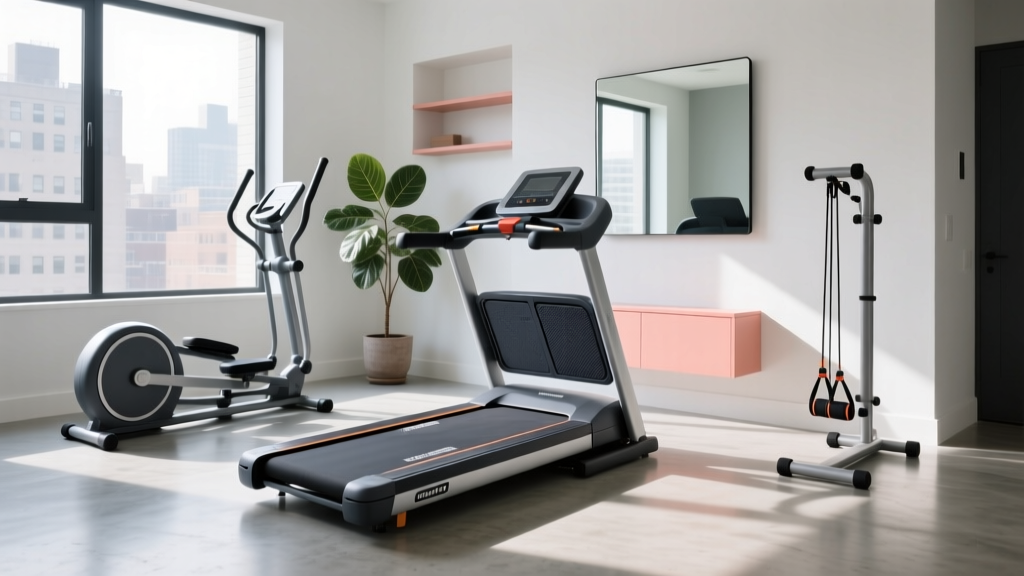
Treadmill Haul Away: Top Compact Cardio Swaps for Small Spaces
Planning a treadmill haul away? Reclaim your floor plan with our guide to compact, portable cardio equipment and space-optimized home gym layouts.

The True Cost and Logistics of Treadmill Haul Away
The modern home is a dynamic, multi-use environment, and dedicating 30 square feet of prime real estate to a motorized treadmill is no longer practical for most urban and suburban layouts. If you are researching treadmill haul away services, you are likely dealing with a bulky machine that has become a clothes rack or an obstacle in your living space. Before you can transition to a space-optimized cardio setup, you must navigate the removal process.
In 2026, professional junk removal services like LoadUp or Junk King typically charge between $150 and $350 for treadmill extraction. This price variance depends heavily on the machine's weight (often exceeding 250 lbs), the number of stairs involved, and whether disassembly is required. Most haul-away crews will not dismantle a treadmill for free; if the deck and uprights cannot fit through your door frame as a single unit, expect an additional $50 to $100 labor surcharge.
Pro-Tip for Eco-Friendly Disposal: Before paying for landfill disposal, check the EPA guidelines on reusing bulky goods. If your treadmill is fully functional and under 150 lbs, local community centers or specialized fitness charities may accept it. However, be aware that major thrift networks universally reject motorized treadmills due to liability and safety key requirements.
The Footprint Reality: Traditional vs. Portable Cardio
Once the old machine is gone, the goal is to maintain cardiovascular health without sacrificing your floor plan. According to the CDC cardiovascular activity requirements, adults need at least 150 minutes of moderate-intensity aerobic activity weekly. You do not need a 70-inch deck to achieve this. Below is a spatial comparison of traditional equipment versus modern compact alternatives.
| Equipment Category | Active Footprint (L x W) | Storage Footprint | Avg. Weight | Layout Flexibility |
|---|---|---|---|---|
| Standard Motorized Treadmill | 75" x 32" (16.6 sq ft) | 75" x 32" (Fixed) | 220 - 300 lbs | Poor (Requires dedicated zone) |
| Foldable Walking Pad (e.g., R2) | 56" x 21" (8.1 sq ft) | 38" x 21" x 6" (Under-bed) | 60 - 75 lbs | Excellent (Highly portable) |
| Performance Rower (e.g., RowErg) | 95" x 24" (15.8 sq ft) | 25" x 33" (Vertical) | 57 lbs | Good (Requires vertical clearance) |
| Compact Recumbent Bike | 55" x 25" (9.5 sq ft) | 55" x 25" (Wheeled) | 80 - 110 lbs | Moderate (Low profile, wide base) |
Elite Compact Cardio Replacements for Small Layouts
When designing a small-space home gym, the focus shifts from "what fits in the room" to "what can be hidden or integrated when not in use." Here are the top-tier portable options dominating the 2026 market.
1. The Under-Desk & Foldable Walking Pads
The King Smith WalkingPad R2 (retailing around $599) remains the gold standard for ultra-compact cardio. Unlike traditional treadmills, the R2 features a 180-degree fold mechanism, reducing its length to just 38 inches.
Space Optimization Insight: The R2 can be slid under a standard platform bed (requiring only 6.5 inches of vertical clearance) or leaned flat against a wall.
Edge Case & Failure Mode: Walking pads utilize smaller, lower-HP motors (the R2 uses a 1.25 HP motor). A common failure mode occurs when users weighing over 200 lbs attempt to run at speeds exceeding 4.5 mph for longer than 40 minutes. The friction generates excess heat, frequently triggering an E02 (motor overheat) or E05 (belt slip) error code. For space-optimized layouts, these are strictly for walking and light jogging, not high-intensity sprinting.
2. Vertical-Stow Rowing Machines
Rowing engages 86% of the body's musculature, making it a highly efficient cardio swap. The Concept2 RowErg ($990) is the industry benchmark. While its active length is 95 inches, its true brilliance lies in its storage capability. According to the Concept2 RowErg specifications, the machine can be separated into two pieces or stood up vertically, occupying a mere 25 x 33 inch footprint on the floor.
CRITICAL LAYOUT WARNING: Storing the RowErg vertically requires 107 inches (nearly 9 feet) of ceiling clearance. Many modern apartments and basement conversions only feature 96-inch (8-foot) ceilings. If your ceiling is too low, you must utilize the Concept2 Wall Hanger bracket to store the rail horizontally on a blank wall, turning the equipment into an industrial-chic design element rather than a floor obstacle.3. High-Resistance Compact Air Bikes
For HIIT enthusiasts who find walking pads too low-intensity, the Assault Fitness AirBike Classic offers massive cardiovascular output in a relatively dense footprint (48 x 24 inches). While heavier than a walking pad (98 lbs), it features front transport wheels. In a multi-use living room, it can be rolled into a closet or pushed into a corner, functioning as a sculptural piece of fitness equipment. The infinite air resistance means the machine scales perfectly to the user's output without requiring a massive magnetic flywheel.
Spatial Layout Rules for Multi-Use Rooms
Integrating portable cardio into a living room, bedroom, or home office requires strict adherence to spatial design principles. Treat your equipment like modular furniture.
- The 36-Inch Traffic Rule: Always maintain a minimum 36-inch walkway around the active zone of your equipment. If a walking pad is deployed in a home office, ensure the chair can roll back without hitting the rear motor housing.
- Acoustic Dampening: Compact machines lack the heavy mass of commercial gym gear, making them prone to transmitting vibration. Place a high-density EVA foam puzzle mat (at least 3/4-inch thick) beneath walking pads and rowers. This protects hardwood floors and reduces low-frequency hums that travel through floor joists to neighbors below.
- Visual Weight and Sightlines: When storing equipment vertically or leaning it against walls, align it with existing architectural lines (like door frames or bookshelves). A walking pad leaned against a wall disrupts visual flow; a walking pad stored inside a dedicated canvas slip-cover and placed behind a console table becomes invisible.
Real-World Edge Cases: When Compact Gear Fails
Space optimization often requires mechanical compromises. As a layout designer and fitness equipment reviewer, I frequently see buyers make the following mistakes when downsizing:
- The Stride-Length Compromise: Many "compact" ellipticals reduce the stride length to 14-16 inches to save horizontal space. For anyone over 5'8", this results in a choppy, biomechanically awkward pedal stroke that can cause knee patellar tracking issues over time. If you need an elliptical, do not sacrifice stride length for footprint; opt for a foldable recumbent bike instead.
- Hinge Wear on Foldable Frames: Bikes and steppers that fold in half rely on heavy-duty steel hinges and quick-release pins. In humid environments (like a bedroom near an en-suite bathroom), these exposed hinge points can develop surface rust, leading to squeaking and eventual structural wobble. Wipe down hinge points monthly and apply a dry PTFE lubricant.
- Power Cord Trip Hazards: Compact gear is often moved frequently. Using a standard, stiff black power cord creates a severe trip hazard in multi-use rooms. Swap the OEM cord for a flat, braided, low-profile extension cord that can be taped flush to the baseboard or hidden under a rug runner.
Frequently Asked Questions
Can I disassemble my treadmill myself to save on haul-away fees?
Yes. Most treadmills require only a 6mm Allen wrench and a Phillips head screwdriver to detach the uprights from the deck. Disconnect the internal wiring harness (usually a single color-coded clip near the base of the right upright) before fully separating the pieces. Moving the deck horizontally through a standard 30-inch interior door frame is usually possible once the uprights are removed.
Are walking pads suitable for standing desk setups?
Absolutely, but verify your desk's minimum height clearance. Most motorized standing desks bottom out at 28 to 29 inches. The WalkingPad R2 features a handlebar that locks into an upright position, raising the total height to roughly 40 inches. You will need a desk that can clear 42 inches to use the walking pad with the handlebar deployed safely.
How do I hide a rower in a small living room?
If vertical storage is impossible due to ceiling height, utilize the "furniture integration" method. Place a narrow, 12-inch deep console table directly in front of the horizontally wall-mounted rower rail. Drape a textured throw blanket over the rower's seat and monitor, and place decorative baskets on the console table. The eye will register the setup as a styled wall display rather than fitness equipment.
More gear to consider
All reviews
Beyond the Woman Running on Treadmill: 2026 Compact Cardio Trends

Tracker Sports Maintenance Essentials: A Precision-Centric Approach for Enthusiasts and Track-Day Drivers
Treadmill FSA Eligible Expenses: Expert Belt Maintenance Guide
Treadmill Motor Size Guide: Is the Weslo 5.9 Treadmill Enough?

ProForm 9000 Treadmill Reviews: 2026 Belt Maintenance Trends
