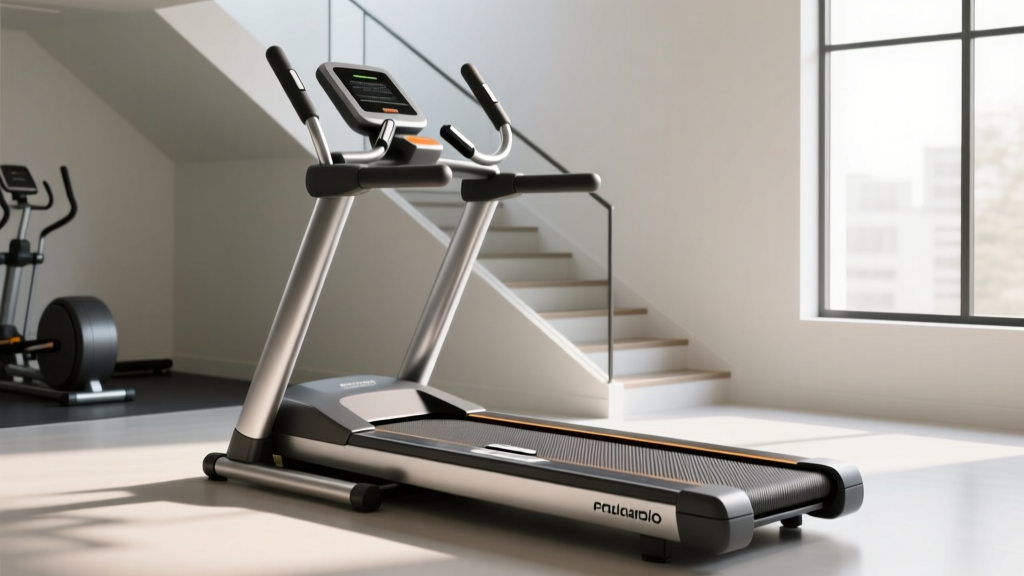
Home Stair Climber Guide: Avoid Sole F80 Treadmill Lube Mistakes
Master your home stair climber setup and maintenance. Learn why using Sole F80 treadmill lube on chains causes damage and how to fix common errors.

The Ultimate Home Stair Climber Setup and Troubleshooting Guide
Bringing a stair climber into your home gym is one of the most effective investments you can make for cardiovascular health and lower-body hypertrophy. According to the American Heart Association, vigorous aerobic activities like stair climbing drastically improve VO2 max and endothelial function. However, unlike the simple belt-and-deck mechanics of a treadmill, home stair climbers—whether rotating StepMills or pedal-based steppers—are complex, high-torque machines. When improperly set up or maintained, they quickly develop drive slippage, sensor errors, and joint-jarring squeaks.
This comprehensive guide covers the exact spatial requirements, mechanical troubleshooting protocols, and critical maintenance mistakes you must avoid to keep your machine running smoothly for years.
Critical Setup Mistakes: Clearances and Floor Loading
The most common reason home users return high-end stair climbers within the first 30 days is improper spatial planning. Stair climbers require vastly different spatial footprints depending on their drive mechanism.
Rotating StepMills vs. Pedal Steppers
- Rotating StepMills (e.g., StairMaster StepMill 7000PT): These units feature a continuous revolving staircase. Because the user climbs vertically while the machine remains stationary, you must account for the user's height plus the step height. A standard 8-foot (96-inch) ceiling is often too low for a 6-foot-tall user on a StepMill. You need a minimum ceiling clearance of 84 inches from the highest step to prevent head strikes.
- Pedal Steppers (e.g., Bowflex Max Trainer M9, NordicTrack CLS9i): These rely on a reciprocal pedal motion. While they don't require massive vertical clearance, they demand strict lateral stability. Placing a pedal stepper on a thick, plush carpet without a high-density EVA foam equipment mat will cause the chassis to flex during heavy stepping, triggering false 'incline calibration' error codes.
The Lubrication Trap: Why Sole F80 Treadmill Lube Ruins Climbers
One of the most catastrophic maintenance errors we see in home gyms with multiple machines is lubricant cross-contamination. Specifically, users hear a squeaking chain or rail on their stair climber and mistakenly apply their Sole F80 treadmill lube to the mechanism. This is a critical failure point that can destroy your machine's drivetrain.
The Chemistry of the Mistake
The Sole F80 requires a 100% pure, low-viscosity liquid silicone lubricant. This specific fluid is engineered to reduce friction between a PVC walking belt and a wooden or MDF deck. It is not designed to adhere to metal under high-torque vertical loads.
When you apply this liquid silicone to the heavy-duty roller chains, guide rails, or pivot points of a stair climber, three things happen:
- Adhesion Failure: The low-viscosity silicone shears off the chain links under the immense torque of a 200 lb+ user stepping upward, leaving metal-on-metal contact.
- Abrasive Sludge Formation: Liquid silicone acts as a magnet for ambient drywall dust, pet dander, and carpet fibers. It binds these particles to the chain, creating a dark, abrasive grinding paste that accelerates sprocket wear by up to 40%.
- Drive Slippage: If the silicone migrates onto the drive belt or the braking flywheel, it will cause catastrophic slippage, resulting in the pedals 'dropping' mid-stride—a severe fall hazard.
Expert Rule of Thumb: Never use liquid silicone treadmill lube on any chain-driven or rail-guided cardio equipment. Treadmill decks require liquid silicone; stair climber chains and pivot points require White Lithium Grease or a dry PTFE (Teflon) spray.
Troubleshooting Mechanical Slippage and Squeaks
If your stair climber is already exhibiting symptoms of poor lubrication or drive tension issues, follow this diagnostic protocol.
Step 1: Degreasing Contaminated Chains
If you suspect liquid silicone or WD-40 has been applied to your stepper's chain drive, you must strip it immediately. Use a lint-free microfiber cloth dampened with 90% isopropyl alcohol. Manually rotate the pedals backward to feed the chain through the cloth until no more black residue appears. Allow the chain to dry completely for 15 minutes.
Step 2: Applying the Correct Lubricant
Apply a manufacturer-approved synthetic grease or a aerosolized White Lithium Grease directly to the inner rollers of the chain. Wipe away any excess. For pedal arm pivot points, use a dry PTFE spray, which dries instantly and repels dust.
Step 3: Checking Drive Belt Tension
If the pedals slip when you step down heavily, but the chain looks fine, the internal V-belt or poly-V belt connecting the alternator/flywheel may be loose.
- Unplug the machine and remove the side shroud.
- Locate the alternator mounting bracket.
- Press the belt at the midpoint of its longest span. It should deflect exactly 1/2 inch (12.7mm) with moderate thumb pressure.
- If it deflects more than 3/4 inch, loosen the alternator pivot bolt, apply outward tension using a tensioning tool or pry bar, and retighten.
Electronic and Sensor Error Codes
Modern home stair climbers rely on optical encoders and magnetic reed switches to track step rate (SPM) and calorie burn. When these fail, the console throws specific error codes.
Common Error Codes and Fixes
- E1 (Speed/Step Sensor Error): The console is not receiving a signal from the flywheel sensor. Fix: Open the shroud and locate the optical sensor bracket. Ensure the sensor is exactly 2mm to 4mm away from the toothed reluctor wheel. Use compressed air to blow out any dust blocking the optical eye.
- E2 (Incline/Calibration Error): Common on hybrid steppers that simulate incline changes. Fix: This usually means the machine failed its startup zero-point calibration because the chassis is flexing on an uneven floor. Recalibrate the machine only after placing it on a hard, level surface with a spirit level confirming the base is perfectly flat.
- E5 (Overcurrent/Brake Fault): The magnetic eddy-current brake is drawing too much amperage. Fix: This is often caused by a frayed brake cable or a failing lower control board. Inspect the wiring harness connecting the console to the base for pinch points against the metal frame.
Maintenance Matrix: Treadmill vs. Stair Climber
To prevent future cross-contamination and maintenance errors, keep this reference chart in your home gym. Understanding the mechanical divergence between these two popular cardio machines is vital for equipment longevity.
| Maintenance Task | Treadmill (e.g., Sole F80) | Stair Climber (e.g., StepMill 7000PT) |
|---|---|---|
| Primary Lubricant | 100% Liquid Silicone | White Lithium Grease / PTFE |
| Application Target | Between PVC belt and MDF deck | Roller chains, pivot pins, guide rails |
| Frequency | Every 150 miles or 3 months | Every 500 hours of use or annually |
| Belt Tension Check | Rear roller adjustment bolts | Alternator pivot bracket adjustment |
| Cleaning Protocol | Vacuum under motor hood monthly | Wipe down optical sensors and rails |
Final Thoughts on Home Gym Equipment Care
A stair climber is a precision piece of engineering that demands respect for its specific mechanical needs. By ensuring proper ceiling clearances, stabilizing the base, and strictly segregating your lubricants—keeping that bottle of Sole F80 treadmill lube far away from your stepper's chain drive—you will eliminate 90% of the common troubleshooting headaches associated with home cardio equipment. Treat the drivetrain correctly, and your machine will deliver decades of elite-level cardiovascular conditioning without missing a step.
More gear to consider
All reviews
Home Stair Climbers 2026: Matching a 9 Min Pace on Treadmill
Arc Machine vs Treadmill: Maintaining Compact Cardio Gear

5.5 Treadmill Pace on Under-Desk Models: 2026 Budget & Value Analysis

Does Incline Treadmill Burn Fat? Noise Comparison

Best Folding Treadmills for Small Spaces & Treadmill Apps 2026
