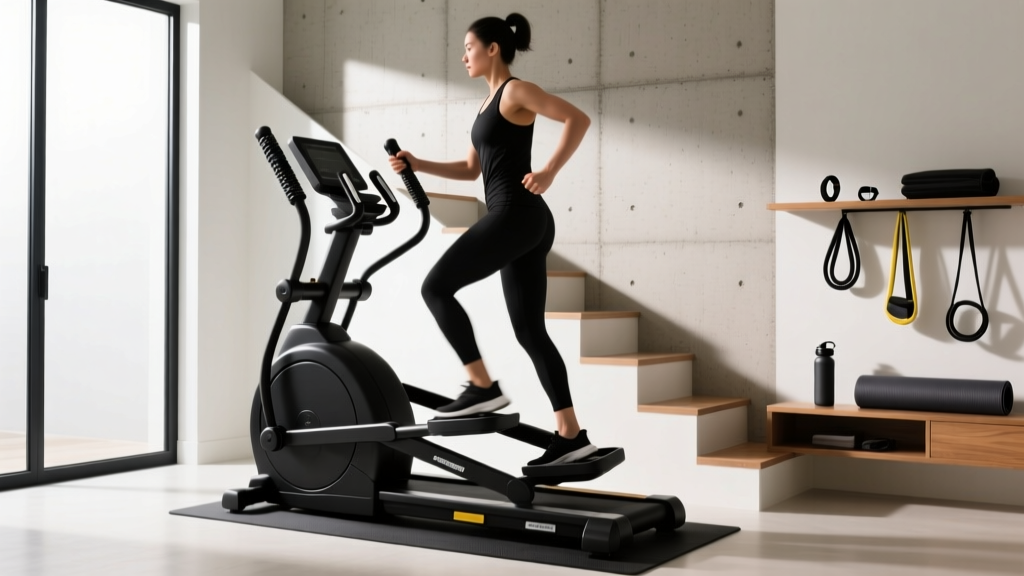
Stair Climber Home Guide: Fix Mistakes vs HIIT Treadmill Routine
Transitioning from a HIIT treadmill routine? Discover our 2026 stair climber home guide, troubleshooting tips, and common biomechanical mistakes to avoid.

The Vertical Shift: Why Home Gyms Are Ditching the Belt
In 2026, the home fitness landscape has seen a massive migration away from traditional horizontal cardio. While the classic HIIT treadmill routine remains a staple for sprint intervals and agility work, an increasing number of athletes and home-gym enthusiasts are transitioning to stair climbers. The appeal is obvious: a higher caloric burn per minute, reduced impact on the patellofemoral joint, and superior gluteal activation. However, swapping a motorized treadmill belt for a vertical climbing mechanism is not a simple 1:1 translation. Many users bring their treadmill habits to the stair climber, resulting in biomechanical inefficiencies, stalled progress, and even hardware damage.
This comprehensive guide addresses the most common mistakes users make when adapting a HIIT treadmill routine to a stair climber, provides actionable troubleshooting for home equipment, and offers a precise framework for optimizing your vertical intervals.
The Biomechanical Clash: Treadmill Momentum vs. Vertical Load
When you execute a HIIT treadmill routine, you are utilizing horizontal propulsion. The motorized belt assists with the turnover rate, and your hamstrings and hip flexors work in tandem to pull the leg forward. On a stair climber—whether it is a hydraulic mini-stepper or a motorized pedal climber like the Bowflex Max Trainer M9—the biomechanics shift entirely to concentric vertical loading.
'The stair climber removes the elastic rebound and momentum you get from a treadmill belt. Every single step requires you to lift your entire body weight against gravity, placing a significantly higher metabolic demand on the quadriceps and gluteus maximus.' — Biomechanics of Vertical Climbing, ACSM Guidelines
Because of this, attempting to replicate the rapid, bouncy foot-strikes of a treadmill sprint on a stair climber will lead to premature calf fatigue and Achilles strain. You must adapt your interval strategy to accommodate the constant tension.
Top 5 Form Mistakes (And How to Troubleshoot Them)
If your heart rate isn't spiking the way it did during your old HIIT treadmill routine, or if you are experiencing lower back pain, you are likely committing one of these five critical errors.
1. The 'Death Grip' on Handrails
The Mistake: Leaning heavily on the console or side handrails, transferring up to 30% of your body weight off the pedals.
The Fix: Use a 'piano touch' grip. Your fingers should rest lightly on the rails purely for balance, not support. If you need to lean, the resistance or step-rate is too high. According to the American College of Sports Medicine (ACSM), leaning drastically reduces caloric expenditure and alters spinal alignment, leading to lumbar strain.
2. Shallow 'Treadmill' Stepping
The Mistake: Taking quick, shallow steps (2-3 inches of depth) to mimic a fast treadmill cadence.
The Fix: Commit to full range of motion. Drive the pedal down until it nearly touches the chassis, and lift your opposite knee to at least hip height. Shallow stepping bypasses the glutes and isolates the calves, leading to rapid burnout without the cardiovascular payoff.
3. Ignoring the Eccentric Phase
The Mistake: Letting the pedal drop rapidly and catching it at the bottom.
The Fix: Control the descent. While stair climbers are primarily concentric, resisting the downward phase for 0.5 seconds engages the hamstrings and stabilizes the knee joint.
4. Upper Body Rigidity
The Mistake: Keeping the torso completely stiff, unlike the natural arm swing used in a HIIT treadmill routine.
The Fix: If your machine has moving arm poles (like the NordicTrack FS14i), use them to distribute the load. If using a standard stepper, pump your arms in a 90-degree bent position to drive momentum and elevate your heart rate into Zone 4.
5. Inconsistent Interval Pacing
The Mistake: Starting a 45-second all-out sprint at 120 steps per minute (SPM), then gassing out at 60 SPM by second 20.
The Fix: Vertical climbing requires a 'ramp-up' approach. Start your high-intensity interval at 85 SPM and progressively increase to 110 SPM over the 45 seconds to manage lactic acid accumulation.
Hardware Troubleshooting: Fixing Home Stair Climber Glitches
Home stair climbers endure immense vertical torque. If your machine feels 'off' during your intervals, consult this troubleshooting matrix before calling a technician.
Quick Diagnostic Callout
Symptom: Pedal feels 'spongy' at the bottom of the stroke.
Culprit: Hydraulic fluid overheating (common in budget models like the Sunny Health SF-S902) or air in the cylinder.
Fix: Hydraulic steppers require a 10-minute cool-down after every 15 minutes of use. If sponginess persists when cold, the cylinder seals are blown and the unit must be replaced.
Symptom: Loud squeaking or belt slipping during high-SPM intervals.
Culprit: Drive belt tension loss on motorized pedal climbers.
Fix: Unplug the machine, remove the side shroud, and locate the alternator/motor mount. Loosen the mounting bolts, apply slight outward pressure to increase belt tension, and retighten. Apply 100% silicone lubricant to the pedal guide rails.
The Translation Matrix: Adapting Treadmill Intervals to the Climber
To successfully migrate your favorite HIIT treadmill routine to a stair climber, you must adjust your metrics. Treadmills measure speed (MPH) and incline (%); stair climbers measure Steps Per Minute (SPM) and Resistance Level (1-20). Use the American Heart Association's target heart rate zones to gauge your effort, rather than relying solely on machine readouts.
| Treadmill HIIT Protocol | Stair Climber Equivalent | Target HR Zone | RPE (1-10) |
|---|---|---|---|
| Sprint: 9.0 MPH, 2% Incline (30s) | Max Climb: 110 SPM, Resistance 15 (30s) | Zone 5 (90-100%) | 9 |
| Recovery: 3.5 MPH, 0% Incline (60s) | Active Rest: 50 SPM, Resistance 4 (60s) | Zone 2 (60-70%) | 3 |
| Incline Walk: 3.0 MPH, 12% Incline (2m) | Steady State: 75 SPM, Resistance 10 (2m) | Zone 3 (70-80%) | 6 |
| Hill Repeat: 6.0 MPH, 10% Incline (1m) | Power Step: 85 SPM, Resistance 18 (1m) | Zone 4 (80-90%) | 8 |
2026 Home Gym Space & Buying Realities
Before you commit to swapping your treadmill for a stair climber, you must evaluate your physical space. The most common mistake home gym owners make is ignoring the vertical clearance requirement. Unlike a treadmill, which only requires ceiling height for the user's head, a stair climber elevates the user significantly off the ground.
The Ceiling Clearance Formula
To avoid hitting your head or ceiling fan during a high-intensity interval, use this exact formula:
- Machine Step-Up Height: (e.g., Bowflex M9 is ~15 inches off the floor at peak extension)
- User Height: (e.g., 70 inches)
- Clearance Buffer: Minimum 12 inches for arm movement and head bob.
- Total Required Ceiling Height: 15 + 70 + 12 = 97 inches (8 feet, 1 inch).
If you have standard 8-foot ceilings (96 inches), a pedal climber with a high step-up height will result in head-strikes for anyone over 5'8". In this scenario, opt for a low-profile hydraulic stepper or a traditional treadmill.
Current Market Pricing & Footprint
As of 2026, the market is segmented into three distinct tiers:
- Budget Hydraulic Steppers ($80 - $200): Models like the Sunny Health & Fitness SF-S902. Footprint is tiny (approx. 16" x 19"), but they lack the flywheel momentum needed for true HIIT. Best for LISS (Low-Intensity Steady State) or short 10-minute burnouts.
- Mid-Range Pedal Climbers ($1,200 - $1,800): Machines like the ProForm Carbon Climber. These feature magnetic resistance and a smaller footprint than treadmills (approx. 30" x 48"), making them ideal for apartments.
- Premium Hybrid Climbers ($2,000 - $2,800): The Bowflex Max Trainer M9 or NordicTrack FS14i. These combine elliptical motion with stair climbing, offering the joint-safety of a cross-trainer with the metabolic demand of a climber. They require a larger footprint and robust electrical circuits.
Final Verdict: Is the Switch Worth It?
Transitioning from a standard HIIT treadmill routine to a stair climber is one of the most effective ways to break through a cardiovascular plateau and build lower-body power. However, it requires a fundamental shift in how you view pacing, posture, and machine maintenance. By abandoning the 'death grip,' utilizing full pedal depth, and properly translating your treadmill intervals into SPM targets, you will unlock a superior, low-impact fat-burning engine right in your home gym.
More gear to consider
All reviews
Treadmill Motor Size Guide: York Millennium Treadmill HP Analysis
Elliptical vs Treadmill: Cardio ROI and Treadmill Tune Up Costs

Choosing the Right Treadmill Motor Size for Your Cardio Program

Knees Over Toes Guy Treadmill Motor Guide: Head-to-Head HP

Does StairMaster or Treadmill Burn More Fat? Maintenance Trends 2026