Rowing Machine vs. Treadmill Stress Test at Home: Buyer & Technique Guide
Skip the risky treadmill stress test at home. Discover why rowing machines are superior for cardiovascular testing, plus a buying guide and troubleshooting.

The Flawed Logic of the Treadmill Stress Test at Home
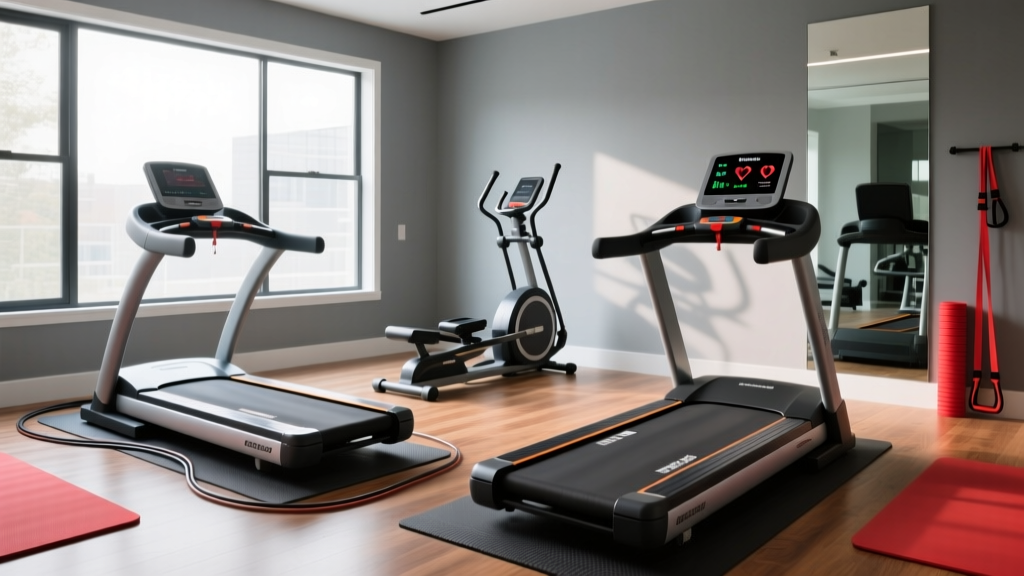
Every year, thousands of fitness enthusiasts search for a treadmill stress test at home to gauge their VO2 max, track cardiovascular health, or establish baseline heart rate zones. The clinical gold standard for this is the Bruce Protocol, performed on a treadmill while hooked up to a 12-lead ECG. However, attempting to replicate a maximal treadmill stress test in your garage or living room is fraught with danger and data inaccuracy. Without clinical supervision, pushing a treadmill to maximum incline and speed poses a severe fall risk, especially as fatigue compromises your proprioception.
Furthermore, treadmills primarily isolate the lower body. If you want a true, comprehensive cardiovascular stress test that safely pushes your heart to its absolute maximum without the joint impact or fall risk of a high-speed treadmill belt, you need to pivot to the rowing machine. According to the Mayo Clinic, stress tests are designed to measure how your heart handles work; a rowing ergometer recruits 86% of the body's musculature, forcing the cardiovascular system to work significantly harder and more efficiently than walking or running on a treadmill.
Medical Disclaimer: A true maximal stress test pushes your heart rate to 100% of its age-predicted maximum. If you are over 40, have a history of hypertension, or possess underlying cardiac conditions, consult a cardiologist before performing any maximal home stress test.Why the Ergometer is the Ultimate Home Cardiovascular Test
When you perform a maximal effort on a rowing machine (commonly known as an ergometer or 'erg'), you eliminate the biomechanical bottlenecks of running. On a treadmill, your calves, Achilles tendons, and IT bands often fail before your cardiovascular system reaches its true limit. On a rower, the load is distributed across the glutes, quads, lats, core, and biceps. This massive peripheral muscle demand forces the heart to pump at maximum stroke volume, yielding a much more accurate reflection of your true cardiovascular engine.
Additionally, high-end rowing machines feature precision telemetry. While a $1,500 treadmill relies on noisy, inaccurate pulse grips or Bluetooth connections that drop during high-vibration running, a premium ergometer's flywheel calculates exact wattage, split times, and drag factor, allowing you to measure cardiovascular decay in real-time.
Rowing Machine Buying Guide for Metabolic Testing
Not all rowing machines are built for stress testing. Magnetic and water rowers offer beautiful aesthetics and quiet operation, but they lack the linear, wind-resistance curve required for true metabolic testing. For a home stress test, you need an air-resistance ergometer with a highly calibrated performance monitor.
| Model | Price (2026) | Resistance Type | Monitor Telemetry | Verdict for Stress Testing |
|---|---|---|---|---|
| Concept2 RowErg (Standard) | $1,250 | Air | PM5 (ANT+ / BT) | The undisputed gold standard. |
| Rogue Echo Rower | $1,195 | Air | PM5 (ANT+ / BT) | Identical internals to C2, Rogue branding. |
| Hydrow (Original) | $2,495 | Electromagnetic | Closed Ecosystem | Poor for raw data testing; screen reliant. |
| NordicTrack RW900 | $1,699 | Magnetic | iFIT Dependent | Avoid for serious VO2 / threshold testing. |
The Buyer's Takeaway: If your goal is accurate home cardiovascular testing, buy the Concept2 RowErg. The PM5 monitor is universally calibrated, meaning a 2:00/500m split in your garage is mathematically identical to a 2:00/500m split in an Olympic testing facility. This consistency is mandatory for tracking cardiovascular adaptations over time.
How to Execute a 2000m Rowing Stress Test
The 2000-meter row is the universal benchmark for cardiovascular and muscular endurance. It typically takes between 6.5 to 10 minutes, placing it squarely in the zone that maximally taxes the aerobic and anaerobic energy systems simultaneously.
- The Warm-Up (15 Minutes): Row 10 minutes at a conversational pace (18-20 strokes per minute). Include three 10-stroke 'power bursts' at race pace to prime the central nervous system and elevate core temperature.
- The Start (0-250m): Take 10-15 high strokes (30-34 SPM) to get the flywheel spinning, then settle into your target race pace (26-28 SPM). Do not sprint; you will flood your legs with lactic acid and blow up your heart rate prematurely.
- The Middle Grind (250-1500m): This is where the cardiovascular stress test truly begins. Focus on a consistent split time. Your heart rate will steadily climb into Zone 4 and eventually Zone 5.
- The Sprint (1500-2000m): With 500 meters left, empty the tank. Increase your stroke rate by 2-4 SPM. Push through the burning sensation in your lungs and legs until you cross the 2000m mark.
- Cool Down: Immediately drop the damper to 1 and row lightly for 10 minutes to flush lactate and prevent blood pooling in the extremities.
Common Technique Mistakes and Troubleshooting
When using a rower as a stress test, poor technique doesn't just ruin your score; it invalidates the cardiovascular data by causing localized muscular failure before your heart reaches its max capacity.
Mistake 1: The Damper Setting Delusion
The Error: Users preparing for a max-effort test often slide the damper lever up to 10, assuming a higher setting equals a better workout. The Troubleshooting: According to Concept2's official training guidelines, a damper setting of 10 is equivalent to rowing a heavy, slow wooden boat. It causes premature latissimus dorsi and bicep fatigue. For a true cardiovascular stress test, set the damper between 3 and 5. Go into the PM5 menu, select 'More Options' > 'Display Drag Factor', and row a few strokes. You want a drag factor between 100 and 130. This mimics the sleek feel of a racing shell and ensures your cardiovascular system, not your grip strength, is the limiting factor.
Mistake 2: Shooting the Slide
The Error: The user's hips and legs fully extend before the handle moves, transferring zero power to the flywheel and placing massive shear force on the lumbar spine. The Troubleshooting: The rowing stroke is a strict sequence: Legs, Core, Arms on the drive; Arms, Core, Legs on the recovery. To fix this, practice 'pause drills'. Row and pause at the 'catch' position (shins vertical, chest forward). Initiate the drive by pressing the footplate away, keeping the arms completely straight until the handle passes the knees. If your lower back is screaming after a 2K test, your sequencing is broken.
Mistake 3: The Valsalva Maneuver at the Catch
The Error: Holding your breath during the heavy drive phase to brace the core. During a maximal stress test, this causes dangerous spikes in intra-thoracic pressure and blood pressure. The Troubleshooting: You must maintain continuous respiration. Exhale sharply through pursed lips on the powerful leg drive, and take a quick, deep inhale through the nose during the recovery phase. If you hear a grunting sound on every stroke, you are likely trapping air.
Mistake 4: Gripping the Handle Too Tightly
The Error: 'White-knuckling' the handle restricts blood flow to the forearms and artificially elevates heart rate and blood pressure due to isometric tension. The Troubleshooting: Hook your fingers around the handle like a meat hook. The thumb should rest lightly underneath, not squeeze. The power is transferred through the skeletal structure of the arms and back, not the grip of the fingers.
Heart Rate Telemetry: Ditch the Wrist Strap
If you are performing a treadmill stress test at home or a 2K row, optical wrist-based heart rate monitors (like the Apple Watch or Garmin Forerunner) are virtually useless. The constant wrist flexion and isometric gripping required in rowing restrict capillary blood flow at the wrist, causing optical sensors to drop out or lag by up to 30 seconds during rapid heart rate climbs.
To get clinical-grade data from your home stress test, you must use a chest strap. The Polar H10 or the Garmin HRM-Pro Plus (both retailing around $89-$99) measure the electrical activity of the heart (ECG). Pair the chest strap via ANT+ directly to the rowing machine's monitor. This allows you to overlay your exact heart rate against your 500m split times, giving you a flawless map of your cardiovascular efficiency and stroke volume decay.
Ultimately, while the search for a 'treadmill stress test at home' is driven by a valid desire to quantify health, the rowing machine provides a vastly superior, safer, and more data-rich environment for pushing your cardiovascular limits. Invest in a quality air ergometer, master the hip-hinge sequence, strap on a chest monitor, and let the flywheel reveal your true metabolic capacity.
References & Further Reading
More gear to consider
All reviews
Infinadeck Omnidirectional Treadmill vs Standard: 2026 Buyer Guide

Stair Climber vs. Walking on Incline Treadmill to Lose Weight: Home Guide

Apartment-Friendly Cardio: Noise Level Comparison & Calories Burned Walking on a Treadmill

Inspire Series Treadmill: Under Desk Office Space & Layout Review

Hitting 6 mph on a Treadmill: Top Folding Picks for Small Spaces