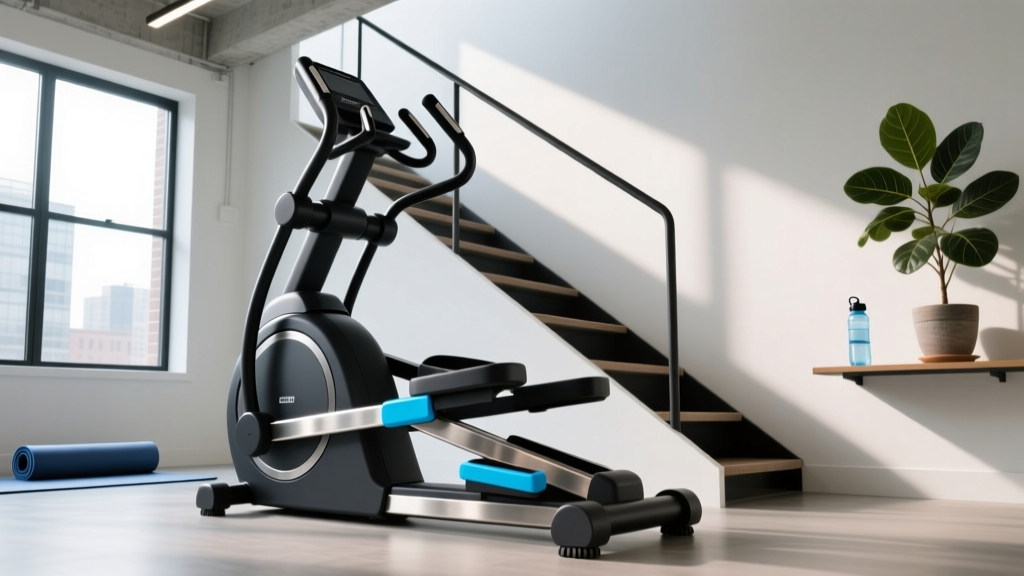
Stair Climber Guide: Why 4 mph on Treadmill Pacing Causes Mistakes
Master your home stair climber with our troubleshooting guide. Learn why 4 mph on treadmill pacing fails and fix common form and mechanical errors.

Transitioning from a treadmill to a stair climber is one of the most common shifts in home cardio routines, yet it is fraught with biomechanical misunderstandings. Many fitness enthusiasts purchase a high-end stair climber for home use—such as the StairMaster StairMill 3 or the Bowflex Max M9—only to find themselves exhausted, sore, or frustrated within the first week. The root cause? They are trying to apply treadmill logic to a vertical climbing machine.
Specifically, users often attempt to replicate the perceived exertion and cadence of a brisk walk—such as maintaining 4 mph on treadmill settings—when stepping onto a stair climber. This fundamental mismatch in pacing and biomechanics leads to severe form breakdown, reduced caloric expenditure, and even premature mechanical wear on home gym equipment. In this comprehensive 2026 troubleshooting guide, we will dissect why this pacing trap occurs, outline the most common stair climber mistakes, and provide mechanical troubleshooting steps for your home setup.
The Biomechanical Trap: Translating Treadmill Speed to Vertical Steps
To understand why your stair climber workouts feel off, we must look at the physics of the movement. Walking at 4 mph on treadmill decks equates to a 15-minute mile pace. Depending on your stride length, this requires a cadence of roughly 130 to 145 steps per minute (SPM) on a flat plane. It is a brisk, sustainable pace that elevates the heart rate into Zone 2 or Zone 3 cardio.
However, a stair climber does not measure horizontal distance; it measures vertical displacement and steps per minute. If a user attempts to match the 130+ SPM cadence of a 4 mph treadmill walk on a motorized StepMill, they are forcing an elite-level climbing pace. According to biomechanical data cited by the American Council on Exercise (ACE), a sustainable, moderate-intensity stair climbing pace for the average user is between 60 and 80 SPM. Pushing past 120 SPM on a stair climber requires anaerobic power outputs that most users cannot sustain for a 30-minute session.
Warning: Attempting to match a brisk treadmill cadence on a stair climber almost always results in the 'Handrail Hang.' Users instinctively lean their body weight onto the side rails to keep up with the rapidly descending stairs, completely negating the core and glute engagement the machine is designed to build.Pacing Translation Matrix: Treadmill vs. Stair Climber
Use the table below to correctly translate your perceived treadmill effort into appropriate stair climber settings. This matrix assumes a standard motorized StepMill (e.g., StairMaster or NordicTrack CLM9.9).
| Treadmill Pace (Perceived Effort) | Approx. Treadmill SPM | Target Stair Climber SPM | Equivalent StepMill Level (1-15) |
|---|---|---|---|
| Light Walk (2.5 mph) | 90 - 100 SPM | 40 - 50 SPM | Level 3 - 4 |
| Brisk Walk (4 mph on treadmill) | 130 - 145 SPM | 65 - 80 SPM | Level 6 - 8 |
| Light Jog (5.5 mph) | 155 - 165 SPM | 90 - 105 SPM | Level 10 - 12 |
| Sprint / HIIT Intervals | 170+ SPM | 115 - 130 SPM | Level 13 - 15 |
Top 4 Form Mistakes on Home Stair Climbers (And How to Fix Them)
Beyond the pacing mismatch, home users frequently develop bad habits due to the lack of a gym environment or personal trainer. Here is how to troubleshoot your form.
1. The Handrail Hang (Weight Dumping)
The Mistake: Gripping the handrails tightly and leaning forward, supporting 20% to 30% of your body weight with your upper body. This often happens when users set the machine too fast, trying to mimic that 4 mph on treadmill feeling.
The Fix: Use a 'piano touch' grip. Your hands should rest lightly on the rails purely for balance, not support. If you cannot maintain the pace without hanging, drop the speed by 15 SPM. According to physical therapy guidelines from the Cleveland Clinic, maintaining an upright torso with a neutral spine is critical to preventing lumbar strain during repetitive stepping.
2. The Half-Step Shuffle
The Mistake: Taking shallow, rapid steps where the knee only bends a few degrees. This shifts the load entirely to the quadriceps and calves, bypassing the glutes and hamstrings, and increasing patellofemoral joint stress.
The Fix: Focus on full-foot placement. Drive through the heel and midfoot, pushing the step all the way down until your leg is nearly fully extended. Aim for a 90-degree knee bend at the top of the step.
3. Ignoring the Eccentric Phase
The Mistake: Letting the machine's motor or hydraulic resistance 'drop' the foot rapidly, rather than controlling the descent.
The Fix: Treat the downward phase as a resisted negative. Controlling the step down engages the hamstrings and improves overall muscular endurance.
4. Core Disengagement and Anterior Pelvic Tilt
The Mistake: Arching the lower back and pushing the hips backward to compensate for fatigue.
The Fix: Brace your core as if preparing for a light punch to the stomach. Keep your hips tucked directly under your shoulders. Imagine a straight line from your earlobe through your shoulder, hip, and ankle.
Mechanical Troubleshooting for Home Stair Climbers
Home stair climbers generally fall into two categories: Motorized StepMills (rotating stairs) and Hydraulic/Pedal Steppers (alternating pedals). Each has unique mechanical failure modes.
Troubleshooting Motorized StepMills (e.g., StairMaster, NordicTrack)
- Issue: The Stair Belt Tracks to One Side or Slips.
Solution: Unlike a treadmill belt, a StepMill chain/belt system requires specific tensioning. If the steps catch or slip under heavy loads, consult your 2026 owner's manual for the rear axle tension bolts. Usually, a quarter-turn clockwise on both side bolts will re-seat the drive chain. Never use silicone lubricant on the stair treads themselves, as this creates a severe slip hazard. - Issue: Console Displays 'Speed Sensor Error'.
Solution: This is typically caused by dust accumulation on the optical sensor near the main flywheel. Unplug the machine, remove the lower front shroud, and use compressed air to clean the sensor eye and the magnetic reed switch on the flywheel.
Troubleshooting Hydraulic Mini-Steppers (e.g., Sunny Health & Fitness SF-S722015)
- Issue: Hydraulic Cylinders Squeak or Lose Resistance.
Solution: Hydraulic cylinders rely on internal fluid viscosity. If they squeak, apply a drop of PTFE (Teflon) lubricant to the external piston rod. If they lose resistance, the internal seals may be blown from overheating. Crucial Note: Most sub-$300 hydraulic steppers are rated for only 15-20 minutes of continuous use. Exceeding this causes the hydraulic fluid to overheat, thin out, and blow the seals. If your cylinders feel 'mushy,' they must be replaced (usually $35-$50 for a pair of universal replacement cylinders). - Issue: Pedals Bottom Out Too Quickly.
Solution: Adjust the tension knob located at the base of the hydraulic cylinders. Turning it clockwise increases the fluid restriction, raising the pedal height and resistance.
2026 Home Setup Spatial Requirements
Before purchasing a full-sized StepMill, measure your space. Motorized stair climbers require significant vertical clearance.
Ceiling Height Formula: User Height + 15 inches = Minimum Ceiling Height. (e.g., A 6'0" user needs at least a 7'3" ceiling).
Footprint: Full StepMills require roughly 36" x 72" of floor space, while pedal climbers like the Bowflex Max M9 require only 30" x 49", making them vastly superior for low-ceiling basements or apartments.
Expert Recommendations: Choosing the Right Machine for Your Form
If you are consistently struggling with form or mechanical issues, your equipment might not match your biomechanics or space. Here is a quick 2026 market breakdown:
- For the Purist (Unlimited Budget & Space): StairMaster StairMill 3. Retailing around $3,799 in 2026, it offers the exact same 8-inch step height and heavy-duty chain drive found in commercial gyms. It forces proper form because the steps are deep enough to prevent the 'half-step shuffle.'
- For the Hybrid Cardio Fan (Moderate Space): Bowflex Max M9. At $2,299, this combines a stair-stepping motion with elliptical-like upper body arms. It is excellent for users who want the heart-rate spike of a stair climber but suffer from lower back fatigue and need the upper-body counterbalance to maintain an upright posture.
- For the Budget/Space-Constrained: Sunny Health & Fitness SF-S722015 Heavy-Duty Stepper. Priced under $250, it features a robust steel frame and resistance bands. While it lacks the continuous motorized rotation of a StepMill, it is highly effective for Zone 2 cardio if you strictly enforce the 15-minute cooldown rule to protect the hydraulic cylinders.
Frequently Asked Questions (FAQ)
Is walking at 4 mph on treadmill better for fat loss than a stair climber?
Not necessarily. While 4 mph on treadmill decks burns a solid amount of calories through horizontal displacement, a stair climber forces you to lift your entire body weight against gravity with every step. A moderate 70 SPM pace on a StepMill will generally yield a higher caloric expenditure and greater glute/hamstring activation than a 4 mph flat walk, provided you do not lean on the handrails.
Why do my shins hurt on the stair climber but not on the treadmill?
Shin splints (medial tibial stress syndrome) on a stair climber are usually caused by 'toe-stepping.' If you only place the ball of your foot on the stair edge, your anterior tibialis muscle works in overdrive to dorsiflex the foot. Always plant your foot flat, driving through the midfoot and heel, to distribute the load to the larger posterior chain muscles.
How often should I maintain my home stair climber?
For motorized StepMills, wipe down the steps after every use to prevent sweat corrosion on the metal brackets. Every 6 months, vacuum the motor compartment to prevent dust buildup on the cooling fan, and check the drive chain tension. For hydraulic steppers, inspect the pivot bolts monthly and apply white lithium grease to the main center hinge to prevent squeaking.
Expert Takeaway: Stop treating your stair climber like a vertical treadmill. Ditch the obsession with matching your 4 mph on treadmill cadence. Slow the machine down, stand tall, push through your heels, and let gravity do the work. Your joints, your glutes, and your machine's motor will thank you.
More gear to consider
All reviews
Wellfit Treadmill Review: Step-by-Step Buying Guide
Air Bike vs Assault Bike Guide & Manual Treadmill Benefits 2026

2026 Portable Cardio Trends: Treadmill Speed to Pace Chart Guide

NordicTrack T Series 16 Treadmill Review & Bike Types Maintenance

How Fast Is 3 Speed On A Treadmill? Air Bike Vs Assault Bike
