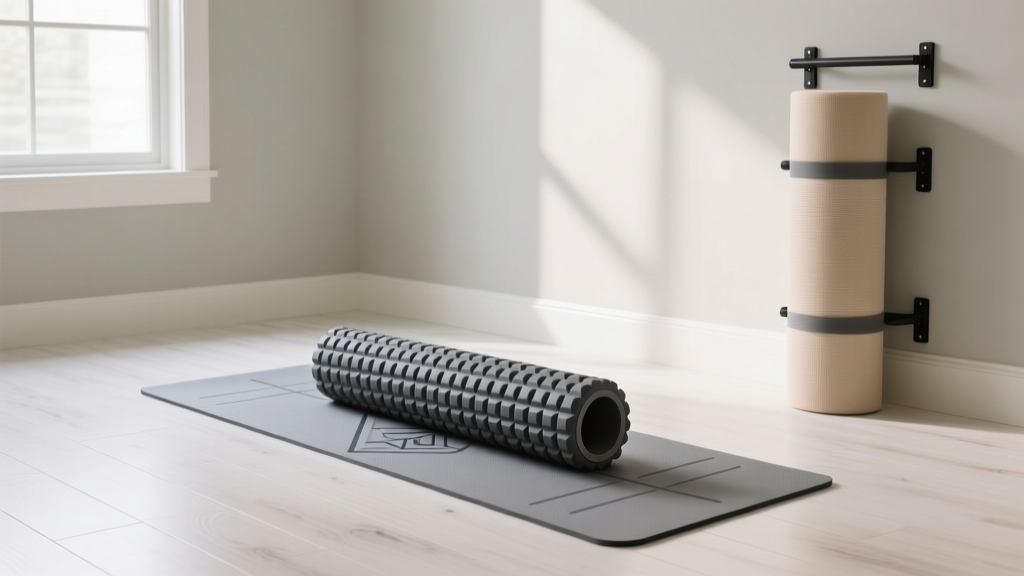
Stability Ball vs BOSU Ball Maintenance: Beyond the Yoga Mat Basket
Learn how to clean, store, and extend the life of your stability ball and BOSU trainer, with tips on why a yoga mat basket isn't enough for proper care.

The Storage and Care Dilemma: Why Your Yoga Mat Basket Isn't Enough
When organizing a home gym in 2026, aesthetics and functionality often collide. A beautifully woven rattan or canvas yoga mat basket is the gold standard for storing rolled cork, TPE, and natural rubber mats, keeping them ventilated and crease-free. However, when it comes to bulky, air-filled balance equipment—specifically standard stability balls and the iconic BOSU Balance Trainer—tossing them into a corner or attempting to wedge them into a mat basket is a fast track to material degradation, warping, and catastrophic failure.
While both the traditional Swiss ball (stability ball) and the BOSU (Both Sides Up) trainer serve similar proprioceptive and core-stabilizing functions, their material anatomy requires vastly different maintenance, cleaning, and storage protocols. Understanding these differences is the key to protecting your investment and ensuring your safety during dynamic movements.
Material Anatomy and Failure Modes
To properly maintain your balance equipment, you must first understand what it is made of. The failure modes of a $30 stability ball are entirely different from those of a $150 BOSU Pro.
Standard Stability Balls (PVC and Anti-Burst Tech)
High-quality stability balls, such as the DynaPro Anti-Burst Stability Ball ($28–$35) or the TheraBand Stability Ball, are constructed from thick, slow-deflate polyvinyl chloride (PVC). They are rated for static loads exceeding 2,000 lbs.
- Primary Failure Mode: Micro-abrasions. Dragging a PVC ball across rough concrete or textured garage floors creates micro-tears. Under pressure, these tears propagate, leading to a sudden blowout.
- Secondary Failure Mode: UV Photodegradation. Prolonged exposure to direct sunlight breaks down the plasticizers in the PVC, making the shell brittle and prone to shattering rather than slowly deflating when punctured.
BOSU Balance Trainer (Urethane Dome and ABS Base)
The premium BOSU Pro Balance Trainer ($149) features a high-grade urethane rubber dome mounted to a rigid, high-impact ABS plastic base.
- Primary Failure Mode: Base warping. Storing the BOSU resting on its dome for extended periods on uneven surfaces can warp the ABS plastic rim, causing it to wobble when flipped over for flat-side-up exercises.
- Secondary Failure Mode: Urethane delamination and chemical drying. Using harsh bathroom cleaners or alcohol-based sprays strips the urethane of its natural moisture, leading to dry rot and surface cracking.
⚠️ Chemical Warning: The Cleaning Trap
According to equipment safety guidelines highlighted by the American Council on Exercise (ACE), using Lysol, bleach, or ammonia-based glass cleaners on fitness equipment is a leading cause of premature material failure. These chemicals dissolve the protective UV coatings on urethane and strip the plasticizers from PVC. Stick to a simple solution of warm water and mild, non-antibacterial dish soap (like Dawn) applied with a microfiber cloth.
The Storage Matrix: Racks, Nets, and the Yoga Mat Basket
While your yoga mat basket perfectly accommodates 72-inch rolled mats, balance trainers require dedicated spatial management to maintain their structural integrity.
| Equipment Type | Ideal Storage Solution | What to Avoid | Estimated Cost |
|---|---|---|---|
| 65cm Stability Ball | Ceiling-mounted mesh hammock or corner ball net | Resting on radiators, sharp corners, or the yoga mat basket | $15 - $25 |
| BOSU Pro Trainer | Flat-side down on a smooth surface, or wall-mounted BOSU rack | Storing dome-side down on uneven concrete | $30 - $45 (for rack) |
| Mini Stability Balls (9-12") | Inside the yoga mat basket or a wire bin | Direct sunlight on window sills | Included with basket |
Inflation Protocols and Temperature Dynamics
Air is highly susceptible to thermal expansion and contraction. A stability ball inflated to a perfect 65cm diameter in a 75°F living room will lose apparent pressure when moved to a 55°F garage, and it risks over-pressurization and seam stress if left in a 90°F sunroom. The National Strength and Conditioning Association (NSCA) emphasizes that improper inflation is a primary driver of equipment-related injuries in proprioceptive training.
The 24-Hour PVC Stretching Rule
When unboxing a new PVC stability ball, never inflate it to its maximum diameter on day one. The PVC needs time to acclimate and stretch. Follow this exact protocol:
- Day 1: Unbox and let the ball sit at room temperature (68°F–72°F) for 2 hours to allow the PVC to become pliable.
- Day 1 (Pump 1): Inflate the ball to roughly 80% of its target diameter (e.g., 52cm for a 65cm ball). Let it sit for 24 hours.
- Day 2 (Pump 2): Inflate to 95% of the target diameter. Wait another 12 hours.
- Day 3 (Final Top-Off): Inflate to the exact target diameter. Use a tape measure wrapped around the equator of the ball to verify the circumference.
BOSU Dome Inflation Metrics
The BOSU Pro requires a specific dome height to ensure the proprietary burst-resistant geometry functions correctly. The apex of the dome should measure exactly 8.5 inches (21.5 cm) from the top of the rigid base when fully inflated. If the dome feels spongy or the sidewalls bulge outward rather than sloping smoothly, it is under-inflated, which drastically reduces the lifespan of the urethane by creating unnatural stress folds during use.
"Treat your inflatable balance gear like a high-performance tire. You wouldn't ignore the pressure in your car's tires as the seasons change; similarly, you should check the inflation diameter of your stability ball and BOSU dome on the first day of every month to account for ambient temperature shifts."
Repairing vs. Replacing: When to Cut Your Losses
Because these items bear your full body weight during dynamic, off-center movements, structural integrity is non-negotiable. Here is a practical decision framework for 2026:
When to Patch a Stability Ball
Most premium balls come with a small PVC patch kit. You can safely patch a puncture only if the hole is less than 3mm (roughly the size of a pinhead or a small thorn puncture) and is located on the upper hemisphere. Clean the area with isopropyl alcohol (only use alcohol on the tiny spot for the patch, not for general cleaning), apply the PVC glue, and press the patch firmly for 60 seconds. Wait 24 hours before inflating. Note: If the tear is on the equator or near the anti-burst seam, discard the ball immediately.
When to Replace the BOSU Dome
You cannot patch a BOSU dome. Urethane requires specialized industrial adhesives and vulcanization processes that cannot be replicated at home. If you notice white stress marks (crazing) near the base rim, or if the dome holds air but feels visibly asymmetrical, the urethane has suffered internal structural fatigue. Given that a replacement dome is rarely sold separately from the base, this usually necessitates purchasing a new unit. To prevent this, strictly enforce the "flat-side down" storage rule when the equipment is not in active use.
Final Thoughts on Home Gym Organization
Curating a functional, safe, and visually appealing home gym requires understanding the unique needs of every piece of equipment. Your yoga mat basket remains the undisputed champion for keeping your TPE and cork mats pristine, breathable, and ready for your morning flow. But for your stability balls and BOSU trainers, invest in proper mesh nets, dedicated wall racks, and a strict, chemical-free cleaning regimen. By respecting the material science of your balance gear, you ensure it will safely support your fitness journey for years to come.
More gear to consider
All reviews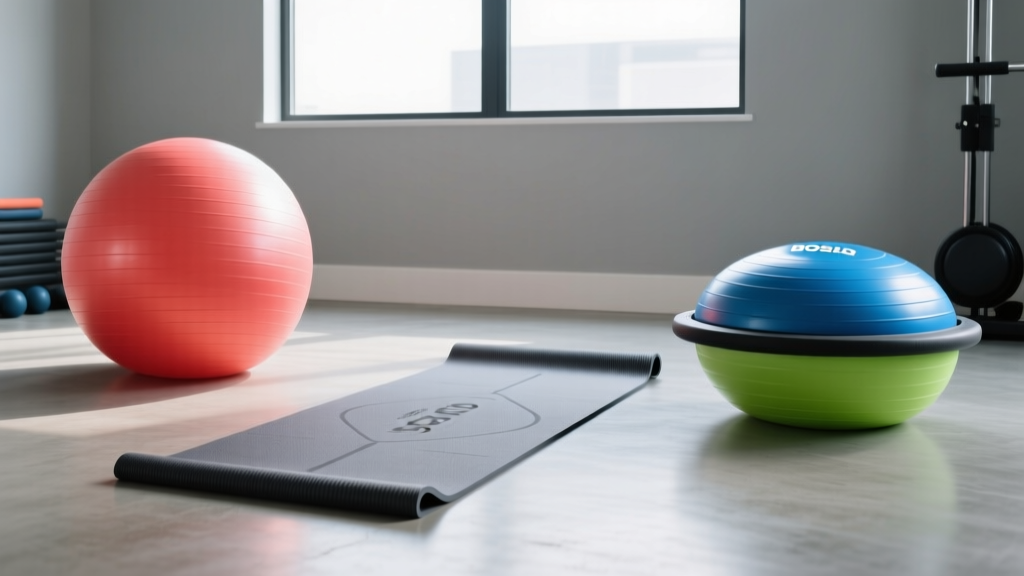
Yoga Mat Sizes & Space: Stability Ball vs BOSU Ball 2026 Trends
Yoga Block & Strap Guide: Caring for Your Hello Kitty Yoga Mat

Battle Rope Guide: Length, Thickness & Large Yoga Mat Trends

Pull-Up Assist Band Sizing Mistakes & Brentwood Yoga Mat Setup Tips

Medicine Ball Weight Selection vs Traditional Yoga Mat: Core Face-Off