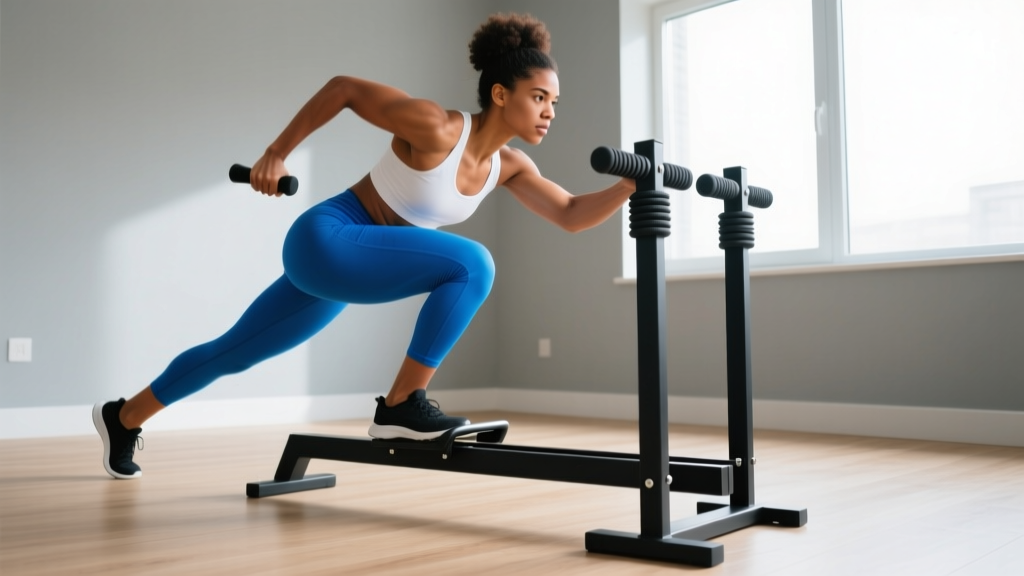
Squat Rack vs Planet Fitness Leg Press Machine: Space Layout Guide
Compare the spatial footprint of a home squat rack vs the Planet Fitness leg press machine. Optimize your garage gym layout for maximum leg gains.

The Spatial Dilemma: Commercial Sleds vs. Home Power Cages
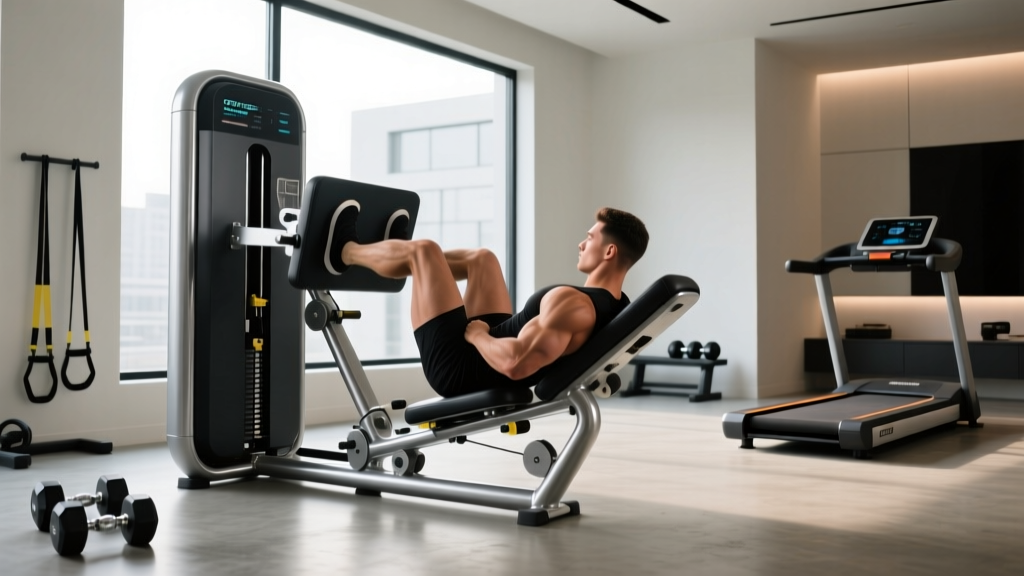
Transitioning from a commercial fitness center to a home garage gym often triggers a harsh spatial reality check. When designing a dedicated leg-training zone, space optimization is the ultimate bottleneck. Many lifters fondly remember the sprawling, heavy-duty sleds at big-box gyms and wonder how to replicate that isolated leg development at home. When evaluating the spatial economics of lower-body training, the typical planet fitness leg press machine serves as a prime example of commercial spatial inefficiency. While highly effective for quad isolation, these massive 45-degree linear sleds demand a footprint that is simply unattainable for 95% of home gym owners.
As we navigate the 2026 landscape of home gym design, the modern power cage and squat rack have evolved from simple barbell holders into hyper-versatile leg-training ecosystems. This guide deconstructs the exact spatial footprints, operational clearances, and biomechanical trade-offs between dedicating space to a commercial-style leg press versus optimizing a squat rack for comprehensive leg development.
Quick Footprint Summary
Commercial 45° Leg Press: Requires ~60 sq. ft. of dedicated operational clearance.
Standard 4-Post Power Cage: Requires ~80 sq. ft. of operational clearance (due to 7-foot barbell sweep), but replaces 4+ single-use machines.
Wall-Mount Fold-Back Rack: Requires ~80 sq. ft. when in use, but collapses to under 3 sq. ft. of static floor space.
Deconstructing the Planet Fitness Leg Press Machine Footprint
Most commercial chains, including Planet Fitness, utilize 45-degree linear leg press machines manufactured by brands like Matrix (Magnum series) or Hammer Strength. These machines are engineered for high-traffic durability, not spatial efficiency. The sled travels on ultra-high-molecular-weight polyethylene (UHMW) plastic runners or dual linear bearings, requiring a massive steel frame to prevent torsional flex under 1,000+ lb loads.
Static vs. Operational Clearance
The static footprint of a standard commercial 45-degree leg press is approximately 86 inches long by 34 inches wide (roughly 20.3 square feet). However, static footprint is a vanity metric in gym layout design. You must account for operational clearance:
- Plate Loading Zone: You need a minimum of 30 inches of lateral clearance on both sides of the sled horns to load 45lb bumper plates safely.
- User Entry/Egress: The reclined seat and low starting position require a 3-foot semi-circle at the base for safe entry and exit.
- Total Dedicated Zone: To use this machine safely without obstructing gym traffic flow, you must allocate a 10-foot by 6-foot zone (60 square feet) that cannot be used for any other exercise.
Power Cage Layouts: Maximizing the Squat Rack for Leg Day
Enter the modern power cage. A standard 4-post rack constructed from 11-gauge 3x3-inch steel tubing—such as the Rogue Fitness RML-390 or the REP Fitness PR-4000—features a static footprint of just 48x48 inches (16 square feet). While the operational clearance still requires a 7-foot barbell path (demanding an 8x10 foot operational zone), the squat rack is a multi-functional hub.
The Fold-Back and Wall-Mounted Advantage
For extreme space optimization, wall-mounted fold-back racks (like the Rogue RML-3W) completely change the spatial math. When folded against the wall, the rack protrudes only 4 inches, reclaiming your garage for parking or functional conditioning work. When unlatched for leg day, it provides the same 1,000lb+ safety rating as a freestanding cage, proving that immovable commercial sleds are a relic of poorly optimized floor plans.
Spatial & Financial Comparison Matrix
| Equipment Type | Static Footprint | Operational Zone | Avg. Cost (2026) | Versatility Index |
|---|---|---|---|---|
| Commercial 45° Sled | 20.3 sq ft | 60 sq ft | $3,500 - $5,500 | Low (Single-use) |
| 4-Post Power Cage | 16.0 sq ft | 80 sq ft | $900 - $1,600 | High (Full Body) |
| Wall-Mount Fold Rack | 2.5 sq ft (Folded) | 80 sq ft | $600 - $1,100 | High (Space-Saving) |
Biomechanical ROI: Does the Space Savings Cost You Gains?
The primary argument for the planet fitness leg press machine is the removal of axial (spinal) loading, allowing lifters to push the quadriceps to absolute failure without the erector spinae becoming the limiting factor. According to the ExRx Biomechanics Database, the barbell back squat requires immense core stabilization and hip mobility, which can limit pure quad hypertrophy for some anatomies.
Conversely, the ExRx Machine Kinesiology data shows that the 45-degree leg press locks the pelvis into a fixed path, maximizing knee flexion and extension isolation. If you ditch the commercial sled for a home squat rack, how do you bridge this biomechanical gap without sacrificing space?
Exercise Substitutions for the Missing Sled
- The Belt Squat Workaround: By adding a belt squat attachment (or simply using a loading pin and dip belt inside the cage), you completely remove spinal compression while achieving deep hip and knee flexion. This mimics the leg press's axial-free loading but takes up zero extra floor space.
- Rear-Foot Elevated Split Squats (Bulgarian): Utilizing the rack's J-cups to hold a single dumbbell or kettlebell, this unilateral movement matches the leg press in quad tension while actively engaging the glute medius for pelvic stability.
- Hack Squat Attachments: Modern racks like the REP Fitness Ares or specialized hack squat attachments that slide onto standard 3x3 uprights allow you to perform guided, fixed-path squats, replicating the exact biomechanical groove of a commercial machine.
Expert Layout Tip: If you are using a flat-foot power rack (no bolts into the concrete), store your heaviest 45lb bumper plates on the rear upright storage pegs. This acts as a spatial anchor and counterbalance during heavy squats, eliminating the need to drill into your garage floor while keeping the center of your operational zone completely clear.
Step-by-Step Garage Gym Leg Zone Optimization
To build a leg-training zone that rivals commercial utility while maintaining strict spatial efficiency, follow this layout protocol:
- Anchor Against the Short Wall: Position your squat rack against the shortest wall of your garage. This ensures the 84-inch barbell path runs parallel to the longest dimension, preventing the bar ends from striking vehicles or workbenches.
- Implement Sandwich J-Cups: Upgrade to UHMW-lined sandwich J-cups. They protect your barbell knurling and allow you to rack the weight slightly forward, optimizing the internal depth of the cage for taller lifters performing deep squats.
- Utilize Vertical Plate Storage: Avoid standalone plate trees, which eat up 4 square feet of floor space and create trip hazards. Use vertical plate storage posts attached directly to the rear or side uprights of the power cage.
- Deploy Flip-Down Safeties: Instead of traditional strap safeties or pin-pipe safeties that must be manually moved, install flip-down safety arms. They tuck flush against the uprights when not in use, widening your internal working area for lunges and lateral movements.
- Integrate Calf Raise Mechanics: To replace the dedicated calf raise machine found in commercial gyms, place a 45lb plate flat on the floor inside the rack as a heel drop platform, and use the rack's safety pins to catch the barbell for heavy standing calf raises.
Final Verdict on Space Optimization
The planet fitness leg press machine is an undeniably effective tool for lower-body hypertrophy, but it is a spatial dinosaur. Dedicating 60 square feet to a single, fixed-path movement is a luxury that modern home gym designers cannot afford. By investing in a high-quality, modular power cage and leveraging biomechanically sound attachments like belt squat mechanisms and hack squat sliders, you can achieve equal—or superior—leg development. The squat rack remains the undisputed king of space-efficient leg training, proving that with intelligent layout design, you never need to compromise on gains to save on square footage.
More gear to consider
All reviews
Horizontal vs 45-Degree Leg Press Machines: Complete Buying Guide

Best Equip Recovery for Heat: Evidence-Based Cooling Gear for Athletes and Workers
Beyond the Leg Press Machine Description: Home Gym Head-to-Head 2026

Horizontal vs 45-Degree Leg Press Machine: Which is Best?

Setting Up a Rogue Leg Press Machine vs Hack Squat