Sole TT8 Treadmill Care vs Compact Portable Cardio Options
Compare Sole TT8 treadmill maintenance with compact portable cardio equipment options. Learn repair costs, longevity tips, and space-saving alternatives.

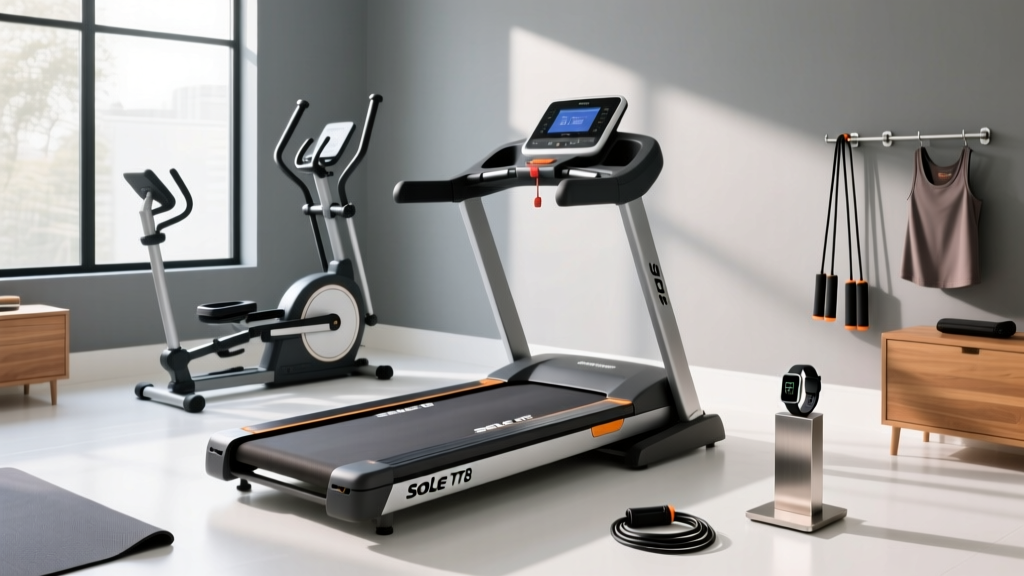
The fitness landscape in 2026 is defined by a massive shift toward spatial efficiency. For years, the Sole TT8 treadmill has been the gold standard for home gyms, offering a commercial-grade 4.0 CHP motor, a 22-inch by 60-inch running surface, and a robust 400-pound user capacity. However, weighing in at 350 pounds and requiring an 83-inch by 34.5-inch footprint, it is not a machine you simply tuck away. As urban living spaces shrink and remote work setups evolve, many fitness enthusiasts are weighing a critical decision: should you invest in the ongoing maintenance of a heavy-duty treadmill, or pivot to compact portable cardio equipment options?
This guide provides a deep-dive technical comparison between maintaining the Sole TT8 and transitioning to modern portable cardio alternatives. We will explore exact repair costs, mechanical failure modes, and the long-term viability of both approaches.
The Heavy-Duty Reality: Sole TT8 Maintenance Deep Dive
The Sole TT8 is engineered for light commercial use, meaning its internal components are vastly superior to standard residential models. However, this durability requires strict adherence to a maintenance schedule to prevent catastrophic failure modes, particularly in the drive system and incline/decline motors.
1. Belt and Deck Preservation
The TT8 features a reversible phenolic deck, which effectively doubles its lifespan if maintained correctly. The most common mistake owners make is over-lubrication. You must use 100% pure silicone treadmill lubricant (never petroleum-based products like WD-40, which will dissolve the belt adhesive). Apply exactly 0.5 ounces of silicone under the belt every 150 miles or every 3 months.
Expert Spec: TT8 Belt Tension TestTo check your belt tension, turn off and unplug the machine. Lift the running belt at the exact center of the deck. It should lift between 2.0 and 2.5 inches. If it lifts higher, the belt is too loose and will slip during high-speed sprints; if it lifts less than 1.5 inches, you are causing excess friction that will overheat the 4.0 CHP motor and eventually fry the lower control board.
2. Motor Hood and Static Mitigation
Dust is the silent killer of treadmill electronics. Every 90 days, remove the six Phillips-head screws securing the TT8 motor hood. Use a vacuum with a soft brush attachment to clean the motor fan blades and the exposed wiring. According to Consumer Reports treadmill reliability data, static buildup from dust accumulation is a leading cause of premature console and control board failures in heavy-duty machines.
The Rise of Compact Portable Cardio Equipment Options
If your living situation no longer supports a 350-pound treadmill, the market for compact portable cardio equipment options has matured significantly. These devices prioritize spatial efficiency, utilizing magnetic resistance, foldable hinges, and low-profile chassis designs. Below, we evaluate the top tier of portable options and their specific maintenance requirements.
Option A: KingSmith WalkingPad X21 (Foldable Walking Pad)
The WalkingPad X21 represents the pinnacle of portable walking pads. It folds down to a mere 8.5 inches thick and weighs 77 pounds. While it lacks the 12 mph top speed and 15% incline of the TT8, it maxes out at 7.5 mph, which is sufficient for power walking and light jogging.
- Maintenance Profile: Extremely low. The primary failure point is the central folding hinge. Keep the hinge mechanism free of debris and apply a single drop of white lithium grease to the pivot points annually.
- Limitations: The 144-pound weight capacity and narrow 17-inch belt width make it unsuitable for heavy runners or those with a wide gait.
Option B: Hydrow Wave (Compact Smart Rower)
Rowing provides a full-body cardiovascular workout that a treadmill cannot match. The Hydrow Wave utilizes a smooth electromagnetic drag mechanism rather than a chain-and-sprocket system. It folds upright into a 33-inch by 24-inch footprint.
- Maintenance Profile: Wipe down the polycarbonate rail after every use to prevent sweat corrosion. Because it uses electromagnetic resistance, there are no physical brake pads to replace, virtually eliminating mechanical wear.
- Limitations: Requires a subscription for the full immersive experience, adding to the long-term cost of ownership.
Option C: Cubii JR2 (Under-Desk Elliptical)
For those prioritizing NEAT (Non-Exercise Activity Thermogenesis) over high-intensity interval training, the Cubii JR2 is a 25-pound portable elliptical that slides under any desk.
- Maintenance Profile: Zero mechanical maintenance required. The magnetic flywheel is sealed. Simply keep the track clear of pet hair.
- Limitations: Caloric expenditure is significantly lower than running on a TT8 or rowing on a Hydrow.
5-Year Maintenance Cost Matrix
When deciding whether to repair an aging Sole TT8 or invest in compact portable cardio equipment options, you must look at the total cost of ownership. Below is a realistic 5-year maintenance projection based on average home use (3 hours per week).
| Equipment Type | Routine Consumables | Expected Part Replacements | Est. 5-Year Cost |
|---|---|---|---|
| Sole TT8 Treadmill | Silicone Lube ($40) | Running Belt ($120), Deck Flip Labor ($150) | $310 |
| WalkingPad X21 | None | Hinge Assembly ($85), Remote ($30) | $115 |
| Hydrow Wave | Microfiber pads ($20) | None (Electromagnetic) | $20* |
| Cubii JR2 | None | None | $0 |
*Note: The Hydrow Wave requires a monthly digital subscription for guided content, which is not factored into the mechanical maintenance cost above.
Decision Framework: Repair Your TT8 or Switch to Portable?
If your Sole TT8 is experiencing issues, use this diagnostic framework to decide whether to fund the repair or transition to a portable setup.
- Evaluate the Failure Point: If the issue is a worn belt, deck, or drive belt, repair it. These are standard wear items costing under $200. If the lower control board or 4.0 CHP motor has failed (often a $500 to $800 repair), consider the age of the machine.
- Assess Your Cardiovascular Needs: The American Heart Association recommends at least 150 minutes of moderate-intensity or 75 minutes of vigorous aerobic activity per week. If your fitness goals require high-incline running or heavy sprint intervals, compact portable options will not suffice. You must repair the TT8.
- Measure Your Spatial Reality: If you have moved to an apartment or need to reclaim a multi-use room, the spatial benefit of a foldable rower or walking pad heavily outweighs the biomechanical superiority of a treadmill.
Universal Longevity Protocols for All Cardio Machines
Whether you are keeping your heavy-duty treadmill or buying into the compact portable cardio equipment trend, implementing these three environmental controls will drastically extend the lifespan of your investment:
Surge Protection is Non-Negotiable: Never plug a Sole TT8 or a smart rower directly into a wall outlet. A minor voltage spike can instantly destroy a $300 motor controller or a proprietary digital motherboard. Use a high-joule rating surge protector (minimum 2000 joules) with built-in EMI/RFI filtering to protect sensitive electronics.
- Humidity Control: Keep your fitness equipment in a room with 40% to 50% ambient humidity. High humidity causes sweat to corrode internal metal components and deck fasteners, while extremely dry environments increase static electricity, which can short out digital displays.
- Subfloor Stabilization: Heavy machines like the TT8 require a high-density EVA foam equipment mat. This not only protects your flooring but prevents micro-vibrations from loosening the chassis bolts over time. For portable options like the WalkingPad, a mat prevents the unit from 'creeping' across hardwood floors during use.
Final Thoughts on Equipment Evolution
The Sole TT8 remains an absolute powerhouse for serious runners who have the dedicated space to house it. By adhering to strict lubrication and dust-mitigation schedules, you can easily push this machine past the 10-year mark. However, the rapid advancement of compact portable cardio equipment options means that sacrificing a treadmill no longer means sacrificing your health. By understanding the mechanical realities and maintenance costs of both categories, you can make an informed decision that perfectly aligns with your 2026 lifestyle and fitness goals. For further technical support and official replacement parts, always refer to the Sole Fitness official product support portal.
More gear to consider
All reviews
True 540 Treadmill vs Air Bike: Assault Comparison
How to Fold ProForm Treadmill & Compact Cardio Value Guide

Air Bike vs Assault Bike Care: Beyond the No Gravity Treadmill

Maintaining Spin, Upright & Recumbent Bikes, Dogs and Treadmills

Folding Treadmill Care: Fixing the Bouncing Tits on Treadmill Effect
