
Rubber vs Urethane: Care for the Rolling Dumbbell Triceps Extension
Discover how rubber hex and urethane dumbbells withstand the rolling dumbbell triceps extension. Expert maintenance tips to maximize longevity.

The Biomechanics of Wear: Why the Rolling Dumbbell Triceps Extension Matters
When analyzing equipment longevity, most lifters focus on high-impact drops like deadlifts or cleans. However, isolation movements like the rolling dumbbell triceps extension introduce a unique, insidious type of wear and tear. During this exercise, you typically start seated, resting the dumbbells on your thighs before 'rolling' them back into a supine position. Between sets, they are often lowered to a rubber mat or hardwood floor. Furthermore, because you are lying flat on your back, gravity pulls sweat, dead skin cells, and chalk directly down onto the dumbbell heads and knurled handles.
This specific biomechanical environment creates a testing ground for dumbbell coatings. The friction of rolling the weights on your thighs, combined with the acidic nature of sweat pooling in the crevices of the equipment, accelerates material degradation. If you are deciding between rubber hex dumbbells and urethane dumbbells for your home or commercial gym, understanding how each material responds to this specific maintenance profile is critical for long-term ROI.
Material Matrix: Virgin Rubber Hex vs. Premium Urethane
Not all coatings are created equal. The chemical composition of the outer shell dictates how it will survive the friction, moisture, and UV exposure inherent in a dedicated training space. Below is a technical comparison of how these two materials stack up against the demands of triceps isolation work and general gym maintenance.
| Material Property | Virgin Rubber Hex (e.g., CAP Barbell) | Cast Urethane (e.g., Rogue, Eleiko) |
|---|---|---|
| Shore A Hardness | 70-80 (Softer, higher bounce) | 85-92 (Denser, dead-bounce) |
| Sweat & Acid Resistance | Moderate (Porous; absorbs salts over time) | Exceptional (Non-porous; repels moisture) |
| Friction Wear (Thigh Rolling) | High (Can develop smooth, slick patches) | Low (Maintains textured grip indefinitely) |
| Edge Chipping (Floor Contact) | Prone to tearing and 'dry rot' cracking | Highly resistant; may scuff but won't tear |
| Odor Retention | High (Traps bacteria and sulfur smells) | Negligible (Easy to sanitize completely) |
Failure Modes in Isolation Exercises
To properly maintain your equipment, you must first understand how it fails. The rolling dumbbell triceps extension requires a secure grip, often utilizing a neutral or pronated wrist angle. If the dumbbell coating degrades, it compromises your safety.
The Rubber Hex Degradation Cycle
Rubber hex dumbbells are typically manufactured using a vulcanization process that bonds a rubber shell to a cast iron core. The primary failure mode here is edge delamination. When you lower the dumbbells to the floor after a heavy set of triceps extensions, the hex corners absorb the shock. Over time, the rubber oxidizes, leading to micro-fissures. Once sweat and chalk infiltrate these fissures, the bond between the rubber and the iron core weakens. You will eventually notice the rubber 'flapping' or peeling back at the corners, which can pinch your fingers during heavy overhead movements.
Urethane Stress and Knurling Rust
Urethane is virtually immune to the oxidation and dry-rot that plagues rubber. However, the failure point in premium urethane dumbbells shifts from the coating to the handle. Because urethane is so durable, lifters tend to neglect the metal shaft. The acidic pH of human sweat (typically between 4.5 and 7.0) will rapidly corrode standard chrome or zinc-plated knurling if left unattended. According to equipment maintenance guidelines from Garage Gym Reviews, rusted knurling not only ruins the tactile feedback required for exercises like the rolling triceps extension but can also lead to superficial skin infections if the rust harbors bacteria.
⚠️ CRITICAL WARNING: The Solvent TrapNever use bleach, ammonia, or petroleum-based degreasers (like WD-40 or harsh brake cleaners) on rubber hex dumbbells. These chemicals strip the natural oils from the vulcanized rubber, accelerating the 'dry rot' process and causing the hex edges to crumble within months. Stick to pH-neutral cleaners.
Step-by-Step Maintenance Protocol for Longevity
Whether you are using budget-friendly rubber or investment-grade urethane, a disciplined maintenance routine will extend the lifespan of your dumbbells by 5 to 10 years. Follow this protocol specifically tailored for high-sweat, high-friction isolation movements.
1. The Post-Workout Wipe (Daily)
Immediately after completing your triceps extensions, wipe down the entire dumbbell. Use a microfiber cloth lightly dampened with a 50/50 mix of distilled water and white vinegar, or a commercial pH-neutral gym wipe. Pay special attention to the inner corners of the hex shape where chalk dust accumulates. For urethane, a simple dry microfiber cloth is often sufficient to remove surface sweat.
2. The Deep Knurling Purge (Weekly)
Sweat and skin cells get packed deep into the diamond-pattern knurling of the handles. Once a week, use a stiff nylon bristle brush (never wire, as it will strip zinc plating) dipped in warm water with a drop of mild dish soap. Scrub the handle in a circular motion, then dry immediately with a towel to prevent flash-rusting.
3. Core Hydration and Protection (Monthly)
Once a month, apply a light coat of 3-IN-ONE Multi-Purpose Oil or food-grade mineral oil to the knurled handles. Rub it in with a cloth, let it sit for 10 minutes, and buff off the excess. This displaces trapped moisture and creates a hydrophobic barrier against future sweat exposure.
Expert Insight: 'If your rubber hex dumbbells have developed a slick, polished surface on the edges from rolling them on your thighs during triceps extensions, the rubber's porous top-layer has been worn away. You can restore some grip by lightly scuffing the smooth areas with a fine-grit sanding sponge, followed by a thorough cleaning to remove the rubber dust.' — Commercial Gym Equipment Technician
Cost-Benefit Analysis: Replacing vs. Restoring
When outfitting a gym for exercises that require precise weight increments and secure handling, the initial price tag is only half the equation. Let us look at the real-world economics of rubber versus urethane from a longevity perspective.
- Rubber Hex Dumbbells (e.g., 50lb Pair): Typically retail between $75 and $90 ($0.75 - $0.90/lb). However, in a high-humidity garage gym or busy commercial space, the rubber edges will likely begin to chip and degrade within 3 to 4 years, necessitating replacement or resulting in a degraded user experience.
- Premium Urethane Dumbbells (e.g., Rogue Fitness Urethane Series): Retail between $300 and $350 for a 50lb pair ($3.00 - $3.50/lb). As noted in the material specifications by Rogue Fitness, high-quality urethane is engineered to withstand UV exposure, extreme temperature fluctuations, and heavy abrasion without breaking down. These will easily last 15+ years with basic weekly maintenance.
While the upfront cost of urethane is roughly 4x higher, the cost-per-year of ownership actually favors urethane if you plan to train for more than a decade. Furthermore, the lack of off-gassing odors and the superior dead-bounce characteristics make urethane vastly superior for controlled, floor-adjacent movements like the rolling dumbbell triceps extension.
Expert Verdict: Which Survives the Long Haul?
If your training regimen heavily features the rolling dumbbell triceps extension and similar supine isolation movements, urethane dumbbells are the undisputed champion of longevity and maintenance ease. Their non-porous surface prevents the absorption of sweat and chalk, eliminating the foul odors and bacterial growth associated with aging rubber hex dumbbells. While rubber hex dumbbells remain a viable, budget-friendly entry point for general fitness, they require vigilant, chemical-free cleaning routines to prevent the hex edges from crumbling and the handles from rusting. Invest in the right material, respect the maintenance protocol, and your equipment will outlast your fitness goals.
More gear to consider
All reviews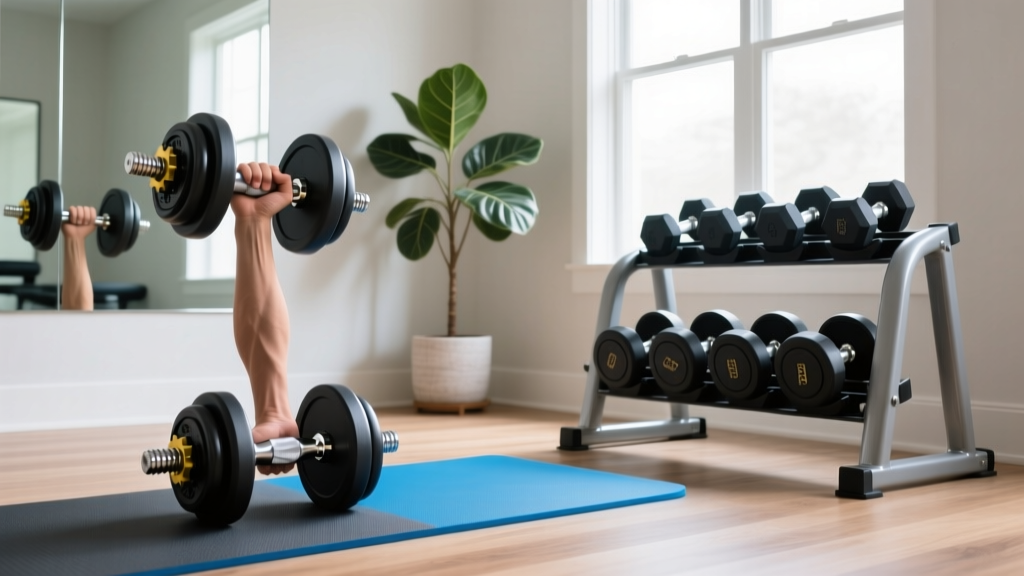
Best Adjustable Dumbbells for Dumbbell Chest Exercises (2026)

Olympic vs Standard Plates Guide + Good Dumbbell Exercises for Chest

Top Dumbbell Racks for a 30 Minute Dumbbell Workout Women Love

EZ Curl Bar vs Straight Bar: Good Upper Body Workouts with Dumbbells
Master Dumbbell Lunges: GIF Form Guide & Top Adjustable Picks
