Tricep Extension Dumbbell Form: Rubber Hex vs Urethane Value
Analyze the true cost of rubber hex vs urethane dumbbells. Discover how material and handle geometry impact tricep extension dumbbell form and budget.

The Hidden Cost of Grip: Why Material Dictates Isolation Quality
Building a free weight arsenal in 2026 forces every home gym owner to confront a harsh economic reality: the price gap between entry-level rubber hex dumbbells and premium urethane dumbbells has widened significantly. While budget-conscious lifters often default to rubber-coated hexagonal dumbbells for their entire rack, this blanket approach ignores the nuanced biomechanical demands of specific isolation movements. Nowhere is this equipment limitation more glaring than in overhead tricep isolation.
When analyzing tricep extension dumbbell form, the handle diameter, knurl pattern, and head geometry become critical variables. Compromised form during heavy overhead extensions rarely stems from muscular weakness; more often, it is the direct result of fighting poorly engineered equipment. In this comprehensive value analysis, we break down the true cost-per-pound, material degradation rates, and ergonomic realities of rubber hex versus urethane dumbbells to help you allocate your 2026 fitness budget with surgical precision.
The Core Budget Dilemma
Rubber Hex Dumbbells: Average $1.50 - $2.20 per pound. Ideal for heavy, high-impact floor movements where dropping is inevitable.
Urethane Dumbbells: Average $3.80 - $5.50 per pound. Essential for precise isolation work, ergonomic grip requirements, and long-term indoor durability.
Stress-Test: How Dumbbell Geometry Alters Tricep Extension Dumbbell Form
The overhead tricep extension requires the lifter to grasp a single, heavy dumbbell with both hands, forming a diamond or overlapping grip beneath the inner plates. According to biomechanical standards outlined by ExRx.net, the elbows must remain tucked and pointing forward, requiring the dumbbell heads to clear the forearms and forehead throughout the eccentric lowering phase.
The Hex Head Clearance Problem
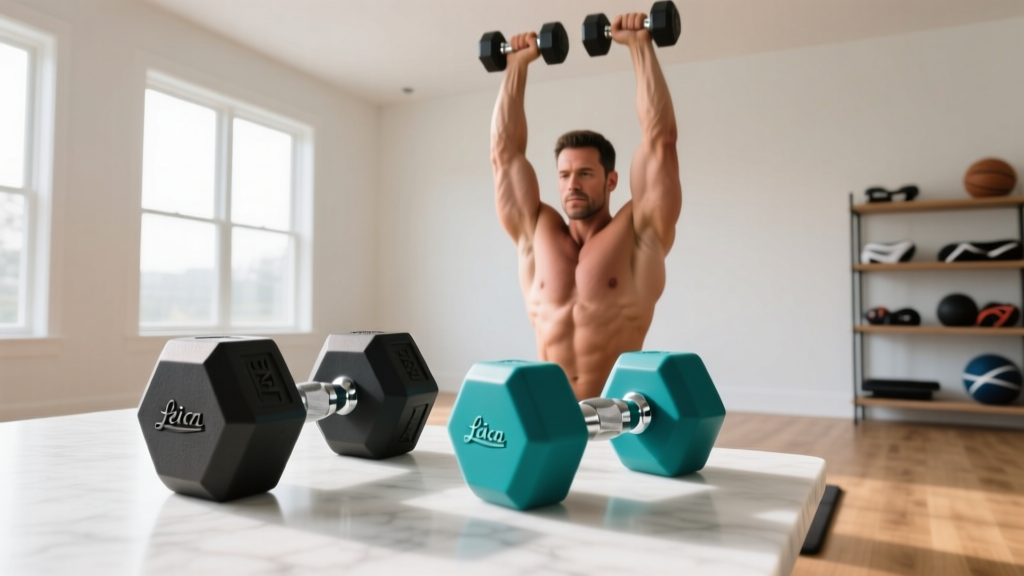
Rubber hex dumbbells feature angular, mold-injected heads. When you press two flat hexagonal sides together under a two-handed grip, the resulting profile is bulky and uneven. As you lower the weight behind your head to stretch the long head of the tricep, the sharp corners and thick rubber seams of hex dumbbells frequently collide with the forearms or wrists. This physical obstruction forces lifters to flare their elbows outward to create clearance, instantly destroying proper tricep extension dumbbell form and shifting dangerous shear stress onto the elbow joints.
Conversely, urethane dumbbells utilize a circular head profile. When gripped with two hands, the round heads nestle together seamlessly, creating a compact, uniform cylinder that glides past the forearms and head without obstruction, allowing for a deep, biomechanically safe stretch.
Handle Knurling and Grip Fatigue
Holding a 60-pound dumbbell overhead with an overlapping grip demands immense friction. Most budget rubber hex dumbbells (such as standard CAP Barbell models) feature cast-iron handles with shallow, inconsistent knurling that wears smooth within a year. Urethane sets from premium manufacturers like Rogue or REP Fitness feature precision-machined steel shafts with medium-depth knurling and a consistent 32mm to 34mm diameter. This specific shaft thickness is optimal for securing a two-handed grip without causing premature finger fatigue, a detail frequently highlighted in Garage Gym Reviews durability tests.
2026 Price-Per-Pound and Specification Matrix
To understand the true value proposition, we must look beyond the sticker price and examine the specifications that directly impact lifting mechanics and longevity.
| Model Tier | Material | Est. Price / lb (2026) | Handle Diameter | Head Geometry | Shore A Durometer |
|---|---|---|---|---|---|
| Entry-Level (e.g., CAP Barbell) | Recycled Rubber / Cast Iron | $1.60 - $1.90 | 35mm+ (Inconsistent) | Hexagonal | 65A - 70A (Soft) |
| Mid-Tier (e.g., REP Fitness) | Virgin Urethane / Steel | $3.80 - $4.20 | 32mm - 34mm (Contoured) | Round / 12-Sided | 85A - 90A (Dense) |
| Premium (e.g., Rogue Fitness) | Virgin Urethane / Steel | $4.80 - $5.50 | 34mm (Precision Knurl) | Round | 90A+ (Ultra-Dense) |
Long-Term Value: Degradation, Odor, and Failure Modes
A budget breakdown is incomplete without factoring in the lifespan and hidden costs of equipment replacement. The American Council on Exercise (ACE) emphasizes that a safe training environment requires equipment free from structural defects and environmental hazards. Here is how the two materials age over a 5-year timeline in a standard garage or basement gym.
The Rubber Hex Failure Modes
- Off-Gassing: Budget rubber is often manufactured from recycled tires and industrial scrap. In enclosed spaces, these dumbbells continuously off-gas volatile organic compounds (VOCs), creating a persistent, toxic odor that requires extensive ventilation to mitigate.
- UV and Ozone Degradation: If your gym receives direct sunlight, the rubber coating will dry out, crack, and flake within 24 to 36 months, leaving black residue on your hands and flooring.
- Core Pull-Out: The most catastrophic failure mode occurs when the adhesive or mechanical bond between the cast-iron head and the steel handle fails. After repeated drops, the heavy hex head can slide off the handle mid-set—a severe safety hazard.
The Urethane Advantage
Urethane is a synthetic elastomer that is entirely odorless, UV-resistant, and impervious to temperature fluctuations. While a set of urethane dumbbells represents a massive upfront capital expenditure, their structural integrity is virtually immortal in a home gym setting. The dense 90A Shore rating means they will not dent, warp, or absorb sweat, completely eliminating the secondary costs of cleaning and replacing degraded rubber sets.
"Investing in urethane for lighter isolation weights is not a luxury; it is a biomechanical necessity. The precision of the handle and the flush profile of the round heads directly protect the connective tissues in the elbows and wrists during high-tension, fixed-path movements."
The Hybrid Budget Strategy: Optimizing Your 2026 Rack
You do not need to choose exclusively between cheap rubber and expensive urethane. The smartest financial strategy for a comprehensive home gym is a Hybrid Tiered Approach. By categorizing your exercises by impact and grip requirements, you can achieve perfect ergonomics where it matters while saving thousands of dollars on heavy poundage.
- Buy Urethane for the 5 lb to 25 lb Range: This weight range is exclusively used for isolation movements where tricep extension dumbbell form, lateral raise mechanics, and skull crushers are performed. The ergonomic handles and round heads are non-negotiable here. Estimated Cost: $450 - $600.
- Buy Rubber Hex for the 30 lb to 100 lb Range: Heavy dumbbells are used for goblet squats, Romanian deadlifts, chest presses, and heavy rows. These movements rely on gross motor patterns where handle thickness and head geometry are less disruptive. Furthermore, heavy rubber hex dumbbells are frequently dropped on mats, a task they handle adequately despite their cosmetic flaws. Estimated Cost: $800 - $1,200.
The Final Verdict
If your budget strictly limits you to a single material, prioritize your joint health and buy urethane, even if it means purchasing fewer pairs. However, by deploying the hybrid strategy, you secure the precise tactile feedback and clearance required for flawless tricep extensions, while maintaining the brute-force utility of rubber hex dumbbells for heavy compound lifts. This targeted allocation ensures your 2026 equipment investment yields maximum biomechanical and financial returns.
More gear to consider
All reviews
Collar Clamp Types: Safety for Lower Back Dumbbell Exercises
Power Rack vs Squat Rack Setup: Incline Dumbbell Row Alternative

Power Rack vs Squat Stand: Exercises with Dumbbells for Arms

Olympic Barbell Guide: Knurling & Dumbbell Back Exercises Without Bench

Cast Iron vs Competition: Are Kettlebells Better Than Dumbbells?
