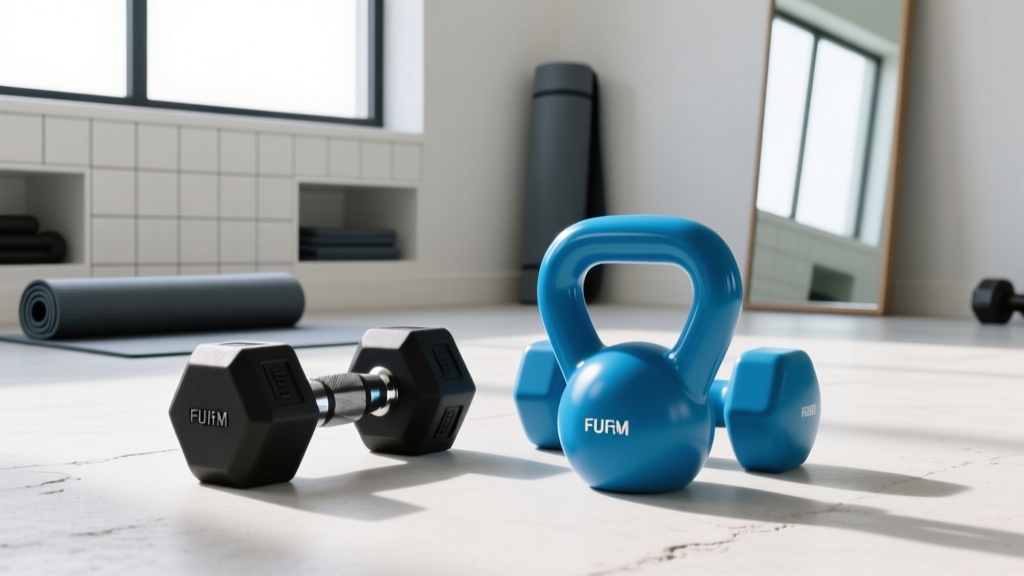
Rubber Hex vs Urethane: Best Gear for a Dumbbell Deltoid Workout
Compare rubber hex vs urethane dumbbells for your home gym. We break down costs, durability, and value for the ultimate dumbbell deltoid workout.

The Biomechanical Demand of a Dumbbell Deltoid Workout
When programming a comprehensive dumbbell deltoid workout, you quickly realize that shoulder training places unique demands on your equipment. Unlike leg days where you might only need a few heavy pairs of dumbbells for goblet squats or lunges, building boulder shoulders requires a massive spectrum of weight. You need feather-light 5 lb or 10 lb pairs for strict rear deltoid flyes, mid-range 15 lb to 25 lb pairs for high-rep lateral raises, and heavy 40 lb to 60 lb pairs for seated overhead presses.
This wide variance in load requirements forces home gym owners to purchase large, multi-pair dumbbell sets. Consequently, the choice between budget-friendly rubber hex dumbbells and premium urethane dumbbells becomes a major financial decision. As of early 2026, supply chain stabilizations have slightly cooled the premium dumbbell market, but the price gap remains significant. In this budget breakdown and value analysis, we will dissect which material truly offers the best return on investment for your shoulder hypertrophy goals.
Key Takeaway: The Micro-Loading Factor
According to Garage Gym Reviews' comprehensive dumbbell testing, the primary failure point for budget dumbbell sets isn't the material itself—it's the weight increment jumps. For a dumbbell deltoid workout, progressive overload on lateral raises requires 2.5 lb to 5 lb micro-jumps. Many budget rubber hex sets skip weights or jump in 10 lb increments after 25 lbs, stalling your shoulder growth.
Rubber Hex Dumbbells: The Budget Baseline
Rubber hex dumbbells, popularized by brands like CAP Barbell and Yes4All, are the undisputed champions of the entry-level home gym. The hexagonal head prevents rolling, which is excellent for floor-based movements like renegade rows that often accompany shoulder stability routines.
The Real-World Pricing (2026 Data)
Currently, rubber hex dumbbells average between $1.10 and $1.50 per pound. A standard 10-pair set (5 lbs to 50 lbs in 5 lb increments, totaling 550 lbs of iron) will cost you approximately $650 to $825. For a complete beginner or someone outfitting a garage gym on a strict budget, this is an incredibly accessible entry point.
Failure Modes and Edge Cases
- VOC Off-Gassing: The most notorious issue with budget rubber is the smell. Cheap manufacturing processes leave volatile organic compounds (VOCs) trapped in the rubber. If you plan to do your dumbbell deltoid workout in a spare bedroom or basement, the odor can be overwhelming and takes 3 to 6 weeks of heavy ventilation to dissipate.
- Durometer and Bounce: Budget rubber typically has a lower durometer (hardness) rating. When you finish a heavy set of push presses and drop the weights, they tend to bounce, which can damage flooring or roll unpredictably despite the hex shape.
- Handle Ergonomics: To cut costs, budget brands often use overly aggressive knurling or excessively thick handles (up to 38mm). During high-rep lateral raises, grip fatigue can become a limiting factor before your medial deltoids actually fail.
Urethane Dumbbells: The Premium Investment
Urethane is a high-density, industrial-grade polymer that has become the gold standard for commercial gyms and premium home setups. Brands like Rogue Fitness and Rep Fitness utilize urethane for its unparalleled durability and clean aesthetic.
The Real-World Pricing (2026 Data)
Urethane commands a premium, generally ranging from $2.60 to $3.80 per pound. That same 10-pair set (5 lbs to 50 lbs) will cost between $1,430 and $2,090. This represents a massive upfront capital expenditure compared to rubber hex.
Why Urethane Wins for Shoulder Training
- Zero Odor: Urethane is completely odorless right out of the box. You can execute your dumbbell deltoid workout in a climate-controlled apartment or bedroom without any chemical smell.
- Superior Knurling and Handle Diameters: Premium urethane sets feature meticulously machined steel handles. Rogue's urethane line, for instance, offers a 32mm to 35mm handle diameter with medium-depth knurling, ensuring your grip doesn't slip during sweaty overhead presses.
- High Durometer Rating: Urethane is incredibly dense (often 85A to 90A+ on the Shore hardness scale). It absorbs impact without bouncing, protecting your gym floor when you drop the weights after a grueling set of Arnold presses.
'Shoulder hypertrophy relies heavily on time under tension and strict form. If your dumbbell handles are too thick or poorly knurled, your forearms will give out during lateral raises long before your deltoids reach mechanical failure. Ergonomics matter just as much as the weight itself.' — Strength and Conditioning Equipment Analysis, BarBend
Head-to-Head Value Matrix
To visualize the budget breakdown, let's compare the two materials across the metrics that actually impact your daily training experience.
| Feature | Rubber Hex (Budget) | Urethane (Premium) | Advantage for Deltoid Workouts |
|---|---|---|---|
| Cost Per Pound | $1.10 - $1.50 | $2.60 - $3.80 | Rubber Hex (Upfront Savings) |
| 5-50lb Set Cost | ~$735 | ~$1,760 | Rubber Hex |
| Odor / VOCs | High (Requires weeks to air out) | None (Zero off-gassing) | Urethane |
| Drop Bounce | Moderate to High | Minimal (High Density) | Urethane |
| Handle Ergonomics | Variable (Often thick/harsh) | Excellent (32-35mm, precise knurl) | Urethane |
| UV / Temp Resistance | Poor (Cracks in cold/sun) | Excellent (Weather resistant) | Urethane (For Garage Gyms) |
| Weight Accuracy | +/- 5% variance | +/- 1% variance | Urethane |
The 5-Year Depreciation Analysis
Looking purely at the receipt, rubber hex wins. But fitness equipment is a long-term asset. Let's apply a 5-year depreciation and replacement framework to determine the true cost of ownership.
Scenario A: The Unheated Garage Gym
If you train in a garage that experiences freezing winters and humid summers, budget rubber is highly susceptible to environmental degradation. The rubber can become brittle, chip at the edges, and separate from the steel core. You may find yourself replacing a $735 set after 4 years. Annualized cost: ~$183/year.
Scenario B: The Climate-Controlled Spare Room
If you bring the weights indoors, the rubber won't crack, but the smell might force you to abandon the room, or the black marks left by cheap rubber on your flooring will ruin the aesthetic. Urethane, conversely, is virtually indestructible in a home environment. A $1,760 urethane set will easily last 20+ years with zero maintenance. Annualized cost over 5 years: ~$352/year, dropping to $88/year over 20 years.
Decision Framework: Which Should You Buy?
Your choice should be dictated by your training environment, budget, and grip strength.
Buy Rubber Hex If:
- Your total equipment budget is under $1,000.
- You are outfitting a detached garage or outdoor gym where cosmetic damage and UV cracking are acceptable risks.
- You are a beginner who hasn't yet established the baseline strength required to need micro-loaded 2.5 lb increments for lateral raises.
Buy Urethane If:
- You are training in a living space, apartment, or finished basement where chemical odors are unacceptable.
- You are an advanced lifter executing a strict dumbbell deltoid workout where grip fatigue from poor knurling limits your overhead press volume.
- You view your home gym as a 10-to-20-year investment and want commercial-grade aesthetics and drop-safety.
Frequently Asked Questions
Can I mix rubber hex and urethane dumbbells in the same rack?
Yes, but it's not recommended for aesthetic or organizational reasons. More importantly, the physical dimensions of the dumbbell heads differ. Urethane heads are generally more compact and perfectly uniform, while rubber hex heads are bulky. Mixing them can make your storage rack look chaotic and may cause balance issues on tiered dumbbell shelves.
Do I really need 2.5 lb increments for a dumbbell deltoid workout?
For heavy compound movements like the seated dumbbell shoulder press, 5 lb jumps (e.g., moving from 40 lbs to 45 lbs per hand) are perfectly fine. However, for isolation movements like lateral raises and rear delt flyes, a 10 lb total jump (5 lbs per hand) is often too massive a leap. Having 2.5 lb increments allows for smooth, continuous progressive overload without breaking down your form.
How do I get the smell out of new rubber hex dumbbells?
If you are committed to the budget route, wash the dumbbells with a mild dish soap and warm water solution, then dry them completely. Next, place them in a well-ventilated garage or outside in the shade (avoid direct UV sunlight, which degrades the rubber) for 14 to 21 days. Wiping them down with a 50/50 water and white vinegar solution can also help neutralize surface VOCs.
Final Verdict
Building a world-class physique requires the right tools. While rubber hex dumbbells provide an undeniable advantage in initial capital outlay, urethane dumbbells offer superior ergonomics, zero off-gassing, and lifetime durability. If your budget allows, investing in a high-quality urethane set will ensure that your grip never fails before your deltoids do, making every rep of your dumbbell deltoid workout count toward your ultimate physique goals.
More gear to consider
All reviews
Loadable Dumbbell Care & Your Seated Dumbbell Exercises PDF

Compact Gyms: Dumbbell Exercises for Buttocks & EZ vs Straight Bars
Heavy-Duty Storage & Racks for the Dumbbell Push Press Exercise
EZ Curl Bar vs Straight Bar: Beyond the Dumbbell Shrugs GIF

Arm Training with Dumbbells: Olympic vs Standard Plate Mistakes
