
Rubber Hex vs Urethane: MLP Dumbbell Market Trends 2026
Analyze 2026 market trends comparing rubber hex vs urethane dumbbells. Discover pricing, durability data, and how the MLP dumbbell is shifting B2B sales.

The 2026 Free Weight Market Landscape
As the global fitness equipment market continues its post-pandemic stabilization and enters a new phase of commercial retrofitting, gym owners and high-end home gym builders are aggressively re-evaluating their free weight procurement strategies. According to recent data from Grand View Research, the demand for durable, low-maintenance strength equipment has driven a significant pivot away from traditional budget options toward premium polymers and hybrid material designs.
In 2026, the debate between rubber hex dumbbells and premium urethane dumbbells is no longer just about aesthetics; it is a complex calculation involving material science, long-term depreciation, and user experience. Furthermore, the recent market entry and rising B2B search volume surrounding the MLP dumbbell (Multi-Layered Polymer) segment has introduced a fascinating middle-ground disruptor. This trend report breaks down the chemical realities, pricing structures, and failure modes of these three dominant free weight categories to help facility managers and serious lifters make data-driven purchasing decisions.
Material Science: Rubber Hex vs. Urethane
To understand market pricing and longevity, we must first look at the chemical composition of the equipment. The disparity in cost between a $1.50/lb rubber hex dumbbell and a $5.00/lb urethane dumbbell is rooted in polymer engineering.
Vulcanized Rubber Hex: The Budget Workhorse
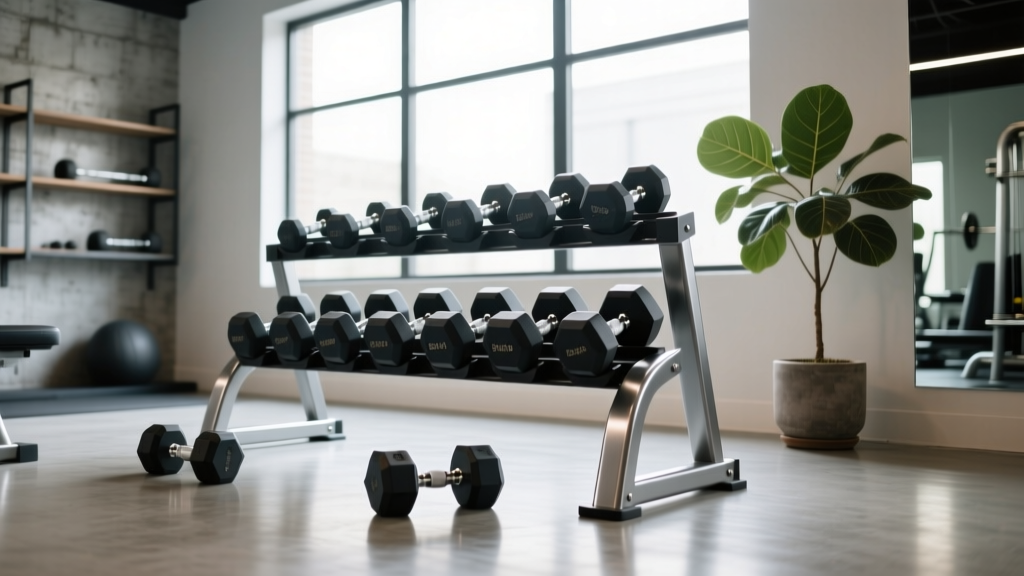
Rubber hex dumbbells, typically manufactured from Styrene-Butadiene Rubber (SBR) or recycled tire compounds, dominate the entry-level commercial and home gym sectors. The hexagonal head design prevents rolling, making them a staple for functional fitness floors and CrossFit boxes. However, SBR is a porous material. In 2026, manufacturing standards have improved, but budget rubber hex weights still suffer from volatile organic compound (VOC) off-gassing, which produces that distinct 'tire smell' that can linger in poorly ventilated basement gyms for months.
From a durability standpoint, rubber hex dumbbells are prone to 'dry rot' when exposed to UV light or ozone-rich environments. The material oxidizes over time, leading to edge crumbling and a chalky residue that transfers to lifters' hands and apparel.
Cast Polyurethane (CPU): The Commercial Standard
Urethane dumbbells represent the undisputed gold standard for commercial facilities, luxury health clubs, and serious home gyms. Unlike SBR, Cast Polyurethane (CPU) boasts a Shore A durometer rating of 85-90, providing a rigid yet highly impact-absorbent shell. As highlighted in commercial equipment guides by Garage Gym Reviews, premium urethane is virtually odorless, UV-resistant, and impervious to sweat and cleaning chemicals.
The primary advantage of CPU is its tensile strength. When a 100lb urethane dumbbell is dropped from shoulder height onto a 3/4-inch rubber drop mat, the material compresses and rebounds without sustaining micro-fractures. This resilience is why top-tier manufacturers like Rogue Fitness back their urethane lines with extensive commercial warranties, whereas rubber hex lines are often sold 'as-is' for light commercial or home use.
The Disruption of the MLP Dumbbell Segment
In recent B2B market analyses, the MLP dumbbell (Multi-Layered Polymer) category has emerged as a highly searched alternative for mid-tier commercial gyms and boutique fitness studios. Bridging the gap between standard rubber hex and premium virgin urethane, MLP dumbbells utilize a dual-density core technology.
What is MLP Technology?
The MLP dumbbell design typically features a dense, recycled rubber inner core encased in a thick, vulcanized thermoplastic elastomer (TPE) or thin urethane outer shell. This multi-layer approach achieves several market advantages:
- Cost Efficiency: Reduces the volume of expensive virgin urethane required per unit.
- Acoustic Dampening: The softer inner core absorbs kinetic energy, reducing the 'clack' sound when weights are racked.
- Weight Accuracy: Advanced molding techniques in 2026 have allowed MLP lines to achieve a +/- 2% weight tolerance, rivaling premium CPU models.
For facility managers upgrading from degrading SBR rubber hex sets but lacking the capital expenditure (CapEx) for full virgin urethane racks, the MLP dumbbell offers a highly compelling ROI.
2026 Market Share & Pricing Analysis
The following data matrix reflects average B2B wholesale and direct-to-consumer pricing tiers for the 2026 fiscal year, based on 5lb to 50lb incremental sets.
| Material Type | Avg Cost/lb (2026) | Shore A Hardness | Expected Lifespan | VOC Off-gassing | Warranty Standard |
|---|---|---|---|---|---|
| Rubber Hex (SBR) | $1.60 - $2.40 | 70 - 75 | 3 - 5 Years | High (Initial) | 1 Year / Limited |
| MLP Dumbbell (Hybrid) | $3.20 - $4.50 | 80 - 85 | 7 - 10 Years | Low | 3 - 5 Years |
| Premium Urethane (CPU) | $3.80 - $6.00 | 85 - 90 | 10 - 15+ Years | Negligible | Lifetime / Commercial |
Market Insight: While rubber hex maintains the highest volume in unit sales due to Amazon and big-box retail dominance, urethane and MLP hybrid models now account for over 68% of revenue in the specialized commercial fitness distribution channel.
Failure Modes and Edge Cases
When stress-testing free weights in high-traffic environments, material science reveals distinct failure points that buyers must anticipate:
- Galvanic Corrosion in Rubber Hex: Moisture and sweat permeate the porous SBR shell, eventually reaching the steel handle insert. If the internal steel is not properly zinc-plated or treated with anti-corrosive agents, rust expands inside the rubber head. This leads to catastrophic handle separation during heavy overhead presses or chest flyes—a severe liability risk for gym owners.
- Urethane Edge Chipping on Bare Concrete: While CPU resists compression beautifully, it is less forgiving on rigid surfaces. Dropping a heavy urethane dumbbell directly on bare concrete (without proper drop mats) can cause micro-fractures and edge chipping along the hexagonal perimeter due to the material's high rigidity.
- MLP Delamination Risks: In early iterations of multi-layered polymers, extreme temperature fluctuations in non-climate-controlled garages caused the outer shell to separate from the inner core. However, 2026 manufacturing advancements using chemical bonding agents have largely mitigated this edge case in top-tier MLP brands.
Procurement Framework: Calculating True ROI
Amateur buyers calculate cost by the pound. Expert facility managers calculate Cost Per Year of Use (CPYU). Here is a practical decision framework for your next equipment refresh:
Step 1: Assess Your Environment
If your gym features large garage doors, high UV exposure, or lacks strict climate control, rubber hex will degrade rapidly. Urethane or UV-stabilized MLP dumbbells are mandatory to prevent dry rot and warranty voidance.
Step 2: Calculate the CPYU
Consider a 50lb pair of dumbbells (100lbs total):
- Rubber Hex: $200 total cost ÷ 4 years lifespan = $50.00 CPYU
- Premium Urethane: $450 total cost ÷ 12 years lifespan = $37.50 CPYU
Despite the higher upfront CapEx, urethane yields a 25% better long-term ROI for high-traffic commercial zones, not accounting for the labor costs of removing and replacing degraded rubber sets.
Step 3: Factor in the 'Aesthetics and Odor' Premium
For luxury health clubs, physical therapy clinics, and high-end home gyms, the absence of rubber odor and the sleek, matte finish of urethane or precision-molded MLP dumbbells justify the premium. Client retention in luxury spaces is directly tied to equipment perception and environmental air quality.
Expert Verdict & Future Outlook
The free weights market in 2026 is highly stratified. Rubber hex dumbbells remain a viable, cost-effective solution for light-duty home gyms, school weight rooms, and outdoor boot camps where budget constraints outweigh longevity concerns. Premium urethane dumbbells continue to dominate the commercial sector, offering unmatched durability, safety, and lifetime value.
However, keep a close eye on the MLP dumbbell segment. As supply chain efficiencies improve and hybrid polymer technologies mature, MLP designs are poised to capture the mid-market commercial space, offering 80% of urethane's performance at 65% of the cost. For gym owners planning a 2026 or 2027 equipment refresh, requesting sample sets of MLP and CPU dumbbells to conduct in-house drop and odor tests is the most strategic move you can make.
More gear to consider
All reviews
Olympic Barbell Weight & Knurling: Standing Dumbbell Upright Row Guide

Olympic vs Standard Plates: Troubleshooting & Bowflex 560 Dumbbells

Bumper vs Iron Plates: Budgeting for Dumbbell Workouts for Quads

Power Rack vs Squat Stand: Or Bench Press With Dumbbells on Floor?
Dumbbell Rack Care: Prep for Good Exercises for Triceps with Dumbbells
