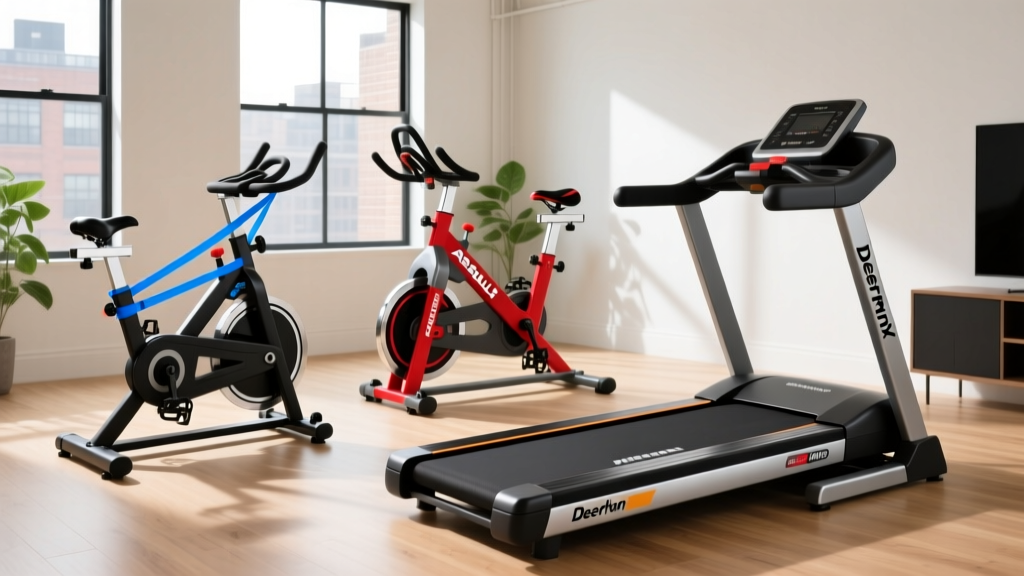
Rowing Machine Guide: Technique vs ProForm Carbon T7 Treadmill
Master rowing machine technique and buying tips. We compare top rowers against the ProForm Carbon T7 treadmill to find your ideal 2026 home cardio setup.

The 2026 Home Cardio Dilemma: Full-Body Rowing vs. Incline Walking
Outfitting a home gym in 2026 requires a ruthless evaluation of space, budget, and biomechanics. For many fitness enthusiasts, the ultimate decision comes down to a head-to-head matchup between a dedicated rowing ergometer and a compact, incline-capable walking/jogging machine. On one side, we have the rowing machine—a full-body powerhouse that recruits 86% of your muscle mass per stroke. On the other side, the highly popular ProForm Carbon T7 treadmill, a favorite for Zone 2 incline walking and accessible daily cardio.
This comprehensive guide will break down exactly what to look for when buying a rowing machine, detail the precise biomechanics of proper rowing technique, and objectively compare the ergometer experience against the ProForm Carbon T7 treadmill to help you decide which machine earns the permanent floor space in your home.
Head-to-Head Specs: Concept2 RowErg vs. ProForm Carbon T7 Treadmill
Before diving into technique, we must look at the raw data. Below is a direct comparison between the gold-standard Concept2 RowErg and the budget-friendly ProForm Carbon T7 treadmill.
| Feature | Concept2 RowErg (Standard Legs) | ProForm Carbon T7 Treadmill |
|---|---|---|
| Current Retail Price | $990.00 | $599.00 - $699.00 |
| Footprint (In Use) | 95' L x 24' W | 68.3' L x 28' W |
| Storage Profile | Separates into two pieces; stands vertically | Folds vertically via hydraulic assist |
| Max User Capacity | 500 lbs | 300 lbs |
| Primary Muscle Focus | Full Body (Legs, Core, Back, Arms) | Lower Body (Calves, Quads, Glutes) |
| Joint Impact | Zero-impact (seated, fluid motion) | Low-to-moderate impact (depending on speed) |
Rowing Machine Buying Guide: What to Look for in 2026
If you decide that the full-body engagement of a rower is the right path for your fitness journey, do not blindly purchase the first machine on sale. The market is flooded with sub-par magnetic rowers that fail to replicate the true ergometer experience. Here is your technical buying framework.
1. Decoding Resistance Profiles
- Air Resistance: The gold standard for serious athletes. As you pull harder, the flywheel displaces more air, creating infinite, variable resistance. It is loud, but it perfectly mimics the feel of a shell on water.
- Water Resistance: Utilizes a tank of water and an impeller. It provides a highly aesthetic 'swoosh' sound and a smooth catch, but requires maintenance (purification tablets) and is exceptionally heavy to move.
- Magnetic Resistance: Uses electromagnets to brake a metal flywheel. It is virtually silent and great for apartment living, but it lacks the dynamic 'live' feel of air or water. The resistance curve is fixed, meaning it does not automatically scale with your effort.
2. The Secret Metric: Drag Factor
Novice rowers often set the damper lever to 10, assuming higher is better. This is a critical error. The damper simply controls air volume. What you actually need to monitor is the Drag Factor. According to elite coaching standards, a drag factor between 110 and 130 (usually a damper setting of 3 to 5) is optimal for cardiovascular endurance and power transfer. Setting it to 10 deadens the stroke and places unnecessary shear force on the lumbar spine.
3. Rail Design and Monitor Telemetry
Look for a stainless steel or anodized aluminum monorail. Dual-rail systems often collect dust and cause the seat carriage to stutter mid-stroke. Furthermore, ensure the monitor tracks Split/500m (your pace) and Watts (your power output). Tracking calories alone is highly inaccurate across different machine brands.
Mastering the Row: Step-by-Step Technique Breakdown
A rowing machine is only as effective as the technique driving it. Poor form leads to lower back pain and diminished caloric output. According to the American Council on Exercise (ACE), proper rowing biomechanics require a specific kinetic sequencing to protect the spine and maximize power.
The 60-30-10 Power Rule:A common misconception is that rowing is an upper-body exercise. In reality, a properly executed stroke derives 60% of its power from the legs, 30% from the core hinge, and only 10% from the arms. If your biceps are burning before your quads, your sequencing is broken.
The Four Phases of the Stroke
- The Catch: Shins must be perfectly vertical. Do not over-compress (letting knees travel past the toes), as this forces the pelvis to tuck and rounds the lumbar spine. Arms are straight, lats are engaged, and shoulders are relaxed.
- The Drive: Initiate the movement by pushing the footplate away. The arms remain completely straight until the handle passes the knees. Once the legs are nearly extended, the core swings open to an 11 o'clock position, followed finally by the arms pulling the handle to the lower sternum.
- The Finish: Legs are fully extended (without hyperextending the knees), torso is slightly leaned back, and the handle rests just below the pecs. Elbows are drawn past the torso.
- The Recovery: The exact reverse of the drive. Arms extend first, torso hinges forward past 12 o'clock, and only then do the knees bend to slide back to the catch. The recovery should take twice as long as the drive (a 2:1 ratio).
'Shooting the slide'—where the legs push but the handle doesn't move because the core and arms are disconnected—is the number one cause of power leakage and lower back strain in amateur rowers. Focus on keeping the arms acting as rigid straps during the initial leg drive.' - Biomechanics Coaching Standard
When to Choose the ProForm Carbon T7 Treadmill Instead
While the rowing machine offers unmatched full-body conditioning, it is not the universal solution for every home gym. This is where the ProForm Carbon T7 treadmill presents a highly compelling alternative, particularly for specific demographics and training modalities.
Biomechanical Limitations and Spinal Health
Rowing requires a deep hip hinge and significant hamstring flexibility. If you suffer from herniated discs, sciatica, or chronic lumbar tightness, the repetitive flexion and extension of the 'Catch' and 'Recovery' phases can exacerbate your condition. The ProForm Carbon T7 treadmill allows for an upright, neutral-spine posture, making it vastly superior for users with lower back vulnerabilities.
The Zone 2 Incline Walking Advantage
In 2026, Zone 2 cardio (training at 60-70% of your max heart rate) is heavily prioritized for mitochondrial density and longevity. The ProForm Carbon T7 treadmill features a 0-10% motorized incline and a top speed of 10 mph. By setting the incline to 8-10% and walking at 3.0 to 3.5 mph, users can easily achieve Zone 2 heart rate targets without the joint pounding of running or the muscular fatigue of rowing. This makes it an ideal 'active recovery' machine that can be used daily without frying the central nervous system.
Footprint and Motor Considerations
The Carbon T7 utilizes a 2.6 CHP (Continuous Horsepower) motor. While this is sufficient for walking, hiking simulations, and light jogging, it is not designed for heavy, sustained sprinting. Furthermore, the tread belt measures 14 inches wide by 55 inches long. This is 5 inches shorter than commercial gym standards. If you are over 6'0' and plan on running at top speed, you will feel constrained. However, for the vast majority of users focusing on incline walking and casual jogging, the footprint and belt size are perfectly optimized for smaller spare bedrooms and apartments.
Regarding caloric expenditure, Harvard Health Publishing notes that vigorous rowing can burn upwards of 372 calories in 30 minutes for a 155-pound individual, while general walking burns significantly less. However, the Mayo Clinic emphasizes that the 'best' cardio machine is ultimately the one that aligns with your physical limitations and the one you will consistently use without dread.
Final Verdict: Matching the Machine to Your Goals
The head-to-head battle between a rower and the ProForm Carbon T7 treadmill is not about which machine is objectively superior, but which is superior for you.
- Buy a Rowing Machine (Air/Magnetic) if: You want maximum caloric burn per minute, need to build posterior chain strength, have limited vertical storage space, and possess the mobility to safely execute the hip hinge.
- Buy the ProForm Carbon T7 Treadmill if: Your primary goal is Zone 2 incline walking, you have lower back or wrist issues that preclude rowing, you prefer consuming media/iFIT programming while exercising, and you want a more budget-friendly entry point into home cardio.
By understanding the exact drag factors, motor capabilities, and biomechanical demands of both machines, you can confidently invest in the equipment that will drive your fitness forward in 2026 and beyond.
More gear to consider
All reviews
Elliptical vs Treadmill: Budgeting a Treadmill Fitness Program
Using Incline on Treadmill to Lose Weight: Curved vs Motorized

Elliptical vs Treadmill Maintenance & Sole F63 Treadmill Sale Guide
WalkingPad A1 Pro Foldable Walking Treadmill Review & Beginner Setup

Elliptical vs Treadmill Care: Assault Fitness Curved Treadmill Tips