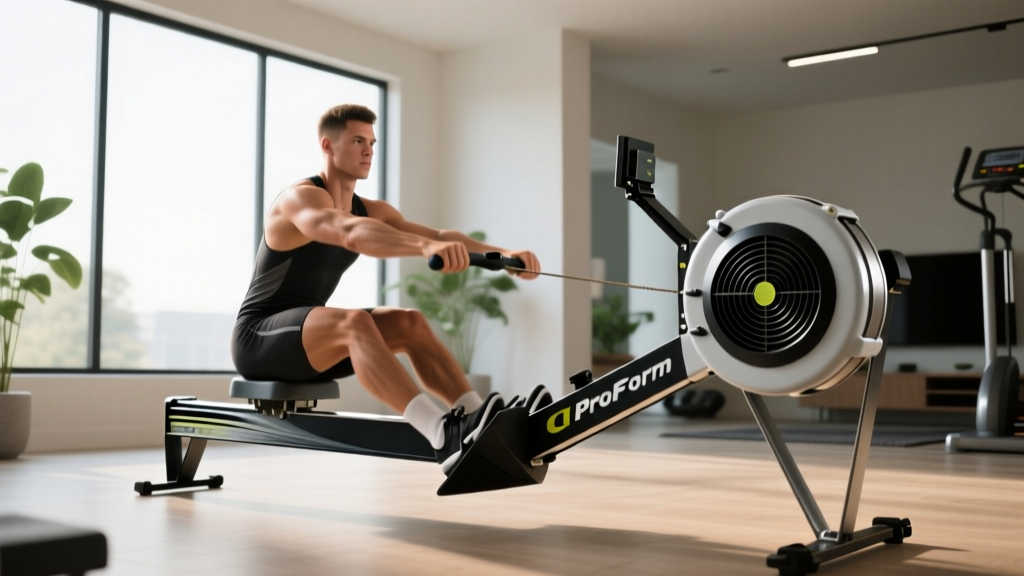
Rowing Machine Guide: Setup vs NordicTrack X22i Incline Treadmill
Master rowing machine buying, technique, and setup. We compare rower installation to the NordicTrack X22i incline treadmill to optimize your home gym.

Building a home cardio gym in 2026 requires balancing spatial constraints, electrical limitations, and biomechanical efficiency. While high-end treadmills dominate the luxury fitness market, the rowing machine remains the undisputed king of full-body, low-impact cardiovascular conditioning. However, choosing the right equipment goes far beyond the price tag; it requires a rigorous understanding of installation logistics and proper movement mechanics.
In this comprehensive guide, we will break down the rowing machine buying landscape, detail a complete setup and installation walkthrough, and master the four-phase rowing stroke. To provide real-world context on home gym spatial planning, we will directly compare the straightforward installation of a premium rower against the notoriously complex structural and electrical requirements of the NordicTrack X22i incline treadmill.
The 2026 Rowing Machine Buying Guide: Resistance Profiles
When shopping for a rower, the resistance mechanism dictates the machine's feel, noise level, and maintenance requirements. Unlike stationary bikes that rely on heavy flywheels, rowers simulate water drag or magnetic tension. Here is how the top 2026 models break down by resistance type.
| Resistance Type | Top 2026 Model | Price Range | Pros & Cons | Best For |
|---|---|---|---|---|
| Air | Concept2 RowErg | $1,100 - $1,300 | Dynamic drag scales with effort; loud; requires chain oiling. | CrossFit, competitive athletes, data purists. |
| Magnetic | Hydrow | $2,495 - $2,695 | Whisper-quiet; sleek design; requires Wi-Fi and subscription. | Tech-forward users, apartment dwellers. |
| Water | WaterRower Natural | $1,600 - $1,800 | Authentic sound/feel; beautiful wood frame; bulky footprint. | Aesthetics, sensory feedback lovers. |
Expert Buying Tip: Do not max out the damper setting on air rowers. According to Concept2, setting the damper between 3 and 5 simulates the drag factor of a sleek racing shell on water (roughly 110-130 drag factor). Setting it to 10 is akin to rowing a heavy wooden rowboat and will prematurely fatigue your lower back before your cardiovascular system is fully taxed.
Installation Walkthrough: Rower vs. NordicTrack X22i Incline Treadmill
The 'Complete Setup and Installation' phase is where many home gym owners encounter severe buyer's remorse. To illustrate the spatial and electrical realities of modern cardio equipment, we are comparing the unboxing and setup of a standard premium rower against the behemoth NordicTrack X22i incline treadmill.
⚠️ Structural Warning: The NordicTrack X22i Incline TreadmillThe X22i features a massive -6% to 40% incline range. When elevated to a 40% grade, the front deck rises over 2 feet. If you are a 6-foot-tall user, you need a minimum ceiling clearance of 10 feet 4 inches just to avoid head strikes. Furthermore, the X22i weighs roughly 340 lbs out of the box and requires a dedicated 15-amp electrical circuit to prevent tripping breakers during high-incline motor surges.
Step-by-Step Rower Setup (The 20-Minute Reality)
Unlike the 3-hour, two-person assembly required for the X22i, setting up a rower is a solo, low-stress endeavor.
- Unboxing & Base Placement: Cut the zip ties and slide the main rail out of the box. For foldable models like the Concept2, attach the front legs using the provided 5/16-inch hex bolts. Torque to roughly 20 Nm.
- Leveling the Rail: Use a carpenter's level on the main steel or aluminum track. Adjust the rear footpads until the bubble is perfectly centered. An unlevel track causes the seat carriage to drift forward during the recovery phase, ruining your stroke rhythm.
- Footstrap Calibration: Loosen the footplate screws. Adjust the plate height so the strap crosses directly over the ball of your foot (the metatarsophalangeal joint), not your midfoot or toes.
- Monitor & Telemetry Pairing: Insert fresh D-cell batteries or plug in the adapter. Pair your Bluetooth chest strap (e.g., Polar H10) to the monitor for accurate heart rate zone tracking.
Installation Comparison Matrix
| Installation Metric | Premium Rower (e.g., Concept2) | NordicTrack X22i Incline Treadmill |
|---|---|---|
| Assembly Time | 15 - 25 Minutes | 2.5 - 4 Hours |
| Required Personnel | 1 Person | 2-3 People (or Pro Assembly) |
| Electrical Needs | Standard 120V (or Batteries) | Dedicated 15-Amp Isolated Circuit |
| Ceiling Clearance | Standard 8 ft (Seat is low to ground) | 10 ft 4 in+ (Due to 40% max incline) |
| Floor Reinforcement | None required (Distribute ~55 lbs) | Recommended (Concentrated 340+ lbs) |
Rowing Technique: The 4-Phase Stroke Sequence
Buying the right machine is only half the battle. Poor rowing technique is a primary cause of lumbar strain. The American Heart Association recommends 150 minutes of moderate-intensity aerobic activity per week, and rowing perfectly fulfills this requirement—if executed with proper biomechanics.
The rowing stroke is not a pull; it is a push. Power generation should follow a strict 60-30-10 ratio: 60% legs, 30% core hinge, 10% arms.
1. The Catch (Starting Position)
- Shins vertical (do not compress past 90 degrees, or you will lift your heels and strain the Achilles).
- Arms fully extended, shoulders relaxed and down.
- Torso hinged forward at roughly 11 o'clock.
2. The Drive (Power Phase)
- Legs First: Push explosively through the mid-foot. The arms and back remain locked in the 'Catch' position until the legs are nearly fully extended.
- Core Hinge: Once the knees are down, swing the torso from 11 o'clock to 1 o'clock.
- Arm Pull: Finally, draw the handle to your lower ribs (just below the sternum), keeping elbows tucked past the torso.
3. The Finish
- Legs fully extended (soft knees, never locked out).
- Torso leaned back slightly (1 o'clock).
- Handle resting lightly against the lower ribs, wrists flat.
4. The Recovery (The Reset)
The recovery must take twice as long as the drive (a 1:2 stroke ratio). Extend the arms first, hinge the torso forward past the knees, and only then allow the knees to bend as you slide back to the Catch. Common Mistake: 'Shooting the slide'—where the hips move backward but the handle doesn't, placing immense shear force on the L4/L5 lumbar vertebrae.
'The ergometer does not care how hard you pull with your arms; it measures the wattage generated by your leg drive. If your heart rate is spiking but your split time isn't dropping, you are likely breaking your kinetic chain by pulling with your biceps before your glutes have fully extended.' — Biomechanics Coaching Adage
Maintenance and Longevity: Rower vs. Treadmill
Maintaining a rowing machine is vastly simpler than maintaining a motorized incline treadmill. The NordicTrack X22i requires regular silicone belt lubrication, deck alignment checks, and incline motor calibration. If the X22i's incline gear strips under heavy load, the repair cost often exceeds $400.
Conversely, maintaining an air or water rower requires minimal intervention:
- Air Rowers: Wipe the stainless steel rail with a glass cleaner weekly to remove seat roller dust. Apply a teaspoon of purified mineral oil to the roller chain every 50 hours of use. Vacuum the flywheel cage bi-annually to prevent dust buildup from altering the drag factor.
- Water Rowers: Add a water purification tablet (usually included) every 6 months to prevent algae growth in the polycarbonate tank. Never use bleach, which will degrade the rubber seals.
Final Verdict: Space, Setup, and Sweat
If you have a dedicated 10x15 foot room with reinforced flooring, 10-foot ceilings, and a dedicated electrical circuit, the NordicTrack X22i incline treadmill offers an unparalleled, immersive hiking and running experience. However, for 90% of home gym owners, the spatial and electrical prerequisites make it a logistical nightmare.
The rowing machine offers a superior, full-body cardiovascular stimulus with a fraction of the installation footprint and zero structural modifications required. By mastering the 4-phase stroke and selecting the correct resistance profile for your living space, you secure a lifelong, joint-friendly cardio solution that fits seamlessly into any home environment.
More gear to consider
All reviews
The Complete Treadmill Guide: Weekly Nutrition & Training Plan
Treadmill vs Bike Machine or Rower? Beginner Rowing Guide

Is an Exercise Bike Better Than a Treadmill? A Feature-by-Feature Breakdown
Best Folding Treadmill for Small Spaces: 2026 Treadmill Band Review

Does a Treadmill Burn Fat? Walking Pad vs Treadmill Setup Guide