
Air Bike vs Assault Bike Care: Longevity & Treadmill MET Calculator
Compare Air Bike vs Assault Bike maintenance for longevity. Learn how to use a treadmill MET calculator to benchmark intensity and prevent wear.

The Cross-Training Dilemma: Benchmarking Air Bikes with a Treadmill MET Calculator
Fan bikes—colloquially known as air bikes—have become the undisputed kings of high-intensity interval training (HIIT) in home and commercial gyms. However, unlike treadmills that offer standardized speed and incline metrics, air bike consoles are notorious for proprietary, often inflated, calorie counts. To program accurate cross-training zones and track mechanical wear, sports scientists and serious garage gym owners frequently rely on a treadmill MET calculator.
By cross-referencing your heart rate, weight, and perceived exertion against established treadmill MET (Metabolic Equivalent of Task) values, you can determine your true metabolic output. According to the Compendium of Physical Activities, vigorous stationary cycling can range from 7.0 to 14.0 METs. This standardized MET data is crucial for equipment maintenance: a user consistently pushing 12+ METs (equivalent to a grueling 7.5 mph treadmill run on a 5% incline) generates significantly more drivetrain heat, belt friction, and crank stress than a casual 4-MET user. Understanding your true MET output allows you to customize your maintenance schedule, ensuring your machine survives the brutal forces of all-out sprint intervals.
Air Bike vs. Assault Bike: 2026 Hardware & Drive System Comparison
The days of noisy, grease-heavy chain drives are largely behind us. In 2026, the premium air bike market is dominated by Poly-V belt drive systems, which offer a smoother ride but require specific tensioning protocols. Below is a comparison of the top three models on the market, focusing on how their unique engineering dictates their longevity and care requirements.
| Model (2026) | Drive System | Weight | Retail Price | Primary Maintenance Quirk |
|---|---|---|---|---|
| Rogue Echo Bike | Poly-V Belt | 72 lbs | $1,195 | Static buildup in the fan cage requires frequent dusting to maintain aerodynamic drag. |
| AssaultBike ProX | Poly-V Belt | 65 lbs | $999 | Crank arm bolts are prone to backing out under high-torque sprints without threadlocker. |
| Schwinn Airdyne AD7 | Poly-V Belt | 65 lbs | $1,199 | Bottom bracket cartridge bearings wear faster if lateral crank play is ignored. |
While the Rogue Echo Bike is widely considered the gold standard for durability due to its heavier frame and robust bottom bracket, the AssaultBike ProX offers a more aggressive price point and a slightly lighter footprint, making it ideal for garage gyms where space and budget are at a premium. However, the lighter frame means vibration dampening is slightly reduced, placing a higher premium on regular bolt-tightening routines.
High-Intensity Wear: How MET Output Dictates Maintenance Schedules
⚠️ The 500-Watt Wear Threshold: If your treadmill MET calculator data indicates you regularly sustain intervals above 10 METs (roughly 250+ watts on a fan bike), you must halve the manufacturer's recommended maintenance intervals. High-torque sprinting accelerates Poly-V belt stretching and crank arm fatigue exponentially compared to steady-state Zone 2 riding.
Most manufacturer manuals suggest a generic 'check every 6 months' approach. For athletes using these machines for CrossFit-style conditioning or Tabata protocols, this is a recipe for catastrophic mid-workout failure. Here is how to adjust your care schedule based on your training intensity:
- Low MET Users (Under 6 METs / Steady State): Inspect crank bolts and belt tension every 90 days. Wipe down the fan cage monthly.
- High MET Users (10+ METs / HIIT & Sprints): Inspect crank bolts and apply fresh threadlocker every 30 days. Check belt tension and bottom bracket play bi-weekly.
Step-by-Step Longevity Protocols for Fan Bikes
Proper maintenance goes beyond wiping down the sweat. The extreme lateral and rotational forces generated during an all-out air bike sprint can loosen hardware and degrade components if not managed correctly.
1. Crank Arm and Bottom Bracket Care (The #1 Failure Point)
The most common point of failure on any air bike is the crank arm working loose from the bottom bracket spindle. This starts as a subtle 'click' during the downstroke and quickly escalates into stripped spindle threads—a $150+ repair.
- Remove the Dust Cap: Use a 16mm socket or appropriate crank puller tool to remove the outer dust cap.
- Torque the Crank Bolt: Using an 8mm Allen key, tighten the crank bolt to exactly 35-40 Nm (Newton-meters). Do not overtighten, as this can crack the aluminum crank arm.
- Apply Threadlocker: If the bolt continues to back out, remove it entirely, clean the threads with isopropyl alcohol, and apply a single drop of Blue Loctite 242 (medium strength). Never use Red Loctite, as it will make future removal nearly impossible without heat.
2. Belt Tension and Fan Cage Alignment
The Poly-V belt transfers power from the pedals to the fan. Over time, the ribs of the belt can wear, or the tensioner can slip. A loose belt will slip during high-MET sprints, causing a sudden loss of resistance and a loud squealing noise.
- The Deflection Test: Press down on the belt at the midpoint between the crank pulley and the fan pulley. You should see exactly 10mm to 15mm (about 1/2 inch) of deflection.
- Adjusting Tension: Loosen the motor mount or idler pulley bolts (usually 5mm or 6mm hex), adjust the tensioner until the deflection is correct, and retighten to 15 Nm.
- Inspect for Debris: Use a soft-bristled brush and a vacuum to clean the fan cage. Dust buildup on the fan blades alters the aerodynamic profile, effectively reducing the drag curve and forcing you to pedal faster to achieve the same MET output.
Expert Troubleshooting: Squeaks, Wobbles, and Console Drift
Even with meticulous care, heavy-use air bikes develop quirks. Here is how to diagnose and fix the most common edge cases without calling a technician.
🔧 Diagnostic Matrix
Symptom: Rhythmic squeaking that speeds up with cadence.
Culprit: Dry pedal bearings or loose pedal threads.
Fix: Remove pedals (remember the left pedal is reverse-threaded). Clean threads, apply marine-grade grease, and reinstall. If the squeak persists, replace the pedal cartridge bearings.
Symptom: Console calories drop to zero mid-sprint.
Culprit: Magnet sensor misalignment.
Fix: Locate the RPM sensor near the fan wheel. Ensure the gap between the magnet on the fan and the sensor is exactly 2-3mm. Vibration often knocks this bracket out of alignment.
Symptom: Lateral wobble in the pedals (side-to-side play).
Culprit: Worn bottom bracket cartridge bearings.
Fix: This requires a bottom bracket removal tool. Unscrew the cartridge (drive side is usually reverse-threaded), clean the shell, and install a replacement sealed cartridge bearing (typically a standard 68mm or 73mm English thread shell, depending on the exact model year).
Frequently Asked Questions (FAQ)
Q: Can I use a standard treadmill MET calculator for an air bike if I don't know my wattage?
A: Yes. While wattage is the most precise metric, you can use a treadmill MET calculator by inputting your body weight, the duration of the workout, and your average heart rate. The calculator will estimate your metabolic cost, which you can then use to categorize your workout intensity (Light, Moderate, Vigorous) and adjust your bike's maintenance schedule accordingly.
Q: Do I need to lubricate the Poly-V belt on my AssaultBike or Rogue Echo?
A: Absolutely not. Poly-V belts are designed to run dry. Applying silicone spray, WD-40, or chain lube will attract dust, create a grinding paste, and cause the belt to slip and degrade prematurely. Keep the belt completely dry and free of debris.
Q: How often should I replace the belt on a fan bike used for daily HIIT?
A: For a user generating high MET outputs daily, expect to replace the Poly-V belt every 18 to 24 months. Replacement belts typically cost between $30 and $50 directly from the manufacturer and can be swapped in under 20 minutes with basic hex keys.
Final Thoughts on Equipment Longevity
Treating your air bike like a precision piece of athletic equipment rather than a static garage fixture is the key to a lifetime of use. By leveraging tools like a treadmill MET calculator to truly understand the mechanical and metabolic loads you are placing on the machine, you can transition from reactive repairs to proactive longevity management. Whether you are running intervals on the Rogue Echo or grinding out AssaultBike ProX sprints, respecting the torque specs, maintaining the belt drive, and keeping the fan cage clean will ensure your machine is always ready for your next personal record.
More gear to consider
All reviews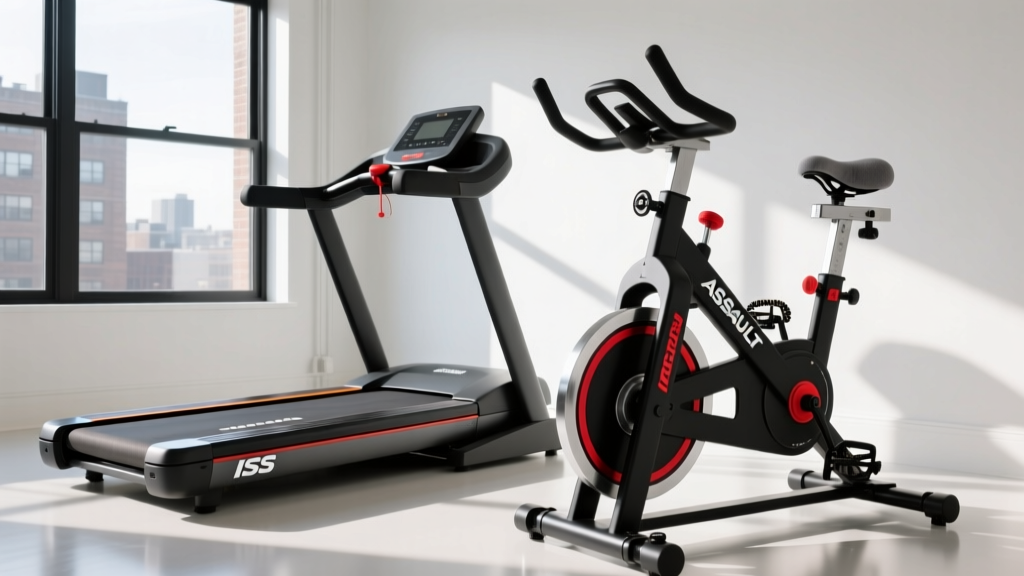
ISS Treadmill vs Air Bike: Assault Maintenance Guide

Arc Treadmill and Portable Cardio Maintenance Guide
Beyond Treadmill Memes: Stair Climber Home Guide

Stair Climber Setup Guide: Superfit Folding Treadmill Alternative

Home Gym Layout: NordicTrack T Series Treadmill & Bikes
