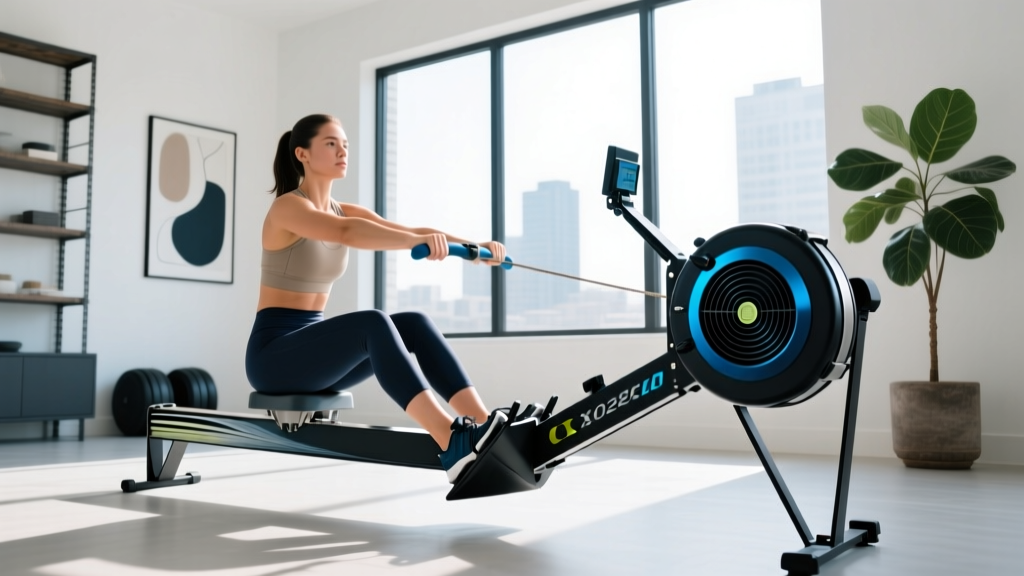
2026 Rowing Machine Buying Guide: Beat the 45-Minute Treadmill
Discover our 2026 rowing machine buying guide. Learn technique, compare top models, and see why it beats a standard 45-minute treadmill workout.

The Biomechanical Advantage: Why Swap the Belt for the Chain?
While a standard treadmill workout 45 minutes in duration is a staple of commercial gyms, it primarily targets the lower body and subjects your joints to repetitive impact. The indoor rowing machine, or ergometer, offers a radically different physiological stimulus. According to the Mayo Clinic, engaging multiple large muscle groups simultaneously yields superior cardiovascular adaptations and caloric expenditure compared to isolated lower-body cardio.
By The Numbers: 45-Minute Caloric Expenditure (155 lb Individual)- Moderate Treadmill Walking (3.5 mph): ~240 calories
- Vigorous Treadmill Running (6.0 mph): ~420 calories
- Moderate Rowing (150W output): ~380 calories
- Vigorous Rowing (200W+ output): ~510 calories
Note: Rowing engages 86% of the body's musculature, including the lats, rhomboids, core, glutes, and quadriceps, resulting in a higher metabolic afterburn (EPOC) than steady-state treadmill walking.
Resistance Types Decoded: Finding Your Ideal Drive
Before dropping $1,000+ on a machine, you must understand the resistance mechanisms available in 2026. The feel, noise level, and maintenance requirements vary drastically across the four main categories.
| Resistance Type | Feel & Noise | Maintenance | Best For |
|---|---|---|---|
| Air | Infinite, dynamic resistance. Loud 'whoosh' sound. | Low (occasional chain oiling) | Competitive rowers, HIIT, CrossFit |
| Magnetic | Smooth, consistent drag. Nearly silent. | Very Low | Apartment dwellers, guided classes |
| Water | Authentic 'catch' feel. Soothing water swoosh. | Moderate (water purification tabs) | Aesthetics, traditionalists |
| Hydraulic | Choppy, limited range of motion. Quiet. | High (pistons degrade over time) | Extreme budget/space constraints |
2026 Top-Tier Ergometers: Market Leaders Compared
The home fitness market has matured, separating gimmicky smart-rowers from durable, biomechanically sound machines. Here are the top contenders for your home gym this year.
1. Concept2 RowErg (The Gold Standard)
- Price: ~$1,100
- Resistance: Air with adjustable damper (1-10)
- Footprint: 96" L x 24" W (Separates into two pieces for storage)
- The Verdict: The undisputed king of ergometers. The PM5 monitor is the global standard for accuracy, allowing you to log verified meters on the Concept2 global leaderboard. It is virtually indestructible but lacks an integrated HD touchscreen.
2. Hydrow Wave (The Immersive Experience)
- Price: ~$1,495
- Resistance: Electromagnetic (Computer-controlled magnetic)
- Footprint: 80" L x 22" W (Stores vertically)
- The Verdict: Utilizes a patented electromagnetic drag system that perfectly simulates the feel of water without the maintenance. The 16-inch touchscreen offers live, on-the-water coaching. Ideal for users who need external motivation and prefer quiet operation.
3. Echelon Row (The Budget Contender)
- Price: ~$599
- Resistance: Magnetic (32 levels)
- Footprint: 84" L x 22" W (Folds vertically)
- The Verdict: A solid entry-level magnetic rower. The resistance curve isn't as dynamic as air, and the build quality feels lighter, but it offers excellent value for casual fitness enthusiasts utilizing the Echelon Fit app.
Mastering the Erg: The 4-Phase Stroke Technique
Poor technique on a rower leads to lumbar strain and inefficient power transfer. Unlike a treadmill where you simply walk or run, rowing requires a precise kinetic sequence. The American Heart Association emphasizes that proper form in aerobic exercises is critical for preventing musculoskeletal injuries over long durations.
- The Catch: Shins vertical, torso hinged forward at 11 o'clock, arms straight, lats engaged. You should feel tension in your hamstrings and calves.
- The Drive: Initiate with the legs. Push the footplate away explosively. Only when the legs are 80% extended should you swing the torso back to 1 o'clock, followed finally by the arms pulling the handle to the lower sternum.
- The Finish: Legs flat, torso slightly reclined, handle resting just below the pectoral line. Elbows drawn back, wrists flat.
- The Recovery: The exact reverse of the drive. Arms extend first, torso hinges forward past the knees, then the knees bend to slide back to the catch. The recovery should take twice as long as the drive (a 1:2 ratio).
Expert Insight: The Damper Setting Myth
Most beginners set the Concept2 damper to 10, assuming higher equals better. This is a critical error. A setting of 10 mimics rowing a heavy, sluggish wooden boat. For optimal cardiovascular conditioning and true race-pace simulation, set the damper between 3 and 5. This aligns the machine's 'drag factor' (typically 110-130) with the hydrodynamics of an Olympic racing shell.
Common Failure Modes and Troubleshooting
When transitioning from a 45-minute treadmill routine to the erg, users frequently encounter specific biomechanical breakdowns. Here is how to identify and fix them:
- Shooting the Slide: The hips shoot backward before the handle moves. Fix: Ensure your lats are engaged at the catch and think about 'hanging' your body weight off the handle before pushing the legs.
- Early Arm Pull: Bending the elbows before the knees are down. Fix: The arms act merely as ropes or hooks during the first half of the drive. Focus on leg drive until the handle passes the knees.
- Lumbar Flexion at the Catch: Rounding the lower back to reach further forward. Fix: The reach comes from pivoting at the hips, not rounding the spine. Stop the slide when your shins are perfectly vertical; going past vertical compromises the lower back.
Frequently Asked Questions
Can I use a rowing machine every day?
Yes, but volume must be managed. Because rowing engages the posterior chain heavily, beginners should start with 15-20 minute sessions, 3 times a week. As your connective tissue adapts, daily 30-to-45-minute sessions are highly sustainable and lower impact than daily running.
Is rowing better than cycling for knee rehabilitation?
It depends on the injury. Rowing requires deep knee flexion at the catch, which can aggravate patellofemoral pain syndrome. Recumbent cycling is generally safer for acute knee rehab. However, for general joint health and strengthening the muscles surrounding the knee, the non-impact nature of rowing is exceptional.
What maintenance does an air rower require?
Air rowers like the Concept2 require minimal but specific maintenance. You must wipe down the monorail after every use to prevent dust buildup on the rollers, and apply a teaspoon of purified mineral oil to the nickel-plated steel chain every 50 hours of use to prevent rust and ensure a smooth drive.
More gear to consider
All reviews
Rowing Guide & Technique: Beyond the NordicTrack Treadmill User Manual

Elliptical vs Treadmill Maintenance: Home Cardio Longevity
Treadmill Muscles Worked: Feature Comparison & Buying Mistakes

Disassembling NordicTrack Treadmill? Why Spin & Upright Bikes Win
Air Bike vs Assault Bike vs XTERRA Fitness TRX3500 Folding Treadmill
