Rowing Machine Guide & Technique: Surge Protector for Treadmill Tips
Master rowing machine technique and compare 2026's top models. Plus, learn vital home gym electrical safety and surge protection tips.

The Biomechanics of the Perfect Rowing Stroke
Rowing is one of the most physiologically demanding and rewarding cardiovascular exercises available. According to Harvard Health Publishing, indoor rowing engages approximately 86% of the body's musculature, offering a low-impact, high-yield workout that builds both aerobic capacity and anaerobic power. However, purchasing a premium machine is only half the battle; mastering the technique is what separates effective training from lower-back injury.
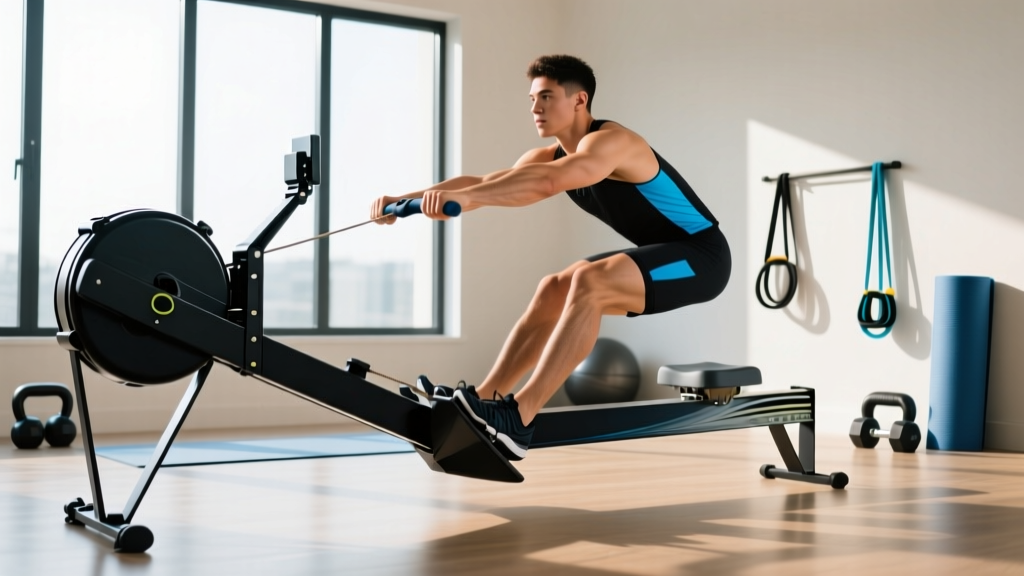
The rowing stroke is not a single pull, but a sequenced kinetic chain divided into four distinct phases. The Concept2 Technique Guide outlines the gold standard for this movement:
- The Catch: Shins should be perfectly vertical (or as close as your ankle mobility allows). Your torso should be hinged forward at roughly 11 o'clock, with arms fully extended and lats engaged. Do not let your knees track past your toes, as this forces you to lift the handle over your knees, wasting energy.
- The Drive: The power sequence is strictly Legs-Body-Arms. Push explosively through the mid-foot. Only when the legs are nearly fully extended should you swing the torso back to 1 o'clock, followed by drawing the handle to your lower sternum.
- The Finish: Legs are flat, core is braced, and the handle rests lightly against your torso. Shoulders are relaxed and down, not shrugged toward the ears.
- The Recovery: This is the active rest phase, executed in the exact reverse order: Arms away, torso hinge forward, then bend the knees. The recovery should take twice as long as the drive (a 1:2 ratio), allowing your heart rate to stabilize and the flywheel to maintain momentum.
2026 Rowing Machine Matrix: Air vs. Magnetic vs. Water
The home fitness market in 2026 offers distinct resistance profiles, each catering to different user preferences, spatial constraints, and acoustic tolerances. Below is a comparative breakdown of the current industry leaders.
| Model | Resistance Type | Price (2026) | Footprint (L x W) | Best For |
|---|---|---|---|---|
| Concept2 RowErg | Air (Flywheel) | $1,095 | 95" x 24" | Purists, CrossFit, Data Nerds |
| Hydrow (Gen 3) | Electromagnetic | $2,495 | 86" x 25" | Interactive Coaching, Quiet Operation |
| WaterRower Classic | Water Impeller | $1,695 | 84" x 22" | Aesthetics, Zen-like Acoustics |
| Echelon Row | Magnetic | $1,299 | 86" x 20" | Budget Smart-Features, Folding Storage |
Expert Insight: The Damper Setting Myth
Beginners frequently set the damper lever on air rowers to 10, mistaking it for a "weight stack" resistance dial. In reality, the damper controls aerodynamic drag. Setting it to 10 is akin to rowing a heavy, wooden barge. Elite rowers and erg coaches universally recommend a setting between 3 and 5 (yielding a drag factor of 110-130 on the PM5 monitor), which accurately simulates the hydrodynamics of a sleek carbon-fiber racing shell on water.
Home Gym Electrical Safety: Protecting Your Investment
When outfitting a home gym, most buyers meticulously research the best surge protector for treadmill setups to safeguard expensive incline motors and touchscreens from voltage spikes. However, modern smart rowing machines require the exact same level of electrical scrutiny.
While a mechanical air rower like the Concept2 RowErg draws minimal power and relies on a simple internal battery for its monitor, interactive rowers like the Hydrow or NordicTrack RW900 house highly sensitive motherboards, HD touchscreens, and electromagnetic resistance controllers. A localized power grid fluctuation or a lightning-induced surge can fry a $2,500 rowing machine display just as easily as it can a treadmill's logic board.
According to the Electrical Safety Foundation International (ESFI), standard power strips do not offer surge protection; they merely expand outlet capacity. To protect your digital cardio equipment:
- Joule Rating: Select a surge protector with a minimum rating of 2,000 Joules for smart rowers and motorized treadmills.
- Clamping Voltage: Look for a clamping voltage of 330V or lower, which ensures the protector diverts excess voltage before it reaches your machine's internal power supply.
- Replacement Cadence: Surge protectors degrade over time. Replace them every 3 to 5 years, or immediately after a major electrical storm or localized blackout.
Edge Cases & Maintenance: What Breaks First?
Even the most robust cardio machines experience mechanical wear. Understanding failure modes will save you downtime and costly repair bills.
1. Chain Stretch and Sprocket Wear (Air Rowers)
Steel chains elongate over time due to friction and inadequate lubrication. If you fail to oil your Concept2 chain with purified mineral oil every 50 hours of use, the chain will stretch and eventually skip teeth on the drive sprocket. Fix: Wipe down and oil the chain monthly. If you notice skipping, the chain and sprocket must be replaced as a matched set (approx. $85 in parts).
2. Bungee Cord Degradation
The handle retraction mechanism on most air and magnetic rowers relies on an internal elastic bungee cord. Exposure to UV light, sweat, and high ambient temperatures accelerates rubber dry-rot. Expect to replace the bungee cord every 2 to 3 years. It is a simple 10-minute DIY fix, but a snapped cord mid-stroke can cause the handle to violently recoil or drop.
3. Water Tank Algae and Clouding
Water rowers provide beautiful acoustics, but stagnant water breeds algae and biofilm, which degrades the polycarbonate tank and impairs the impeller. Fix: Drop a chlorine purification tablet into the tank every 6 months. Never use bleach, as it will micro-fracture the plastic and cause catastrophic leaking.
Frequently Asked Questions
Can I use a rowing machine on carpet without a mat?
While air rowers on standard legs can technically sit on carpet, it is highly discouraged. Carpet fibers and dust are pulled directly into the flywheel cage, clogging the fan blades and drastically reducing the drag factor. Always use a high-density PVC or rubber equipment mat to stabilize the machine and protect your flooring from sweat corrosion.
What is the ideal stroke rate (SPM) for a standard 2000m test?
For most amateur athletes, a sustainable stroke rate for a 2000m time trial falls between 28 and 32 strokes per minute (SPM). Pushing beyond 34 SPM often compromises the power output per stroke (split time), resulting in a faster heart rate but a slower overall finish time.
How much ceiling clearance do I need?
If you are tall or using a machine with an elevated monitor, ensure you have adequate clearance. The Concept2 RowErg with standard legs places the seat at 14 inches off the ground. A user with a 34-inch inseam sitting at the catch will need a minimum ceiling height of 7 feet to avoid head strikes during the torso swing.
More gear to consider
All reviews
Bike Maintenance: Upright, Recumbent, Spin & Treadmill MPH Pace Chart
Stair Climber Setup: Prep for a Treadmill Challenge for Beginners

Best Treadmills for an Interval Training Treadmill Workout 2026

Curved vs Motorized Treadmill Setup: Horizon Treadmills Reviews Guide

Integra Treadmill & Air Bike Longevity: Assault Bike Comparison Guide
