
Rowing Machine Buying Guide & Technique vs T10 9B Reflex Treadmill
Master rowing machine buying criteria and stroke technique. We compare full-body ergometers against the compact T10 9B Reflex Treadmill for home gyms.

The Home Cardio Dilemma: Full-Body Ergometers vs. Compact Walking Pads
Designing a home gym in 2026 requires balancing spatial constraints with physiological goals. Two vastly different approaches to cardiovascular health frequently dominate buyer considerations: the full-body, high-engagement rowing machine and the ultra-compact, low-impact walking pad. Specifically, fitness enthusiasts often weigh the comprehensive benefits of an ergometer against the convenience of specialized under-desk or shock-absorbing models like the T10 9B Reflex Treadmill. This guide serves as your definitive rowing machine buying guide and technique manual, while providing a data-driven comparison to help you decide if a rower or a reflex treadmill best suits your biomechanics and floor plan.
Rowing Machine Buying Guide: What Actually Matters in 2026
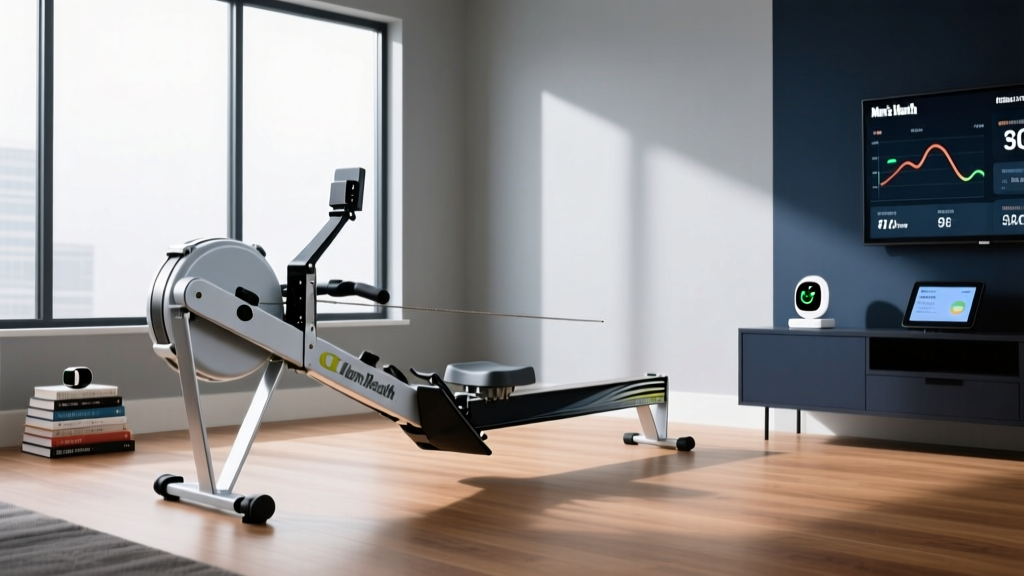
Investing in a rowing machine (ergometer) is an investment in an 86% muscle-engagement workout. However, not all rowers are built equally. When evaluating models, you must look beyond basic marketing claims and focus on resistance mechanics, rail ergonomics, and telemetry.
1. Resistance Profiles: Air vs. Water vs. Magnetic
- Air Resistance (e.g., Concept2 RowErg - $1,195): The gold standard for competitive rowers and CrossFit athletes. The flywheel generates resistance dynamically; the harder you pull, the more resistance it creates. It is loud but offers the most authentic on-water feel and infinite resistance scaling.
- Water Resistance (e.g., WaterRower Natural - $1,595): Utilizes a water-filled tank to create drag. It provides a highly aesthetic, soothing 'swoosh' sound and a smooth catch. However, resistance adjustment requires manually adding or removing water via a siphon pump, making it less ideal for interval training where rapid resistance changes are needed.
- Magnetic Resistance (e.g., Hydrow Arc - $1,495): Uses electromagnets to brake the flywheel. It is virtually silent and offers precise, digitally adjustable resistance levels. This is the premier choice for users in shared living spaces or those who prioritize interactive, screen-based coaching over raw mechanical feel.
2. Ergonomics and Rail Length
A critical failure point in budget rowers is an inadequate monorail length. If you are taller than 6'2", you must ensure the machine accommodates your inseam. The Concept2 RowErg features a 54-inch monorail, safely accommodating users up to 6'9". Furthermore, examine the seat contour; a flat, hard plastic seat will cause sciatic nerve compression during 45-minute endurance sessions. Look for ergonomic, contoured seating with a slight ischial tuberosity relief.
3. Footplate Lock and Drive Angle
Your power transfer begins at the footplate. Premium models feature adjustable footplates with a 45-degree splay and rigid, non-stretching nylon straps. Avoid rowers with bungee-cord heel ties, as they degrade rapidly and introduce energy leaks during the drive phase.
Mastering Rowing Technique: The 4-Phase Stroke
Owning a premium ergometer is useless without proper biomechanics. Poor technique not only caps your cardiovascular output but is the primary cause of lumbar herniations in amateur rowers. According to aerobic exercise guidelines from the Mayo Clinic, maintaining proper form during repetitive motion exercises is vital for joint longevity. Here is the precise breakdown of the stroke.
The Golden Rule of Rowing: Power distribution should always be 60% legs, 30% core (hip hinge), and 10% arms. If your biceps are burning before your quads, your sequencing is fundamentally flawed.Phase 1: The Catch
Shins should be vertical (perpendicular to the floor). Do not over-compress; letting your knees travel past your toes forces your hips to tuck, rounding your lumbar spine. Keep your arms straight, shoulders relaxed and slightly in front of your hips, with a slight forward lean (about 11 o'clock on a clock face).
Phase 2: The Drive
This is the power phase. Initiate the movement by driving through your heels, engaging the quadriceps and glutes. Do not pull with your arms yet. Once the legs are nearly extended, swing the hips open (the core engagement), and finally, draw the handle to your lower sternum. The sequence is strictly: Legs, Hips, Arms.
Phase 3: The Finish
Legs are fully extended, torso leaned back slightly (1 o'clock position), and the handle is resting just below the pectoral line. Elbows should be drawn back and close to the ribs. This is a momentary pause, not a resting position.
Phase 4: The Recovery
The recovery is the active rest phase and must take exactly twice as long as the drive. Reverse the sequence: Arms extend first, torso hinges forward past the knees, and finally, the knees bend to slide back to the catch.
Common Fault - 'Shooting the Slide': This occurs when the seat moves backward before the handle, meaning the legs are pushing but the core and arms are not transferring the load. This places immense shearing force on the L4-L5 vertebrae.
The T10 9B Reflex Treadmill: A Compact Alternative?
While rowing demands intense neuromuscular coordination and significant floor space (typically 8 feet by 2 feet when in use), the T10 9B Reflex Treadmill represents the opposite end of the cardio spectrum. Priced around $289, the T10 9B is an under-desk and light-jogging walking pad engineered for spatial efficiency and passive calorie expenditure.
The defining feature of the T10 9B is its 'Reflex' elastomer shock-absorption system. Unlike traditional treadmills that use bulky mechanical springs, the T10 9B utilizes high-density silicone nodes beneath the running belt to dissipate ground reaction forces. This makes it highly effective for users with plantar fasciitis or mild knee osteoarthritis who cannot tolerate the repetitive impact of outdoor pavement. However, with a peak motor output of 2.5 HP and a max speed of 7.6 mph, it is strictly limited to walking and light jogging. It cannot accommodate high-intensity interval training (HIIT) or sprint mechanics.
Ergometer vs. Walking Pad: Head-to-Head Data Matrix
To contextualize the physiological and spatial differences, we have compiled a direct comparison matrix. Data from Harvard Health Publishing confirms that vigorous rowing burns significantly more calories per hour than walking, but walking pads offer superior adherence for sedentary professionals.
| Metric | Premium Rowing Machine | T10 9B Reflex Treadmill |
|---|---|---|
| Primary Muscle Engagement | 86% (Full Body: Quads, Glutes, Lats, Core) | Lower Body Only (Calves, Hamstrings, Glutes) |
| Caloric Expenditure (155lb user / 30 min) | ~252 kcal (Moderate) / ~369 kcal (Vigorous) | ~133 kcal (Brisk Walking at 4.0 mph) |
| Joint Impact Profile | Zero Impact (Seated, closed kinetic chain) | Low Impact (Reflex elastomers reduce shock by ~30%) |
| Footprint (In Use) | ~96" L x 24" W (Cannot be used under a desk) | ~50" L x 20" W (Fits under standard standing desks) |
| Cognitive Load & Multitasking | High (Requires intense focus on stroke sequencing) | Low (Ideal for answering emails or watching TV) |
| Average 2026 Price Point | $1,100 - $1,600 | $250 - $320 |
Expert Verdict: Matching the Machine to Your Physiology
The decision between a rowing machine and the T10 9B Reflex Treadmill is not about which machine is objectively 'better,' but rather which aligns with your daily lifestyle and orthopedic needs.
Choose the Rowing Machine if: You have 30 to 45 minutes of dedicated, uninterrupted time. You want to maximize VO2 max improvements, build posterior chain strength, and require a zero-impact modality due to severe ankle or knee joint degradation. The learning curve is steep, but the physiological ceiling is virtually limitless.
Choose the T10 9B Reflex Treadmill if: You work from home, utilize a standing desk, and struggle to find a dedicated 'workout block' in your schedule. The T10 9B excels at NEAT (Non-Exercise Activity Thermogenesis). By walking at 2.5 mph while working for two hours, you can effortlessly burn an extra 300 calories without triggering the central nervous system fatigue associated with high-intensity rowing.
Ultimately, for pure cardiovascular conditioning and muscular endurance, the rowing machine remains the undisputed champion of home fitness. But for sustainable, daily movement integration in a modern home office, the reflex walking pad is an invaluable tool.
More gear to consider
All reviews
Air Bike vs Assault Bike Guide & UREVO SpaceWalk E4 Treadmill Care

Inspire Fitness Series T5 Treadmill vs Elliptical Care Guide
Rowing Setup: Better Than Treadmills Compatible With Apple Watch?

Treadmill Motor Sizes & Calculating Elevation Gain on Treadmill

FSA Treadmill & Cardio Machine Noise Level Comparison Guide
