Rowing Machine Buying Guide and Technique vs Sole F83 Treadmill
Master rowing machine buying and technique. We compare top 2026 ergometers against the Sole F83 treadmill to help you choose the best home cardio gear.

The Home Cardio Dilemma: Ergometer vs. Premium Treadmill
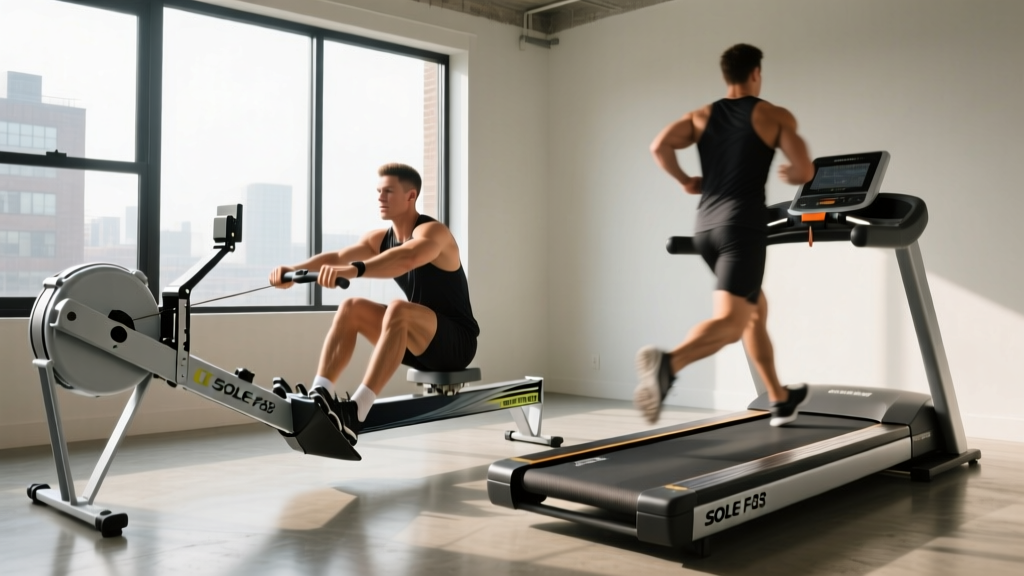
Designing a home gym in 2026 often comes down to a battle for floor space and biomechanical efficiency. On one side of the ring, you have traditional, high-end running platforms like the Sole F83 treadmill, renowned for its 4.0 CHP motor and Cushion Flex Whisper Deck. On the other, you have the indoor rowing machine (ergometer), a full-body powerhouse that demands a fraction of the footprint while engaging nearly every major muscle group. This comprehensive rowing machine buying guide and technique breakdown will help you decide whether an air, magnetic, or water rower is the right investment for your physiology, or if a premium treadmill remains your best option.
Rowing Machine Buying Guide: Key Specs to Evaluate
Unlike treadmills, where motor horsepower and belt length dictate the price, rowing machines are categorized primarily by their resistance mechanism. Understanding these differences is critical for matching the machine to your training style and living environment.
1. Air Resistance (The Gold Standard)
Air rowers use a flywheel with fan blades. The harder you pull, the more resistance is generated. This dynamic response perfectly mimics the feel of moving a shell through water. They are exceptionally durable but generate a distinct 'whoosh' noise that can be disruptive in shared living spaces.
2. Magnetic Resistance (The Silent Operator)
Magnetic rowers use a magnetic brake system to create drag on the flywheel. They are virtually silent and offer highly precise, repeatable resistance levels. However, they lack the infinite, effort-based resistance curve of air rowers, which some competitive rowers find limiting during sprint intervals.
3. Water Resistance (The Aesthetic Choice)
Water rowers feature a polycarbonate tank filled with water. They offer a highly authentic sound and feel, and the resistance scales with your stroke rate. The primary drawback is maintenance; the water must be treated with purification tablets every six months to prevent algae buildup, and the seals can occasionally degrade.
Space-Saving Reality Check: While the Sole F83 treadmill requires a dedicated footprint of roughly 35" x 82" and weighs 280 lbs, most high-end rowers (like the Concept2 RowErg) can be unbolted and stood upright in a 25" x 25" corner, or easily rolled under a bed when separated into two pieces.2026 Cardio Machine Comparison Matrix
To contextualize the market, here is how the top-tier rowing machines compare against the premium Sole F83 treadmill across critical home-gym metrics.
| Machine Model | Type | 2026 MSRP | Resistance / Motor | Max User Weight | Muscle Recruitment |
|---|---|---|---|---|---|
| Concept2 RowErg | Air Rower | $990 | Air Flywheel (Spiral Damper) | 275 lbs | 86% (Full Body) |
| Hydrow Arc | Magnetic Rower | $1,495 | Electromagnetic Drag | 320 lbs | 86% (Full Body) |
| Rogue Echo Rower | Air/Magnetic | $1,390 | Hybrid Air & Magnetic | 350 lbs | 86% (Full Body) |
| Sole F83 Treadmill | Motorized Treadmill | $1,899 | 4.0 CHP DC Motor | 350 lbs | ~60% (Lower Body/Core) |
Mastering the Rowing Technique: The 4-Phase Stroke
A treadmill is intuitive; you simply walk or run. A rowing machine, however, requires technical proficiency. Poor form on an ergometer doesn't just reduce caloric output—it actively invites lumbar strain and rib stress fractures. According to the Concept2 Technique Guide, the stroke is divided into four distinct phases. Power distribution should always follow the 60-30-10 rule: 60% legs, 30% core, 10% arms.
- The Catch: Shins are completely vertical (no further forward to avoid excessive lumbar flexion). Arms are straight, shoulders relaxed, and the torso is leaning forward at roughly 11 o'clock.
- The Drive: The power phase. Push explosively with the legs while keeping the arms straight and the core braced. Only when the legs are nearly fully extended do you swing the torso back to 1 o'clock, followed by pulling the handle to your lower ribs.
- The Finish: Legs are flat and fully extended. The torso is leaned back slightly (1 o'clock). The handle is drawn into the solar plexus/lower ribcage, with elbows drawn past the torso and wrists perfectly flat.
- The Recovery: The active rest phase. Sequence is reversed: Arms extend first, torso hinges forward past 12 o'clock, and finally, the knees bend to slide the seat back to the catch.
Common Failure Mode: "Shooting the slide." This occurs when you push with your legs during the Drive but fail to brace your core, causing your hips to shoot forward while the handle remains stationary. This places massive shear force on the L4-L5 vertebrae. Always ensure your shoulders and hips move backward simultaneously at the start of the Drive.
Biomechanics and Caloric Expenditure: Rower vs. Treadmill
When evaluating the Sole F83 treadmill against a rower, we must look at physiological ROI (Return on Investment). Running on a treadmill is a predominantly lower-body, weight-bearing exercise. The Sole F83's 15% incline capability and 22" x 60" belt allow for intense glute and calf activation, and its Cushion Flex Whisper Deck successfully reduces joint impact by up to 40% compared to outdoor asphalt.
However, rowing is a non-weight-bearing, horizontal power movement. Harvard Health Publishing notes that vigorous rowing can burn between 252 and 440 calories in 30 minutes (depending on body weight), which is highly competitive with vigorous treadmill running. The distinct advantage of the rower is the 86% muscle recruitment rate. By actively engaging the latissimus dorsi, rhomboids, biceps, and posterior chain on every stroke, rowers elevate their heart rate and trigger a higher excess post-exercise oxygen consumption (EPOC) effect compared to steady-state treadmill jogging.
Joint Health Consideration: If you suffer from plantar fasciitis, Achilles tendinopathy, or severe knee osteoarthritis, the horizontal, zero-impact nature of a rowing machine is vastly superior to the repetitive ground-reaction forces of treadmill running, even on a highly cushioned deck like the Sole F83.Maintenance, Longevity, and Real-World Edge Cases
Cardio machines are only as good as their maintenance schedules. Ignoring routine care leads to catastrophic failure modes that void warranties.
Treadmill Maintenance (Sole F83)
- Belt Lubrication: Requires 100% silicone lubricant every 150 miles or 3 months. Failure to lubricate causes excessive friction, which draws higher amperage and will eventually fry the motor control board.
- Belt Tensioning: Over time, the running belt stretches. If it slips during a sprint, it requires an Allen wrench adjustment to the rear roller bolts.
Rower Maintenance (Air & Magnetic)
- Chain Care: Air rowers with steel chains require a few drops of purified mineral oil every 40 hours of use. A dry chain will stretch, develop stiff links, and eventually snap under peak wattage output.
- Rail Cleaning: The seat wheels pick up dust and skin cells, which transfer to the aluminum monorail. This must be wiped down with a non-abrasive cleaner weekly to prevent the wheels from pitting and creating a bumpy stroke.
Frequently Asked Questions
Can I build muscle using a rowing machine, or is it strictly cardio?
While primarily a cardiovascular endurance tool, high-drag, low-stroke-rate rowing intervals (e.g., 10 sets of 10 strokes at maximum effort with a damper setting of 10) act as a power-endurance stimulus. It will hypertrophy the upper back and quadriceps to a degree, but it will not replace heavy resistance training for maximal muscle growth.
Is the Sole F83 treadmill better for marathon training than a rower?
Absolutely. If your specific goal is to prepare for a 26.2-mile road race, the biomechanical specificity of running is irreplaceable. The Sole F83 treadmill allows you to practice exact pacing, foot strike mechanics, and weight-bearing joint conditioning that a rower cannot simulate.
What is the ideal drag factor setting on an air rower?
According to elite rowing coaches, a drag factor between 110 and 130 (usually achieved at a damper setting of 4 or 5) most accurately simulates the water resistance of a competitive racing shell. Setting the damper to 10 is a common novice mistake that leads to premature muscular fatigue and lower back pain.
Final Verdict: Earning Your Floor Space
Choosing between a premium treadmill and an ergometer requires an honest assessment of your orthopedic history, spatial constraints, and fitness goals. The Sole F83 treadmill remains an elite, heavy-duty choice for runners who need a wide belt, high top-speed capabilities, and impact reduction for daily mileage. However, if you are seeking a time-efficient, zero-impact modality that simultaneously builds posterior chain strength and cardiovascular capacity, a high-quality rowing machine is arguably the most efficient piece of cardio equipment you can buy in 2026. Evaluate your floor plan, commit to learning the 4-phase stroke, and select the resistance type that aligns with your noise tolerance and maintenance willingness.
More gear to consider
All reviews
Skating Treadmill Belt Maintenance: 2026 Trends & Lubrication Guide

Lionsgate The Long Walk Treadmill vs Upright & Spin Bikes
Stairmaster vs Treadmill vs Elliptical: A Beginner's Walking Pad Guide

Fixing Motor Stalls at 4 Miles Per Hour on Treadmill: HP Sizing Guide

Treadmill Pace & Cardio Noise: The Ultimate Quiet Setup Guide
