Optimizing Reverse Dumbbell Flies: Olympic vs Standard Plates
Master your home gym setup for reverse dumbbell flies. Compare Olympic vs standard weight plates, rack clearance, and installation steps.

The Biomechanics of Space: Why Plate Choice Dictates Your Setup
Building a functional home gym in 2026 requires more than just buying heavy iron; it demands a strategic approach to spatial geometry. When configuring your facility for precise posterior chain isolation—specifically optimizing your station for reverse dumbbell flies—the foundational choice of your weight plate ecosystem (Olympic vs. Standard) dictates your rack footprint, storage solutions, and bench clearance. The reverse dumbbell fly requires a massive lateral range of motion during the eccentric stretch. If your plate storage trees are improperly sized or positioned due to miscalculating plate dimensions, you will inevitably smash your dumbbells into your weight stacks mid-rep.
This complete setup and installation walkthrough will guide you through selecting the right plate type, installing your power rack and storage horns, and configuring your bench clearance to ensure uninterrupted, biomechanically sound rear-deltoid training.
Olympic vs. Standard Weight Plates: 2026 Market Breakdown
Before unboxing your hardware, you must commit to a plate standard. The primary difference lies in the hub diameter: Standard plates feature a 1-inch (25mm) center hole, while Olympic plates feature a 2-inch (50mm) center hole. However, the physical footprint of the plates themselves is where the setup complications arise.
Expert Insight: According to biomechanical guidelines outlined by the ACE Exercise Library, rear deltoid flies require unrestricted scapular retraction and a wide lateral arc. Standard vinyl-filled plates are often excessively thick and wide at lower weights, creating unpredictable spatial hazards in tight home gyms.| Feature | Olympic Plates (e.g., Rogue Echo Bumpers) | Standard Plates (e.g., CAP Cast Iron) |
|---|---|---|
| Hub Diameter | 2 inches (50mm) | 1 inch (25mm) |
| 45lb Plate Diameter | 450mm (17.7 inches) - Uniform | Varies (typically 14-15 inches) |
| Storage Horn Size | 2-inch diameter horns required | 1-inch diameter horns required |
| Avg. Cost (2026) | $2.50 - $3.50 per lb | $1.10 - $1.50 per lb |
| Max Barbell Load | 1,000+ lbs | 250 - 300 lbs (sleeve bend risk) |
Phase 1: Rack and Storage Installation Walkthrough
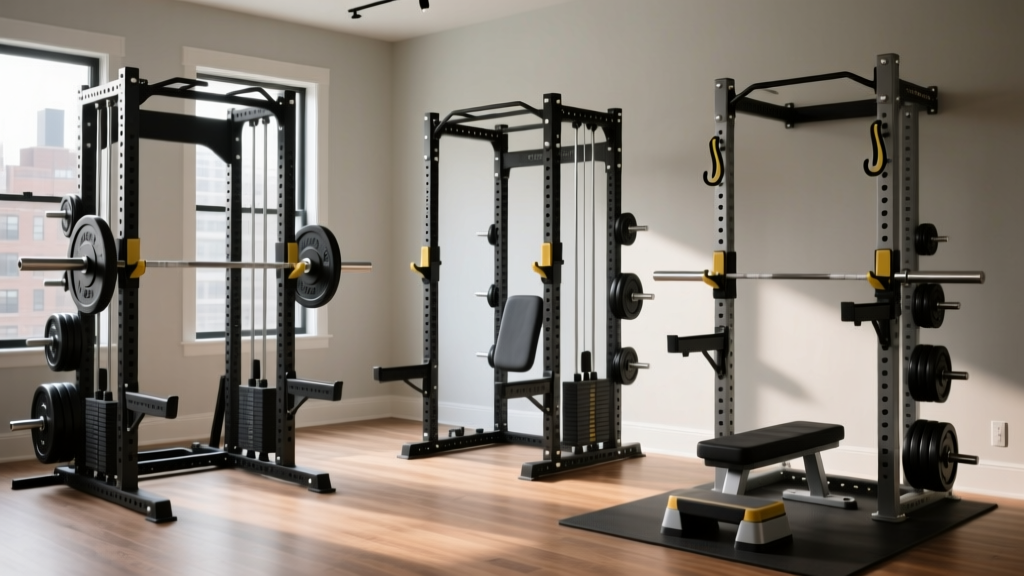
For this walkthrough, we are utilizing a standard 3x3 upright power rack, such as the highly modular Rep Fitness PR-4000. Your choice of Olympic vs. Standard plates will determine which weight storage attachments you must install.
Step 1: Assembling the Uprights and Base
- Position the Base: Lay the rack base flat on your rubber matting. Ensure the front uprights face your primary lifting area.
- Attach Uprights: Insert the 3x3 uprights into the base sockets. Insert the M20 structural bolts but do not fully tighten them yet. Leave them finger-tight to allow the frame to self-square.
- Install Crossmembers: Attach the rear and side crossmembers. Use a rubber mallet to tap the uprights into perfect 90-degree alignment.
- Torque the Bolts: Using a calibrated torque wrench, tighten all M20 structural bolts to exactly 70 ft-lbs. This prevents the rack from swaying during heavy eccentric loading.
Step 2: Installing Weight Storage Horns
This is where your plate choice becomes physical reality. If you chose Olympic plates, you must install 2-inch diameter storage horns. If you chose Standard, you need 1-inch horns.
- Placement Height: Install the lowest storage horns at 18 inches from the floor. This prevents 45lb Olympic bumpers (which have a 17.7-inch radius) from scraping the floor when loaded or unloaded.
- Protrusion Clearance: A standard Olympic storage horn protrudes 10 inches from the upright. When fully loaded with three 45lb bumper plates, the stack will extend roughly 14 inches from the rack face.
Phase 2: Configuring the Bench for Reverse Dumbbell Flies
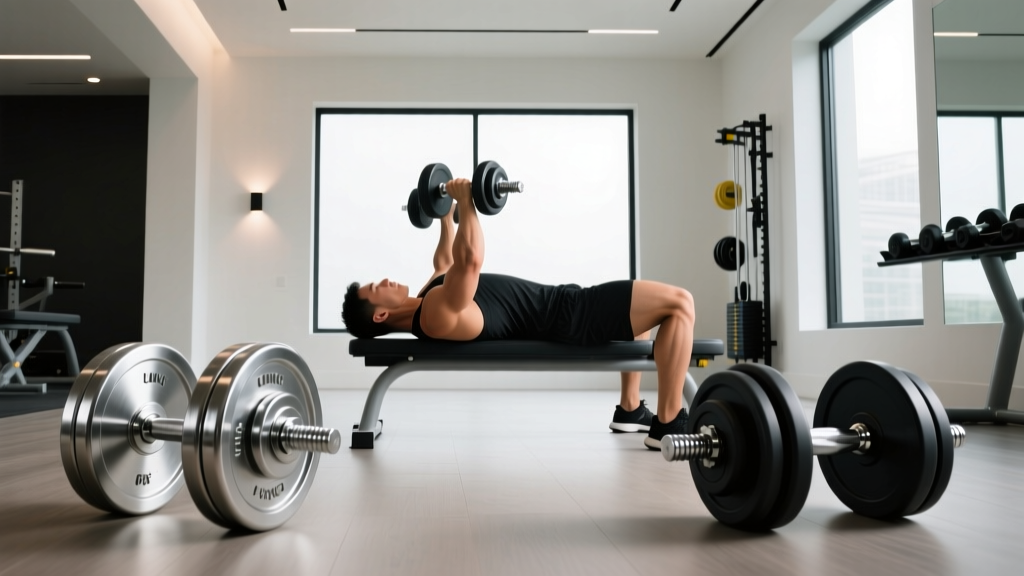
The reverse dumbbell fly is highly sensitive to spatial constraints. When performing this movement chest-supported on an incline bench, the dumbbells travel outward and downward. If your weight tree or rack storage horns are positioned laterally too close to your bench, the eccentric phase will be interrupted by the dumbbells striking the stored iron.
⚠️ Clearance Warning: Never place a loaded Olympic plate tree parallel to the sides of your incline bench. The uniform 17.7-inch diameter of Olympic bumpers creates a massive 'wall' of iron. Always store heavy plates behind the rack or at least 48 inches away from the lateral edges of your bench.The 48-Inch Rule for Lateral Clearance
To properly set up your bench for reverse dumbbell flies:
- Place an adjustable FID (Flat/Incline/Decline) bench in the center of your rack or open floor space.
- Set the bench pad to a 15 to 30-degree incline. This angle optimally targets the rear deltoids and rhomboids while minimizing lower back shear.
- Measure exactly 48 inches from the centerline of the bench pad to the nearest wall, plate tree, or rack storage horn on both the left and right sides.
- Test the range of motion with your heaviest training dumbbells. Lie face down, let your arms hang straight down, and sweep them outward until your hands are at or slightly above shoulder height. You should have at least 12 inches of negative space between the dumbbell head and your nearest plate stack.
Phase 3: Barbell Sleeve and Knurling Maintenance
Your choice of plate standard also impacts the longevity of your barbells and dumbbells. Standard 1-inch barbells are notorious for sleeve bending when loaded heavily, which alters the balance of the bar. Conversely, Olympic bars feature high-tensile steel sleeves with internal bushings or bearings.
"The transition from Standard to Olympic plates isn't just about weight capacity; it's about preserving the structural integrity of your lifting implements. A bent 1-inch sleeve will cause uneven rotational torque during any lift, but it is especially punishing during delicate isolation movements where joint stability is paramount."
— Home Gym Engineering Best Practices, 2025 Report
When loading Rogue Echo Bumper Plates or similar Olympic variants, always use high-quality spring collars or clamp collars. Because Olympic bumpers have a smooth, vulcanized rubber edge, they can slide against each other during drops, generating rubber dust that accumulates on your barbell sleeves. Wipe down your sleeves with a nylon brush and 3-in-One oil weekly to prevent the dust from mixing with humidity and creating a corrosive paste that destroys your barbell's internal bushings.
Expert Troubleshooting and Edge Cases
Issue: Standard Plates Wobbling on the Tree
Cause: Standard 1-inch plates often have inconsistently cast center holes. If a plate wobbles on your 1-inch storage horn, it can slowly 'walk' its way off the horn over time due to gym vibrations (like dropping dumbbells nearby).
Solution: Wrap a single layer of athletic tape around the base of the 1-inch storage horn to create a friction seal, or upgrade to threaded 1-inch horns with locking nut end-caps.
Issue: Dumbbell Knurling Damaging Bumper Plates
Cause: When setting up for reverse dumbbell flies, lifters often rest their heavy, aggressively knurled dumbbells directly against the edge of Olympic bumper plates stored on the floor or low horns.
Solution: Never store dumbbells leaning against plate stacks. The steel knurling will act like a cheese grater against the rubber matrix of the bumper plate, eventually causing the plate to delaminate and fail its bounce-test rating. Always use a dedicated, tiered dumbbell rack positioned at least 36 inches away from your plate storage zone.
Final Walkthrough Checklist
- [ ] Rack uprights torqued to 70 ft-lbs.
- [ ] Storage horns matched to plate hub size (2-inch for Olympic, 1-inch for Standard).
- [ ] Lowest horn positioned at 18 inches to clear 45lb plate radius.
- [ ] Bench positioned with 48 inches of lateral clearance on both sides.
- [ ] Rear deltoid fly range of motion tested with zero risk of iron-on-iron collision.
By respecting the physical dimensions of your chosen weight plate standard and meticulously measuring your spatial clearances, you create a training environment where isolation exercises like the reverse dumbbell fly can be performed with absolute focus and zero spatial anxiety.
More gear to consider
All reviews
Power Rack vs Squat Rack vs Stand: Dumbbell Scaption Setup
Pectoral Muscle Exercises With Dumbbells: Plate Guide

Barbell Collar & Clamp Types Comparison: Dumbbell Side Laterals
Best Dumbbell Workouts to Barbells: Knurl & Weight Buying Mistakes

Power Rack vs Squat Rack vs Squat Stand for Dumbbell Skiers