
Resistance Band Sets Guide & How to Clean a Yoga Mat
Master your home gym with our 2026 resistance band set buying guide covering levels and types, plus expert tips on how to clean a yoga mat properly.

The Anatomy of a Resistance Band Set: Types and Materials
Building a versatile home gym requires more than just adjustable dumbbells; it demands a deep understanding of variable resistance. As of 2026, the resistance band market has evolved far beyond simple rubber tubes. According to the National Strength and Conditioning Association (NSCA), accommodating resistance is now a staple for both elite powerlifters and physical therapy patients. However, buying the wrong type of band set can lead to premature snapping, inadequate stimulus, or joint strain.
1. Continuous Flat Loops (Power Bands)
These are the heavy-duty workhorses of the band world. Made from layered natural latex, they are designed to withstand extreme elongation (up to 3x their resting length). Best for: Pull-up assistance, accommodating resistance on barbell squats and bench presses, and heavy mobility work. Top Tier Example: Rogue Fitness Monster Bands ($15 to $45 per band, or $120+ for a curated 4-band set). They feature a proprietary layered manufacturing process that prevents the micro-tears common in cheaper extruded bands.
2. Tubular Bands with Carabiners
Constructed from extruded latex or TPE (Thermoplastic Elastomer) with a woven nylon outer sleeve, these bands clip into handles or door anchors. The sleeve prevents over-stretching and protects the user if the inner core snaps. Best for: Bodybuilding isolation movements, cable machine mimics, and general fitness. Top Tier Example: Bodylastics Stackable System ($40 to $60). The anti-snap sleeve and reinforced carabiner clips make them a safe choice for high-rep hypertrophy training.
3. Fabric Mini-Loops
Woven from a blend of cotton, polyester, and elastic rubber threads. Unlike cheap TPE mini-loops that roll up your thighs and pinch the skin, fabric loops grip the skin and stay in place. Best for: Glute medius activation, lateral band walks, and warm-ups. Top Tier Example: Peach Bands or WODFitters Fabric Sets ($25 to $35 for a 3-piece set).
Decoding Resistance Levels: Poundage and Elongation
One of the most confusing aspects of buying a resistance band set is the color-coding system. Historically, yellow meant 'light' and black meant 'heavy.' However, the 2026 fitness equipment market lacks a universal standard. A 'medium' green band from a budget Amazon brand might offer 15 lbs of resistance at 100% elongation, while a premium brand's green band might offer 35 lbs. Always buy based on printed poundage, not color.
| Resistance Level | Typical Poundage (at 100% stretch) | Elongation Limit | Primary Use Case |
|---|---|---|---|
| Extra Light (Rehab) | 5 - 15 lbs | 2.5x Length | Rotator cuff rehab, physical therapy, elderly mobility |
| Light / Medium | 15 - 35 lbs | 3.0x Length | Bicep curls, tricep pushdowns, shoulder lateral raises |
| Heavy | 40 - 60 lbs | 3.0x Length | Pull-up assistance, heavy rows, glute bridges |
| Extra Heavy (Power) | 70 - 120+ lbs | 2.5x Length | Powerlifting accommodating resistance (squats/deadlifts) |
Note: Poundage increases exponentially as the band stretches. A band rated at 50 lbs will only provide 50 lbs of resistance when stretched to twice its resting length (100% elongation).
Buying Framework: Matching Sets to Your Training Goals
Don't just buy the cheapest multi-pack. Your training dictate your purchase:
- The Powerlifter: Skip the handled tubes. Buy a 3-band set of Continuous Flat Loops (1 Heavy, 1 X-Heavy, 1 Monster). You need bands that can be choked around a barbell sleeve without fraying.
- The Hypertrophy Athlete: Invest in a high-quality Tubular Stackable Set with a door anchor and ankle straps. Look for sets that allow you to stack bands to reach 100+ lbs of tension for chest presses and lat pulldowns.
- The Runner / Rehab Patient: A 5-piece flat ribbon set (like TheraBand CLX, $20-$30) is ideal. The open-loop design allows you to wrap them around hands and feet without the constriction of continuous loops.
Equipment Maintenance: How to Clean a Yoga Mat and Bands
Tension tools and floor accessories share the same environment, meaning they are both exposed to sweat, dead skin cells, and ambient dust. Knowing exactly how to clean a yoga mat and your resistance bands is critical for preventing bacterial growth and preserving the polymers.
The Science of Mat Polymers and Cleaning
The method you use to clean your mat depends entirely on its cellular structure. Using the wrong solution will destroy the material.
🧘 Closed-Cell Mats (Polyurethane / PVC):Mats like the Lululemon Reversible or Manduka PRO are non-porous. Never use essential oils, vinegar, or harsh surfactants on PU mats. The oils will break down the polyurethane topcoat, leaving a permanent, slippery residue. Instead, use a 50/50 mix of distilled water and witch hazel, or a dedicated PU mat spray. 🌿 Open-Cell Mats (Natural Rubber):
Mats like the Jade Yoga Harmony are porous and absorb sweat. To clean an open-cell mat, use a mild, non-oil-based surfactant (like Manduka All-Purpose Mat Wash or a few drops of castile soap in warm water). Wipe with a microfiber cloth and never submerge the mat in water, as the rubber will act like a sponge and harbor mold internally.
Resistance Band Hygiene
Resistance bands, particularly natural latex loops, degrade when exposed to the sebum (oils) found in human sweat. After every heavy session, wipe your flat loops and tubular bands with a damp microfiber cloth. Once a month, apply a light dusting of cornstarch or a specialized silicone-based band conditioner to prevent the latex from drying out and oxidizing.
Real-World Failure Modes and Edge Cases
Even the best equipment fails if misused. The American Council on Exercise (ACE) frequently highlights the dangers of improper band anchoring and material degradation. Here is what you must watch out for:
- UV and Ozone Degradation: Natural latex is highly susceptible to UV light and ozone. Never store your resistance bands on a porch, in a car, or in direct sunlight. Oxidation causes the latex to turn chalky and snap without warning under load.
- Latex Allergies: According to the Mayo Clinic, repeated exposure to natural latex proteins can trigger severe contact dermatitis or systemic allergic reactions. If you or your training partners have sensitivities, strictly purchase TPE or fabric-wrapped bands.
- The Door Anchor Trap: Never anchor continuous loop bands to standard interior door hinges or handles. The lateral force can rip the door from its frame or snap the handle. Always use a heavy-duty, foam-padded door anchor placed over the top of the door, pulling in the direction the door closes.
'The tension curve of a resistance band is linear and ascending. It provides the most resistance at the point of peak contraction. Use this to your advantage by pairing bands with dumbbells to create a complete resistance profile that challenges the muscle through the entire range of motion.' — Biomechanics Principle, NSCA Essentials of Strength Training
Final Verdict: Building Your 2026 Arsenal
Investing in a high-quality resistance band set is one of the highest-ROI decisions you can make for your home gym. By understanding the difference between tubular, continuous loop, and fabric bands, and by respecting the material science of your floor accessories—knowing exactly how to clean a yoga mat and condition your latex—you ensure your equipment remains safe, hygienic, and effective for years to come. Start with a 3-band continuous loop set for heavy compounds, add a fabric mini-loop set for warm-ups, and treat your polymers with the chemical respect they demand.
More gear to consider
All reviews
Jump Rope Types Compared & How to Clean Liforme Yoga Mat

Resistance Band Set Guide: Levels & Cushioned Yoga Mat Pairings

Loop vs Tube Band Care & Best Way to Wash a Yoga Mat
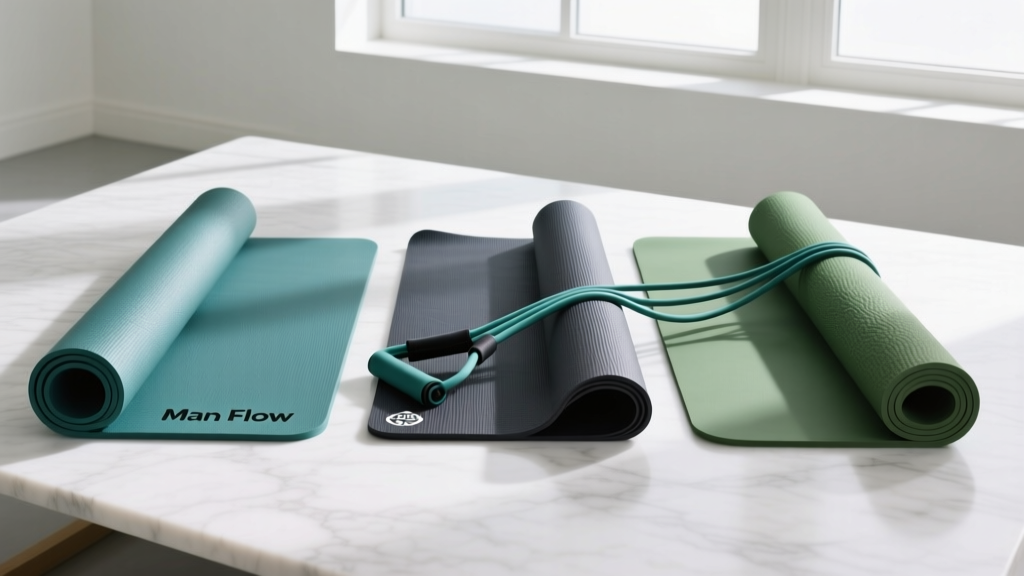
Man Flow Yoga Mat vs Top Rivals: 2026 Grip & Thickness Test

Pilates Care: How to Clean a Yoga Mat Gaiam & Maintain Accessories
