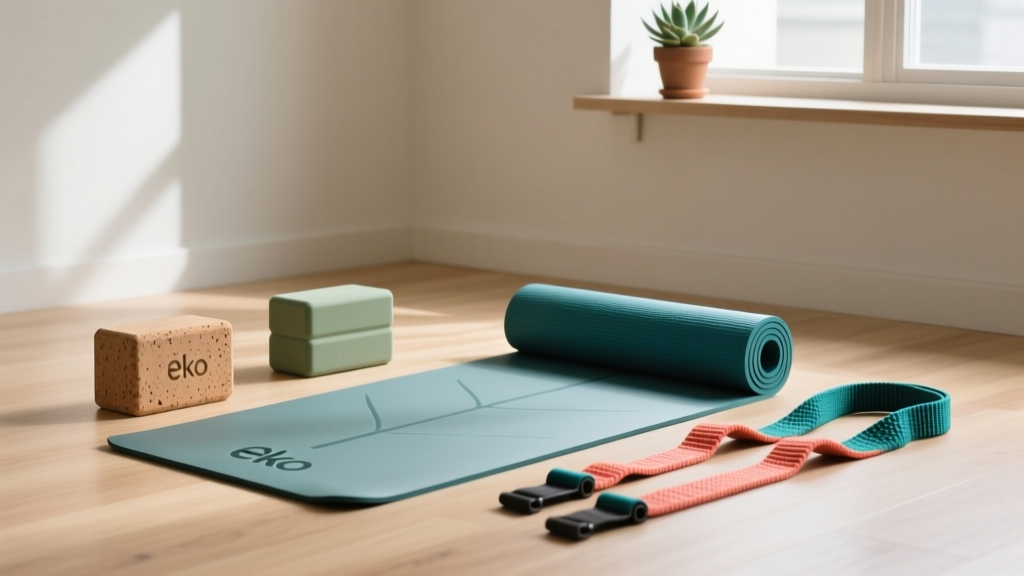
Resistance Band Set Guide: Match Levels to Camouflage Yoga Mat
Master your tactical home gym. This 2026 resistance band set buying guide covers tension levels, types, and pairing with your camouflage yoga mat.

The Tactical Foundation: Grounding Your Bands on a Camouflage Yoga Mat
In the evolving landscape of functional and field-ready fitness, the camouflage yoga mat has transcended mere aesthetic appeal. For hunters, military personnel, tactical athletes, and outdoor enthusiasts in 2026, a camo-patterned mat made from high-density TPE or natural rubber serves a critical purpose: it masks dirt from outdoor environments, provides a rugged non-slip surface for boots or bare feet, and protects delicate joint tissue during ground-based mobility work. However, a mat is only the foundation of your training ecosystem. To build functional strength, replicate load-bearing rucking, or maintain muscle mass in austere environments, you must pair this rugged base with a precisely calibrated resistance band set.
Buying a resistance band set is not a one-size-fits-all endeavor. The market is saturated with cheap, single-layer latex tubes that snap under peak tension, alongside professional-grade layered power bands designed to withstand hundreds of pounds of force. This comprehensive buying guide dissects the anatomy of resistance bands, decodes the tension matrix, and provides a practical framework for matching the right band levels to your specific training phases—all while keeping your tactical setup intact.
Anatomy of a Resistance Band Set: 3 Core Categories
Before evaluating tension levels, you must understand the structural differences between the three primary band categories available on the market. Each serves a distinct biomechanical purpose.
1. Continuous Loop Power Bands (41-Inch Standard)
Constructed from multiple layers of bonded natural latex, these 41-inch continuous loops are the gold standard for heavy compound movements. Premium models, such as the Rogue Monster Bands or Serious Steel Assisted Pull-Up Bands, utilize a layered manufacturing process that prevents micro-tears from propagating into catastrophic snaps. They are ideal for banded squats, deadlifts, and pull-up assistance. When anchored to a heavy rig or stepped on while standing on your camouflage yoga mat, they provide an ascending resistance curve that peaks at the lockout of the movement.
2. Tube Bands with Carabiner Handles
Tube bands consist of a hollow or solid cylindrical latex core, often encased in a woven nylon sleeve to prevent snap-back injuries. Sets like the WODFitters 11-Piece Tube Band Set utilize stacked carabiner clips to combine multiple tubes onto a single handle. While highly portable and excellent for isolation exercises (bicep curls, lateral raises, tricep pushdowns), the plastic or metal carabiners can scratch hardwood floors. This is where your thick 6mm camouflage yoga mat becomes essential—it acts as a protective buffer between the hardware and the ground during floor-anchored exercises.
3. Flat Therapy and Mini-Loop Bands
Typically measuring 12 inches in circumference (mini-loops) or sold in 50-foot rolls (therapy bands), these are designed for rehabilitation, glute activation, and joint stabilization. The TheraBand CLX (Consecutive Loops) line eliminates the need to tie knots, offering secure, tactile grips. These bands generate low-to-moderate tension and are primarily used for physical therapy and warm-up routines before heavy lifting.
| Band Category | Material & Construction | Tension Range | Best Use Case | Avg. Price Range |
|---|---|---|---|---|
| 41" Power Loops | Layered Natural Latex | 15 lbs – 200+ lbs | Heavy compounds, pull-up assist | $25 – $65 per band |
| Tube Bands w/ Handles | Latex Core + Nylon Sleeve | 5 lbs – 50 lbs per tube | Isolation, hypertrophy, travel | $35 – $55 per set |
| Mini-Loops / Therapy | TPE or Single-Layer Latex | 2 lbs – 25 lbs | Rehab, glute activation, mobility | $12 – $25 per set |
The Tension Matrix: Decoding Color Codes and Poundage
A common point of confusion for buyers is the color-coding system. Historically, the physical therapy industry standardized colors (Yellow = Light, Green = Medium, Black = Heavy). However, in the modern tactical and cross-training market, color codes are entirely brand-dependent. A red band from Rogue Fitness offers 15-35 lbs of resistance, while a red band from a generic Amazon brand might offer 50-120 lbs.
⚠️ CRITICAL BUYING RULE: Never purchase a band set based solely on color. Always verify the printed poundage (lbs/kg) and the physical dimensions (width and thickness in millimeters). For example, a standard 'Heavy' power band is typically 1.75 inches wide and 4.5mm thick, yielding roughly 50-125 lbs of tension at maximum elongation.According to guidelines published by the American Council on Exercise (ACE), elastic resistance training requires matching the band's elongation percentage to your target muscle's strength curve. A band stretched to 100% of its resting length (e.g., stretching a 41-inch band to 82 inches) provides the listed peak resistance. If you are performing short-range movements like rotator cuff external rotations, you will only experience a fraction of the band's rated poundage.
Progressive Overload Framework: Building Your 2026 Kit
To build a complete, field-deployable gym that pairs seamlessly with your camouflage yoga mat, you need a tiered approach to progressive overload. Here is the exact loadout we recommend for intermediate to advanced athletes.
- Phase 1: Mobility and Activation (The Warm-Up)
Purchase a set of 12-inch TPE mini-loops (approx. 10-30 lbs). Use these on your mat for banded clamshells, monster walks, and scapular retractions. TPE is preferred here over latex because it resists degradation from sweat and outdoor humidity. - Phase 2: Hypertrophy and Isolation (The Pump)
Acquire an 11-piece tube band set with a door anchor and ankle straps. The door anchor allows you to replicate cable machine mechanics (cable crossovers, face pulls) in any hotel room or barracks. Ensure the set includes a reinforced nylon carrying case for rugged transport. - Phase 3: Absolute Strength and Power (The Heavy Work)
Invest in three 41-inch continuous loop bands: a 1/2-inch green (approx. 25-65 lbs), a 1-1/8-inch purple (approx. 50-125 lbs), and a 1-3/4-inch black (approx. 80-175 lbs). By 'stacking' the green and purple bands on a heavy kettlebell or anchor point, you can create custom tension increments, mimicking the micro-loading of traditional iron plates.
Edge Cases and Failure Modes: When Bands Snap
Elastic resistance is incredibly safe when used correctly, but catastrophic failure can cause severe welts or ocular injuries. Understanding the failure modes of resistance bands is crucial for longevity and safety.
1. UV and Ozone Degradation
Natural latex is highly susceptible to ultraviolet light and ozone. Leaving your power bands exposed to direct sunlight on the tailgate of a truck or next to a sunny window will cause the outer layers to oxidize, turning chalky and brittle within weeks. Storage Rule: Always store latex bands in an opaque, airtight bag with a silica gel packet to control moisture.
2. Anchor Point Friction
The most common cause of band snapping is wrapping a continuous loop around a rough or abrasive anchor point, such as a rusted chain-link fence or a knurled steel pull-up bar. The friction creates micro-tears on the outer layer of the latex. Solution: Always use a smooth nylon anchor strap or carabiner to connect the band to the rig, rather than looping the latex directly over metal.
3. Surface Abrasion and the Camo Mat Synergy
When performing floor-anchored exercises (like banded good-mornings or seated rows), stepping directly on the band with rugged tactical boots or on rough concrete will sever the bottom layers of the latex. This is where your camouflage yoga mat provides a secondary functional benefit. The dense, textured TPE surface of a high-quality camo mat grips the latex band securely, preventing slippage, while simultaneously shielding the band from the abrasive ground beneath it.
'Elastic resistance offers a unique variable load that increases as the muscle shortens. This matches the ascending strength curve of movements like squats and presses, reducing joint shear force at the bottom of the movement where the joint is most vulnerable.' — Mayo Clinic Fitness Guidelines
Finalizing Your 2026 Loadout
Building a tactical, travel-ready, or garage-based fitness ecosystem requires intentional equipment selection. By understanding the structural differences between power loops, tube bands, and therapy bands, and by strictly adhering to printed poundage rather than arbitrary color codes, you can engineer a resistance band set that scales with your strength for years. When paired with a durable, high-traction camouflage yoga mat, you create a versatile training zone capable of handling everything from joint rehabilitation to heavy, band-resisted powerlifting—anywhere the mission takes you.
More gear to consider
All reviews
Budget Guide: Jade Harmony Professional Yoga Mat & Ball Sizing

Troubleshooting Yoga Mats for Grip: Thickness & Material Mistakes
Pull-Up Assist Band Sizing: Pairing with Ideal Yoga Mat Thickness

Resistance Band Buying Guide: Levels, Types & Average Yoga Mat Size

Care for Pilates Gear & 1/4 Extra Thick Deluxe Yoga Mat Accessories