
Block & Strap Guide: Difference Between Yoga Mat and Pilates Mat
Explore the 2026 market for yoga blocks and straps, and learn the crucial difference between yoga mat and pilates mat foundations for your practice.

The Convergence of Mind-Body Fitness in 2026
As we navigate the 2026 fitness landscape, the rigid boundaries between traditional yoga and clinical Pilates have largely dissolved. Hybrid modalities, mobility flows, and cross-training are the norm, driving a massive surge in the mind-body accessories market. However, this convergence has created a widespread consumer blind spot: practitioners are purchasing props without understanding their foundational surface. To make an informed investment in your gear, you must first understand the fundamental difference between yoga mat and pilates mat constructions, as this directly dictates which yoga blocks and straps will safely and effectively support your biomechanics.
2026 Market Insight: The global yoga and Pilates equipment market has seen a 14% year-over-year growth in 'hybrid prop' searches. Consumers are no longer buying single-discipline gear; they are seeking versatile blocks and straps that adapt to both the grip-heavy demands of Vinyasa and the cushion-dependent articulations of mat Pilates.The Foundation: Understanding the Difference Between Yoga Mat and Pilates Mat
Before analyzing blocks and straps, we must establish the ground rules of your practice surface. The difference between yoga mat and pilates mat designs comes down to thickness, density, and traction versus cushioning.
- Yoga Mats (3mm - 5mm): Engineered for high traction and ground feedback. Materials like natural rubber and polyurethane (PU) prevent lateral slipping during standing balances (e.g., Warrior III). They prioritize grip over impact absorption.
- Pilates Mats (10mm - 15mm): Engineered for spinal protection and joint cushioning. Made from high-density NBR (Nitrile Butadiene Rubber) or dense TPE, they protect bony prominences during rolling exercises like the 'Roll-Up' or 'Teaser'.
Why Mat Choice Dictates Prop Selection
Placing a rigid, high-density cork block on a 15mm squishy Pilates mat during a standing Triangle Pose (Trikonasana) creates a severe lateral slip hazard. The block sinks into the foam, tilting under load and risking wrist impingement. Conversely, using a soft, low-density EVA foam block on a thin 4mm yoga mat for seated Pilates spine twists lacks the structural integrity to support deep lateral flexion. Your mat's compression rate must inversely match your block's density.
2026 Market Analysis: Yoga Blocks (Cork vs. EVA Foam vs. Bamboo)
The standard yoga block maintains the universal 4:6:9-inch ratio, providing three distinct height increments for modifying poses. However, material science in 2026 has segmented the market into three distinct tiers.
| Material | Density / Hardness | 2026 Price Range | Best Mat Pairing |
|---|---|---|---|
| EVA Foam | Shore C 35-45 (Soft) | $12 - $18 | Thin Yoga Mats (3-5mm) |
| Recycled Cork | 300-350 kg/m³ (Firm) | $24 - $32 | Hybrid / Medium Mats (6-8mm) |
| Bamboo / Hardwood | Rigid (Zero Compression) | $38 - $55 | Thick Pilates Mats (10mm+) |
Failure Modes and Edge Cases
When conducting durability tests for our 2026 buying guide, we identified specific failure modes based on material. EVA foam blocks (like the Gaiam Soft Foam Block) suffer from permanent compression memory after 4-6 months of daily weight-bearing use, losing up to 15% of their original height. Cork blocks (such as the Manduka Recycled Cork Block) offer superior longevity but are prone to edge chipping if repeatedly dropped onto hardwood floors. Bamboo blocks eliminate compression entirely, making them the safest choice for practitioners using thick Pilates mats who need a stable, non-sinking base for standing modifications.
Strap Market Trends: D-Ring, Cinch, and Elastic Resistance
While blocks provide structural elevation, straps facilitate proprioceptive feedback and deep fascial stretching. The 2026 strap market has evolved beyond simple cotton webbing, introducing specialized designs for different disciplines.
Traditional Yoga Straps (8ft Cotton with D-Rings)
The industry standard remains the 8-foot cotton strap with dual metal D-rings. Models like the Hugger Mugger Cotton Yoga Strap ($16) feature a 1.5-inch gap between the D-rings. This spacing is critical: it prevents the cotton webbing from bunching and jamming when you loop the strap around your foot for supine hand-to-big-toe poses (Supta Padangusthasana). Cotton provides high friction, preventing the strap from slipping through the rings under high tension.
Pilates and Mobility Straps (10ft Nylon or Eco-Leather)
Pilates mat work often requires longer straps to simulate the resistance of a Reformer's footbar. A 10-foot nylon strap (such as the Balanced Body Mat Strap, $28) offers higher tensile strength and a smoother glide, which is essential for continuous, fluid movements like Pilates leg circles. Nylon's lower friction coefficient allows for micro-adjustments mid-movement, a feature cotton straps lack.
Expert Insight: According to the National Center for Complementary and Integrative Health (NCCIH), proper use of props like straps significantly reduces the risk of hamstring avulsion injuries in beginners by allowing for controlled, progressive loading rather than forcing end-range flexibility.
Biomechanical Insights: Why Prop Selection Matters
Using the wrong prop-to-mat ratio isn't just a matter of comfort; it's a biomechanical liability. Harvard Health Publishing notes that joint alignment and load distribution are paramount in mind-body practices to prevent repetitive strain. When a practitioner uses a soft foam block on a thick Pilates mat, the combined compression of both surfaces creates a 'wobble effect' under the hand or foot. This forces the stabilizing muscles of the rotator cuff and the ankle complex to overcompensate, leading to premature fatigue and potential tendinopathy.
Furthermore, Mayo Clinic experts emphasize that props should bridge the gap between your current mobility and the pose's requirement, not force your body into compromised alignment. A rigid bamboo block on a dense mat ensures that the skeletal structure bears the load, not the vulnerable connective tissues.
The 2026 Buyer’s Decision Framework
Use this step-by-step framework to select the correct block and strap combination based on your primary practice surface.
- Identify Your Primary Mat: Are you primarily on a 4mm sticky yoga mat, or a 12mm cushioned Pilates mat? (If you switch daily, invest in two sets of blocks or opt for a medium-density 8mm hybrid mat).
- Match Block Density to Mat Thickness:
- Thin Yoga Mat (3-5mm): Choose EVA Foam or Standard Cork. The hard floor beneath the thin mat provides the necessary base stability.
- Thick Pilates Mat (10-15mm): Choose High-Density Cork, Bamboo, or Wood. You need a material that will not compress into the thick foam.
- Select Strap Length and Material:
- For Static Yoga Holds: 8ft Cotton (High friction, holds D-ring locks securely).
- For Dynamic Pilates/Mobility: 10ft Nylon or Elastic (Allows for smooth gliding and continuous tension adjustments).
FAQ: Props and Mat Compatibility
Can I use a yoga block for Pilates?
Yes, but material matters. Standard EVA foam yoga blocks are often too soft for Pilates spine twists or lateral flexions on a thick mat. Opt for cork or bamboo blocks, which provide the rigid resistance needed for Pilates-based core stabilization.
Why does my strap keep slipping through the D-rings?
This usually happens when using a smooth nylon strap with a wide D-ring gap, or when the strap is not woven correctly. Ensure you weave the strap through both rings, fold it back over the top ring, and pull it under the second ring to create a friction lock. For high-tension pulls, switch to a textured cotton strap.
What is the best block for travelers?
If you travel frequently and use rented or studio mats (which vary wildly in thickness), an inflatable or high-density collapsible EVA foam block is your best 2026 option. While lacking the premium feel of cork, modern travel blocks offer sufficient rigidity for seated modifications without adding bulk to your luggage.
Final Verdict
The mind-body accessories market in 2026 rewards informed consumers. By acknowledging the critical difference between yoga mat and pilates mat foundations, you can select blocks and straps that enhance your biomechanics rather than compromise them. Invest in cork or bamboo for thick-mat Pilates work, stick to high-grip cotton straps for static yoga, and never ignore the compression rate of your foundation.
More gear to consider
All reviews
Exercise with Yoga Mat: 2026 Thickness & Grip Guide
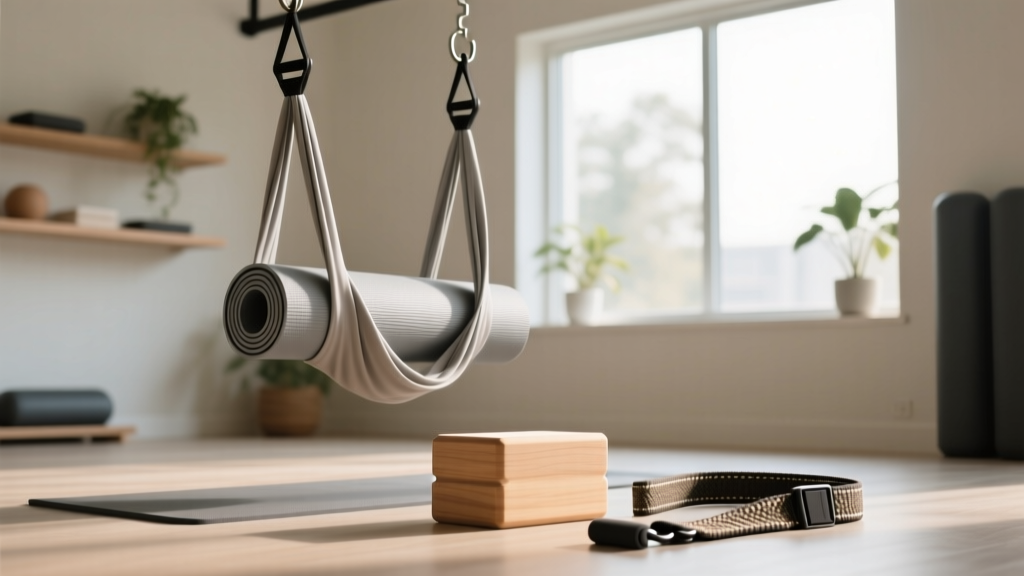
Best Hangable Yoga Mats and Block Strap Guide 2026

Yoga Block & Strap Buying Guide: How to Clean Gym Mats at Home

Loop Band vs Tube Band Care: Protect Your Manduka X Yoga Mat 5mm
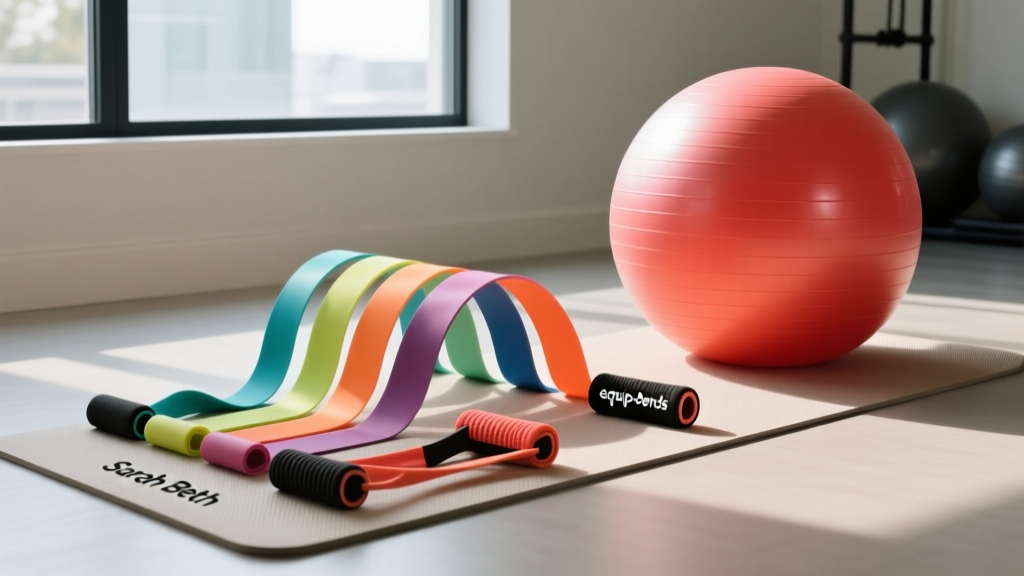
Exercise Ball Size Guide & Care for Sarah Beth Yoga Mat
