
No-Damage Home Gym Mirror Installation & Rental Setup Trends 2026
Explore 2026 trends in no-damage rental home gym setups, featuring damage-free home gym mirror installation, modular gear, and lease-safe flooring.

The 2026 Urban Fitness Shift: Why Renters Are Demanding No-Damage Setups
The landscape of residential fitness has undergone a permanent structural shift. According to the Joint Center for Housing Studies of Harvard University, the United States currently sustains over 44 million renter households, a demographic increasingly composed of remote workers and high-income earners who demand premium amenities without the permanence of homeownership. Concurrently, data from the National Multifamily Housing Council (NMHC) highlights that strict lease agreements and steep security deposit deductions are driving a massive secondary market for 'leave-no-trace' fitness equipment.
In 2026, the home fitness industry is no longer just catering to suburban garage owners. The fastest-growing sector in residential gym design is the urban rental market. Consumers are actively seeking modular, non-destructive setups that deliver commercial-grade performance while strictly adhering to lease clauses that prohibit drywall penetration, structural alteration, and subfloor damage. This trend report analyzes the current market dynamics of renter-friendly home gyms, with a specialized deep-dive into the highly searched, often misunderstood domain of damage-free home gym mirror installation.
Market Insight: The Deposit Protection Economy
Industry analysis shows that the average cost to repair a single improperly patched drywall anchor hole in a luxury apartment now ranges from $150 to $300 per incident in professional painting and texturing fees. This has created a micro-economy of 'deposit protection' fitness gear, where consumers willingly pay a 20-30% premium for freestanding, adhesive-based, or ballast-stabilized equipment.
The Evolution of Home Gym Mirror Installation for Rentals
Proper form tracking and spatial expansion are critical for any training environment, making mirrors a non-negotiable element of gym design. However, traditional home gym mirror installation involves drilling into wall studs or utilizing heavy-duty drywall toggles—both of which violate standard residential leases. The 2026 market has responded with two primary renter-friendly solutions: advanced chemical adhesives and freestanding optical-grade acrylics.
Method 1: Mirror-Safe Mastic Adhesives
The most critical failure mode in DIY mirror mounting is 'desilvering.' Standard construction adhesives (like basic polyurethane formulas) contain solvents that eat through the protective paint and silver nitrate backing of glass mirrors, causing permanent black rot within weeks. The 2026 industry standard for renter-safe, damage-free mounting is Loctite PL 520 Mirror Adhesive or Liquid Nails Mirror-Mastic. These specialized formulas bond aggressively to painted drywall and glass without degrading the reflective backing.
Application Protocol: Apply in vertical beads (never horizontal, which traps moisture) every 4 to 6 inches. Press the mirror to the wall and secure it temporarily with painter's tape and wooden braces for 48 hours while the mastic cures. Upon move-out, the mirror is removed by slicing the adhesive with a piano wire, and the residual mastic is scraped and painted over, leaving no structural drywall damage.
Method 2: Freestanding Optical Acrylic Systems
For renters who cannot risk wall adhesives, the market has seen a surge in shatterproof, optical-grade acrylic mirrors (typically 3/16-inch thick PMMA). Unlike cheap, funhouse-style acrylics that distort at the edges, 2026's premium acrylic panels feature reinforced backing grids. These are leaned against the wall and secured at the base with high-friction neoprene anti-slip pads, requiring zero wall contact.
Damage-Free Mirror Mounting: A Comparative Analysis
| Installation Method | Material Cost (per 4x6 ft) | Lease Risk Level | Optical Clarity | Move-Out Remediation |
|---|---|---|---|---|
| Mirror-Safe Mastic (PL 520) | $85 - $120 | Low (Paint/Scrape) | Perfect (Glass) | Wire-cut, scrape, spot-paint |
| 3M VHB Heavy-Duty Strips | $110 - $150 | Medium (Drywall Tear) | Perfect (Glass) | High risk of paper-face drywall tear |
| Freestanding Acrylic (PMMA) | $180 - $250 | Zero | High (Slight edge warp) | None (Simply carry out) |
| Tension-Rod Framed Systems | $300 - $450 | Zero | Perfect (Glass) | None (Tension release) |
Lease-Safe Flooring: Preventing Plasticizer Migration
Beyond the walls, the most common point of financial contention between renters and property managers in 2026 is flooring damage. Modern apartments heavily feature Luxury Vinyl Plank (LVP) or engineered hardwood. A widespread misconception is that laying down heavy rubber horse stall mats directly onto LVP will protect the floor from dropped dumbbells. In reality, this causes a chemical reaction known as plasticizer migration.
The vulcanized rubber in standard gym mats contains chemical plasticizers that, when trapped against the polyurethane wear layer of LVP under the pressure of heavy equipment, will permanently stain the floor with indelible yellow or brown marks. To execute a truly no-damage setup, renters must deploy a 6-mil polyethylene vapor barrier film (available at any hardware store for roughly $0.15 per square foot) between the subfloor and the rubber mats. This inert plastic barrier completely blocks chemical transfer while still allowing the rubber to absorb kinetic impact from dropped weights.
Equipment Trends: The Rise of Ballast-Stabilized Racks
The Health & Fitness Association (HFA) notes that consumer demand for home strength training has outpaced cardio equipment purchases for the fourth consecutive year. However, traditional power racks require 3/8-inch lag bolts drilled directly into structural wall studs. The 2026 market solution is the ballast-stabilized freestanding rack.
Brands have engineered flat-footed squat stands and fold-away wall units that utilize the weight of the user's own equipment for stabilization. By designing racks with extended rear weight-storage horns, the rack becomes structurally anchored by the load of bumper plates and sandbags. For example, a standard flat-footed rack weighing 150 lbs becomes virtually immovable when loaded with 300 lbs of bumper plates on its rear pegs, safely supporting dynamic kipping pull-ups and heavy barbell racking without a single screw in the drywall.
Renter Warning: The French Cleat Fallacy
Many online tutorials suggest using wooden French Cleats mounted with drywall anchors to hold heavy gym mirrors or folding workout tables. This is a critical failure point. Standard drywall toggle bolts are rated for static sheer weight, not dynamic vibration. The micro-vibrations from dropping weights on the floor will slowly loosen the toggle wings inside the drywall cavity, leading to catastrophic wall failure and severe property damage.
The Economics of a No-Damage Home Gym
From a financial perspective, investing in premium renter-friendly gear yields a distinct return on investment when factoring in avoided lease penalties and boutique gym memberships. Consider the following 2026 cost-benefit breakdown for an urban professional:
- Boutique Gym Membership: $180/month ($2,160/year).
- No-Damage Home Gym Capital Expenditure: $1,400 (Includes freestanding acrylic mirror, poly-film barrier, 3/4" rubber mats, adjustable dumbbells, and ballast-stabilized squat stands).
- Avoided Lease Penalties: $600 (Average cost of 4 drywall patch/paint jobs and LVP stain remediation).
- Net First-Year Savings: $1,360, with the equipment retaining a 60% resale value on the secondary market upon relocation.
Conclusion: The Future of Transient Fitness Spaces
The era of the suburban, permanently bolted-down garage gym is no longer the sole standard for residential fitness. As urbanization continues and high-end rental living becomes a long-term lifestyle choice for millions, the market will continue to innovate in the space of transient, modular, and non-destructive fitness design. By leveraging specialized mirror-safe mastics, optical acrylics, chemical-blocking floor barriers, and ballast-based equipment, renters in 2026 can construct elite training environments that leave absolutely no trace behind.
More gear to consider
All reviews
Beyond the Garage: Practical Space Alternatives for Home Gym Setup When Square Footage Is Limited

Force USA HG100 Home Gym Product Info and Reviews: Rental Setup 2026
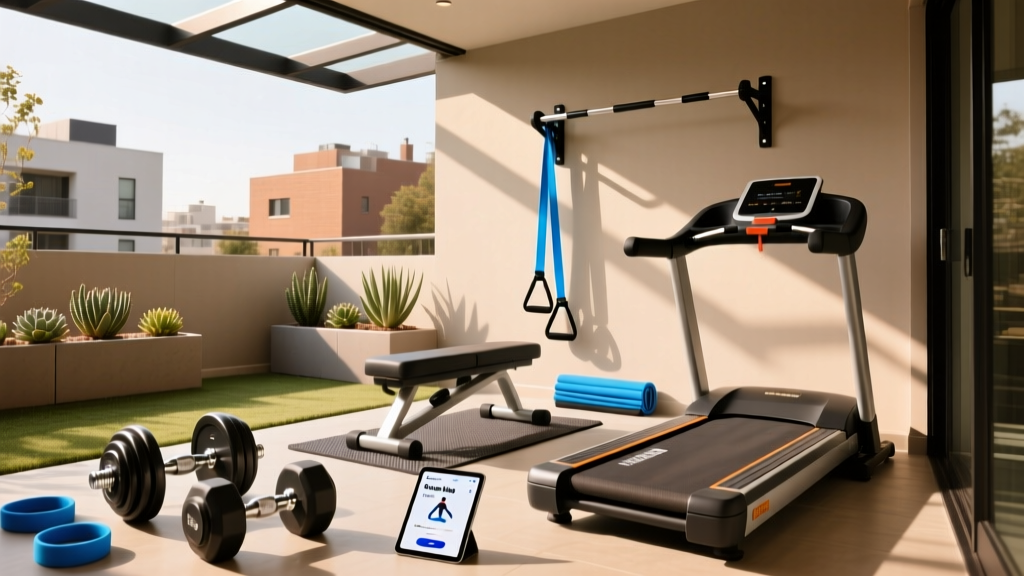
Outdoor Gym Weather Care & Home Gym Club Training App Tracking

Troubleshooting Your Home Gym Weider Pro 9940 in a Rental Apartment

Home Gym Costs: Head-to-Head Budget Builds Under $500
