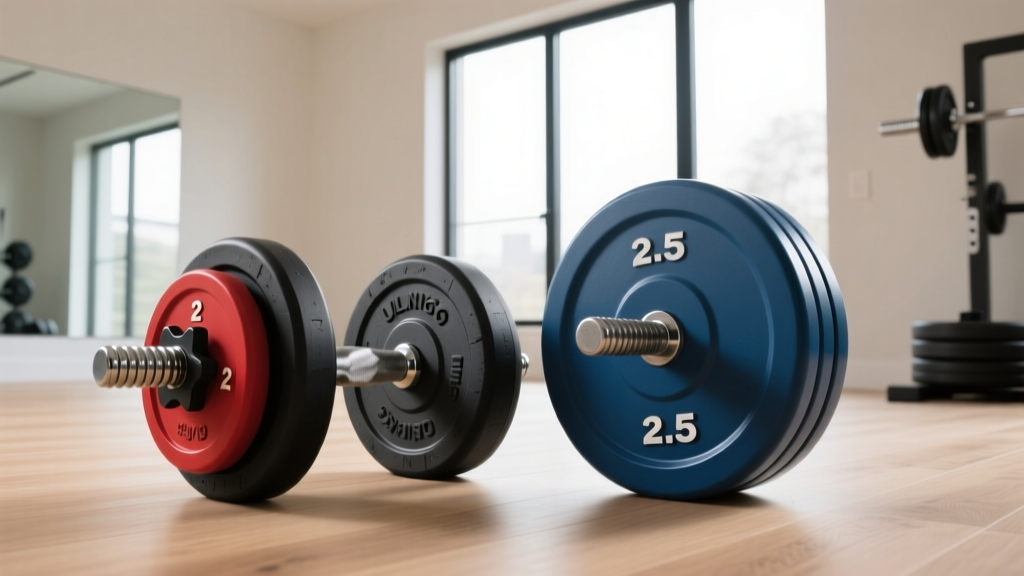
Standard vs Olympic Plates: Errors in a Simple Workout with Dumbbells
Troubleshoot standard vs Olympic weight plate mistakes that ruin loadable dumbbell setups, grip clearance, and your simple workout with dumbbells.

When you set out to design a simple workout with dumbbells at home, the last thing you expect is for your equipment to fail before you even finish your first set of goblet squats. For home gym owners building a versatile setup on a budget, loadable dumbbell handles seem like the perfect solution. However, the most pervasive and costly mistake beginners make is fundamentally misunderstanding the difference between Standard (1-inch) and Olympic (2-inch) weight plates—and how that choice dictates the success, safety, and longevity of their dumbbell training.
This troubleshooting guide dissects the exact mechanical, ergonomic, and financial errors lifters make when mixing plate types with dumbbell handles, and provides a concrete framework to fix your setup for 2026 and beyond.
The Core Mistake: Misunderstanding Sleeve Diameters
The terms "Standard" and "Olympic" are heavily marketed, but the nomenclature is inherently confusing. The mistake lies in assuming the measurements refer to the exact physical dimensions of the plates or bars. They do not.
- Standard Plates: Feature a center hole that is actually 1.125 inches (approx. 28.5mm) in diameter, designed to slide over solid steel dumbbell handles that are exactly 1 inch (25.4mm) thick.
- Olympic Plates: Feature a center hole that is 1.968 inches (exactly 50mm), adhering to the strict international specifications outlined by the International Powerlifting Federation (IPF). These require sleeves that are 50mm in diameter.
How Plate Hubs Ruin Your Simple Workout with Dumbbells
Assuming you have matched the hole size to the sleeve diameter correctly, the next major troubleshooting issue is hub width (the raised flange around the center hole). When performing a simple workout with dumbbells using loadable handles, sleeve real estate is incredibly limited.
Most budget Olympic loadable dumbbell handles, such as the Titan Fitness 15-inch Loadable Dumbbell Handles, offer only about 4.75 inches of usable sleeve space per side. If you use traditional cast-iron Olympic plates, the wide raised hubs eat up that space rapidly, preventing you from loading enough weight for progressive overload.
Sleeve Capacity Matrix: Standard vs. Olympic Hubs
| Plate Type & Spec | Center Hole | Avg. Hub/Flange Width | Max Plates on a 4.75" Sleeve | Max Load per Side (using 10lb plates) |
|---|---|---|---|---|
| Standard Cast Iron (1") | 1.125" | 1.50" | 3 plates | 30 lbs |
| Olympic Cast Iron (2") | 1.96" (50mm) | 2.25" | 2 plates | 20 lbs |
| Olympic Urethane (2") | 1.96" (50mm) | 1.75" | 2 to 3 plates | 20 - 30 lbs |
| Olympic Bumper (2") | 1.96" (50mm) | N/A (Full Width) | 1 to 2 plates | 10 - 25 lbs |
The Troubleshooting Fix: If your simple workout with dumbbells requires loads exceeding 40 lbs per hand, you must abandon wide-hub cast iron Olympic plates and invest in Rogue Echo Bumper Plates or precision-machined urethane Olympic plates. While bumpers are wider overall, their flat profile allows them to sit flush against one another on the sleeve, maximizing the 4.75-inch space without the interference of raised steel hubs.
Collar Failure Modes During Dynamic Movements
A simple workout with dumbbells often incorporates unilateral, dynamic movements like lunges, step-ups, or renegade rows. These exercises introduce multi-directional torque to the dumbbell sleeve. The type of plate you use dictates the type of collar required to secure it, and mismatching them is a primary cause of home gym injuries.
Standard Spin-Lock Collars vs. Olympic Spring Clips
Standard 1-inch handles almost universally rely on threaded sleeves and star-lock (spin-lock) nuts. While secure for static lifts like floor presses, the threaded sleeves on budget handles (like the ubiquitous $25 CAP Barbell 14-inch handles) are prone to cross-threading. Furthermore, the repetitive impact of setting dumbbells on the floor vibrates the star-nut loose over time. By your third set of walking lunges, the collar has backed off by half an inch, allowing the plates to shift and alter the center of gravity.
Olympic loadable dumbbell handles utilize smooth 50mm sleeves, allowing for heavy-duty aluminum clamp collars (like HG Collars or Rogue USA Aluminum Collars). These clamps exert over 100 lbs of lateral clamping force, completely eliminating plate shift during dynamic movements.
Grip Ergonomics and Shaft Bending
According to biomechanics resources like ExRx.net, grip diameter significantly impacts forearm fatigue and neural drive during pulling movements. This is where the Standard vs. Olympic choice transcends the plates and affects the dumbbell handle itself.
Expert Insight: Standard 1-inch solid steel dumbbell handles lack the structural rigidity to support heavy loads without flexing. When loaded past 80 lbs total, a 14-inch standard handle will exhibit a visible downward bow in the center of the grip shaft, causing severe wrist supination strain during pressing movements.
Conversely, high-quality Olympic loadable dumbbell handles (such as the Rogue Loadable Dumbbell Handles, priced around $175 per pair in 2026) feature a hollow, chrome-finished 35mm (1.38-inch) steel shaft. This thicker shaft diameter mimics the ergonomics of a standard Olympic barbell, providing optimal grip closure and preventing shaft flex even when loaded with 150+ lbs of Olympic plates.
💡 Pro-Tip for Grip Clearance: When using Olympic plates on loadable dumbbells, the thick 2-inch hubs can crowd your knuckles during exercises like dumbbell cleans or snatches. To troubleshoot this, use "thin-hub" machined steel plates or fractional change plates (e.g., 2.5lb or 5lb micro-plates) closest to the collar to push the wider plates outward, away from your grip shaft.The Financial Trap: Buying Standard for a "Beginner" Gym
The most common justification for buying Standard plates and handles is cost. In early 2026, standard cast-iron plates average $1.25 to $1.50 per pound, while entry-level Olympic plates hover around $1.75 to $2.00 per pound. Beginners assume they are saving money to fund their simple workout with dumbbells.
However, this creates a dead-end upgrade trap. If you eventually decide to add a barbell to your home gym, you will be forced to buy an entirely new set of Olympic plates, as your Standard plates will not fit a standard Olympic barbell. Your initial "savings" are entirely negated. Furthermore, the resale value of Standard plates is abysmal compared to Olympic plates, which hold roughly 60-70% of their retail value on the secondary market.
Step-by-Step Troubleshooting Flowchart
If you are currently struggling with your loadable dumbbell setup, follow this diagnostic flow to correct your equipment errors:
- Audit Your Current Plates: Measure the center hole. If it is ~1 inch, you are in the Standard ecosystem. If it is ~2 inches, you are in the Olympic ecosystem. Do not attempt to mix them using cheap plastic adapter rings, as these crack under heavy loads.
- Evaluate Your Sleeve Space: Remove all plates and measure the usable sleeve length. If it is under 5 inches and you are using Olympic plates, you must switch to thin-profile urethane or bumper plates to achieve adequate loading.
- Check Collar Security: If using Standard spin-locks, replace them with aftermarket O-ring lined star-nuts to reduce vibration loosening. If using Olympic sleeves, invest in aluminum locking collars rather than cheap plastic spring clips.
- Test the Shaft Flex: Load your dumbbells to your maximum working weight for goblet squats. Press down on the center of the grip. If the steel bends or the knurling digs sharply into your palms due to a thin shaft, retire the handles and upgrade to 35mm Olympic loadable handles.
Final Verdict
Executing a safe, progressive, and simple workout with dumbbells requires respecting the physics of your equipment. While Standard 1-inch plates and handles serve a niche purpose for ultra-lightweight rehabilitation or travel kits, the Olympic 50mm standard remains the undisputed king of home gym versatility. By troubleshooting hub widths, upgrading your collar security, and investing in proper 35mm shaft handles, you eliminate the mechanical failures that derail home training programs.
More gear to consider
All reviews
Front Rack Dumbbell Squat Trends: 2026 Storage & Rack Analysis
Bumper Plate vs Iron Plate: Space & Dumbbell RDL vs Barbell RDL

Seated Dumbbell Calf Raise Setup & Barbell Collar Comparison
Front Lunges with Dumbbells: A Beginner's Guide to Neoprene Weights

Olympic vs Standard Plates & Standing Dumbbell Fly Muscles Worked
