
Power Rack vs Squat Rack vs Stand: Starter Dumbbell Workout Guide
Compare power racks, squat racks, and squat stands. Find the perfect rig to elevate your starter dumbbell workout and future barbell training.

The Evolution from a Starter Dumbbell Workout to Heavy Rigs
When you first embark on a fitness journey, a starter dumbbell workout routine paired with a set of adjustable dumbbells and a flat bench is often all you need. However, as your strength progresses—moving past 50-pound dumbbells for chest presses or transitioning into barbell movements—the logistics of safely lifting and racking heavy weights change dramatically. Hoisting 70-pound adjustable dumbbells into an incline position without a proper rack is a recipe for a rotator cuff injury.
This is where investing in a dedicated lifting rig becomes non-negotiable. But with the market flooded with options, how do you choose between a squat stand, a half squat rack, and a full power rack? In this 2026 buying guide, we break down the exact specifications, attachment ecosystems, and spatial footprints of each rig type to help you make an informed decision that supports both your current dumbbell routine and your future strength goals.
Expert Insight: According to National Strength and Conditioning Association (NSCA) guidelines, utilizing mechanical spotter arms is critical for solo lifters performing exercises where the load passes over the face or neck, such as dumbbell bench presses or barbell squats. Never rely solely on the floor or a spotter who isn't physically capable of handling your max working weight.
Squat Stands: The Minimalist's Entry Point
Squat stands consist of two independent, upright metal posts with adjustable J-cups. They offer the smallest footprint and the most open floor space, making them ideal for garage gyms with low ceilings or limited square footage.
Top Contenders & Specifications
- Rogue S-1 Squat Stand 2.0: Priced around $345, this stand features 3x3-inch 11-gauge steel uprights and a 1000-lb capacity. The footprint is a mere 48" x 48", and it stands 72" tall.
- Titan Fitness T-1 Series: A budget-friendly alternative at roughly $250, featuring 2x2-inch uprights. While cheaper, the 2x2 profile limits your attachment options compared to the industry-standard 3x3.
Pros and Cons for Dumbbell Lifters
For a starter dumbbell workout, squat stands are excellent if you primarily use them to set up a bench for rack pulls, floor presses, or eventually barbell benching. However, because the uprights are not connected by a top crossmember (unless you buy a pull-up bar add-on), they can wobble slightly when racking heavy, uneven loads. You must bolt them to a concrete floor or use heavy-duty weight plate anchors on the base to prevent tipping during failed reps.
Half Squat Racks: Balancing Space and Safety
Often referred to as "open racks" or "half racks," these feature a connected rear frame, providing vastly superior stability compared to independent stands. They typically include a pull-up bar and robust spotter arms that extend outward, allowing you to fail a rep safely outside the rig.
The Attachment Ecosystem Advantage
When analyzing the Garage Gym Reviews' power rack testing, the half rack category consistently wins for versatility. The Rep Fitness PR-1100 (approx. $449) uses 2x2 uprights with 1-inch holes, which is great for beginners. However, serious lifters should look at the Rogue Monster Lite RM-4000M ($900+), which utilizes 3x3 uprights with 5/8-inch holes.
Crucial 2026 Buying Tip: Always check the hole spacing and upright dimensions before buying attachments. The industry has largely standardized around 3x3-inch uprights with 5/8-inch hardware. If you buy a rack with 1-inch holes or 2x2 uprights, you will be locked out of 80% of the premium attachment market (like landmines, lat pulldowns, and monolifts).
Full Power Racks: The Ultimate Enclosed Fortress
A full power rack features four (or sometimes six) uprights connected by top and bottom crossmembers, creating an enclosed "cage." You step inside the cage to lift. This design offers the highest weight capacities (often 1,500 to 2,000+ lbs) and unparalleled safety, as the spotter straps or pin-pipe safeties run the entire width of the interior.
Deep Dive: Rep PR-4000 V3 vs. Titan T-3
| Feature | Rep PR-4000 V3 (3x3) | Titan T-3 Power Rack |
|---|---|---|
| Approx. Price | $1,099 | $699 |
| Upright Size | 3x3" 11-Gauge Steel | 2x2" 11-Gauge Steel |
| Hole Spacing | 5/8" (Westside in bench zone) | 2" Standard / 1" Westside |
| Footprint | 48" x 48" (or 30" depth option) | 48" x 48" |
| J-Cups | Sandwich J-Cups w/ UHMW Plastic | Standard Steel w/ UHMW Liner |
For lifters advancing beyond a basic starter dumbbell workout into heavy barbell squats, rack pulls, and kipping pull-ups, the full power rack is the undisputed king. The enclosed space also allows for safe band work and cable attachments without the risk of the rack tipping forward.
Decision Matrix: Which Rig Fits Your Garage?
Choosing the right equipment requires matching your spatial constraints with your training ambitions. Use this framework to make your final decision:
- Choose Squat Stands if: You have less than 30 square feet of dedicated lifting space, an 80-inch or lower ceiling, and your routine is 70% dumbbell-focused with light barbell pressing. (Budget: $250 - $400)
- Choose a Half Rack if: You want the stability of a connected frame and the safety of outward-facing spotter arms, but you still want an open front area for dumbbell lunges, kettlebell swings, and gymnastics rings. (Budget: $600 - $1,000)
- Choose a Full Power Rack if: You plan to lift heavy solo, want to integrate a lat pulldown/cable system, and have the ceiling height (at least 84-90 inches) to accommodate a full cage and pull-up bar clearance. (Budget: $800 - $1,800+)
Frequently Asked Questions
Can I use a squat stand for heavy dumbbell bench presses?
Yes, but with caveats. If you are using heavy adjustable dumbbells (e.g., 80+ lbs), you will need to clean them to your shoulders and kick them back. A squat stand with extended spotter arms can catch the dumbbells if you fail, but setting them up on the stand itself is impractical. You will still be picking them up from the floor or a bench.
What is "Westside Hole Spacing" and why does it matter?
Standard hole spacing on racks is usually 2 inches apart. Westside spacing features holes that are 1 inch apart in the bench press and squat zone (typically the middle 20-30 inches of the upright). This allows for micro-adjustments of your J-cups, ensuring you don't have to un-rack the barbell from too high (wasting energy) or too low (risking a failed lift off the chest).
Do I need to bolt my rack to the floor?
Full power racks with a 48" x 48" base and heavy barbell storage on the rear uprights rarely need bolting. However, squat stands and half racks with shallow 24" or 30" depths must be bolted to concrete or heavily anchored with plate storage on the front base to prevent tipping during pull-ups or aggressive re-racking.
Ultimately, upgrading from a simple bench to a proper rig is the bridge between a beginner starter dumbbell workout and a lifelong, progressive strength training program. Assess your ceiling height, measure your floor space, and invest in the 3x3 ecosystem to future-proof your home gym for the next decade.
More gear to consider
All reviews
EZ Curl Bar vs Straight Bar: Pairing & Split Squats with Dumbbells

Optimize Space for a Light Dumbbell Workout: Hex vs Urethane Dumbbells

Barbell Collar & Clamp Types Comparison: Arnold Presses with Dumbbells
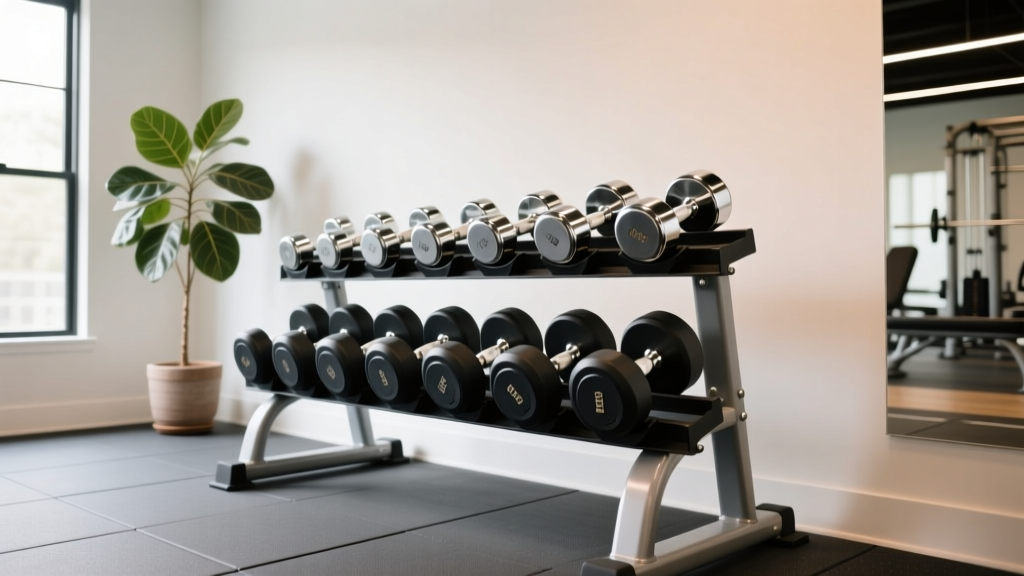
Dumbbell Rack Maintenance: Storing Your 35 Pounds Dumbbell Safely
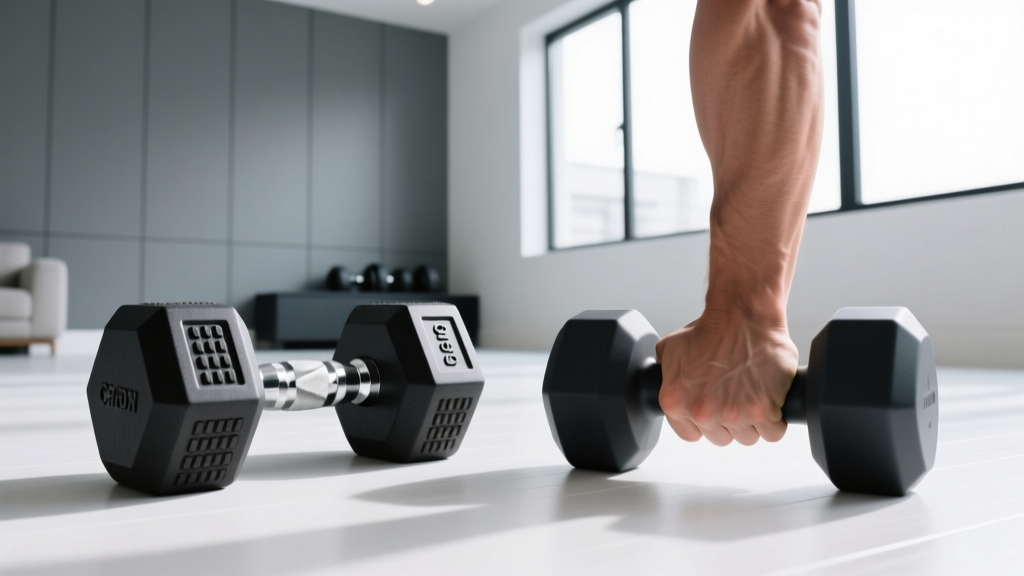
How to Curl Dumbbells Correctly: Rubber Hex vs Urethane Budget Guide
