
Rack vs Stand: Troubleshooting Dumbbell Rear Delt Flyes Clearance
Troubleshoot home gym spatial limits. We compare power racks, squat racks, and stands, focusing on safety and clearance for dumbbell rear delt flyes.

The Operational Clearance Matrix: Where Home Gym Builders Fail
When outfitting a home gym, most lifters obsess over the external footprint of their equipment. They measure the concrete slab, check the ceiling height, and pull the trigger on a rig. But the most common—and frustrating—mistake in home gym design is ignoring operational clearance. This failure becomes painfully obvious when you attempt wide-arc isolation movements, specifically the dumbbell rear delt flye, inside a confined space.
Choosing between a power rack, a half squat rack, and independent squat stands isn't just about heavy squats; it is about how the rig accommodates your accessory work. In 2026, with home gym footprints shrinking and equipment modularity increasing, troubleshooting your spatial layout before you buy is critical. Let's break down the common mistakes lifters make with these three setups and how to troubleshoot clearance and safety issues.
Comparing the Big Three: Dimensions and 2026 Pricing
Before troubleshooting specific movement failures, we must establish the physical constraints of standard 11-gauge steel rigs. The interior width of your rack dictates your lateral wingspan for dumbbell work.
| Equipment Type | Popular 2026 Model | Upright Profile | Interior Width | Approx. Price |
|---|---|---|---|---|
| 4-Post Power Rack | Rogue R-3 Power Rack | 3x3 Inches | 49 Inches | $1,195 |
| 4-Post Power Rack (Budget) | Titan T-2 Short Rack | 2x3 Inches | 41.5 Inches | $449 |
| Half Rack (Squat Rack) | REP Fitness PR-4000 Half | 3x3 Inches | 48 Inches (Front Open) | $899 |
| Squat Stands | Rogue SML-2 Monster Lite | 3x3 Inches | 49 Inches (Infinite Lateral) | $550 (Pair) |
Troubleshooting the Dumbbell Rear Delt Flye Inside a 4-Post Rack
The chest-supported dumbbell rear delt flye is a staple for posterior shoulder development. According to BarBend's comprehensive rack comparison, 4-post power racks offer unmatched safety for heavy barbell lifts, but they create a 'cage effect' for dumbbell work.
Mistake #1: The 'Upright Strike' Failure Mode
The Scenario: You set an adjustable bench to a 45-degree incline inside a Titan T-2 (41.5-inch interior width). You lay chest-down to perform rear delt flyes with 35lb dumbbells. At the bottom of the eccentric phase, the dumbbells smash into the steel uprights, ruining the stretch and potentially damaging the knurling or the rack's powder coat.
The Troubleshooting Fix:
- Alter the Bench Angle: Drop the incline to 15 or 20 degrees. A flatter bench alters the biomechanical arc, keeping the dumbbells higher and closer to your torso, bypassing the uprights entirely.
- The Diagonal Placement: Angle the bench diagonally inside the rack. This utilizes the hypotenuse of the rack's interior rectangle, granting you an extra 10 to 14 inches of lateral clearance for your arms to drop freely.
- Upgrade to 3x3 Uprights: If you are buying a new rack, opt for a 3x3 profile (like the Rogue R-3). While the interior width is similar, the wider uprights allow you to mount J-cups and safeties on the *outside* of the cage, keeping the interior completely flush and free of protruding hardware that could clip your dumbbells.
Many lifters leave their sandwich J-cups or pin-pipe safeties mounted on the inside uprights when doing dumbbell work. A 35lb dumbbell striking a steel pin-pipe during a rear delt flye can cause severe wrist sprains or chip your dumbbell's urethane coating. Always clear the interior uprights before accessory work.
Squat Stands: Infinite Clearance, Hidden Safety Flaws
If your primary frustration is spatial restriction, squat stands (like the Rogue SML-2) offer infinite lateral clearance. You can perform seated bent-over rear delt flyes, wide-arc chest flyes, and heavy dumbbell presses without ever hitting a steel post. However, squat stands introduce a completely different set of troubleshooting nightmares regarding safety and balance.
Mistake #2: Ignoring the Center of Gravity Shift
The Scenario: You are using squat stands with 24-inch safety spotter arms. You sit on the end of a flat bench to perform seated bent-over rear delt flyes. You lean forward, and your spotter arms are extended toward you. If you accidentally bump the spotter arms, or if you attempt to rack a heavy barbell on the stands without bolting them down, the entire rig can tip forward.
The Troubleshooting Fix:
- Bolt or Sandbag: In 2026, most premium squat stands feature base plates with pre-drilled holes. If you are on a concrete slab, use wedge anchors. If you are on rubber mats over wood, you must use 40lb+ sandbags on the rear crossmembers to counterbalance the forward lean of the safety arms.
- Use a Spotter Arm Alternative: For dumbbell work, remove the long safety spotter arms entirely. They are designed to catch a falling barbell, not to protect you during dumbbell rear delt flyes. Removing them eliminates the tipping hazard and clears floor space for your feet during seated variations.
Half Racks (Squat Racks): The Middle-Ground Compromise
Half racks feature two main uprights and a rear stabilizer, with J-cups mounted on the *front* of the rig. You perform your lifts outside the cage. This is the ultimate troubleshooting hack for lifters who want the safety of a spotter arm system but the spatial freedom of squat stands.
Mistake #3: Poor Bench Alignment for Chest-Supported Work
Because you work outside a half rack, you can easily drag an adjustable bench just outside the uprights to do chest-supported dumbbell rear delt flyes. The mistake here is spatial mismanagement: leaving the bench too close to the uprights, causing your head or the top of the bench to scrape the steel when adjusting the incline.
The Fix: Utilize a bench with a low-profile rear stabilizer (like the Rogue Adjustable Bench 3.0). This allows you to slide the bench flush against the base of the half rack's uprights, giving you the structural support of the rack without the lateral confinement.
Pro-Tip for Band-Resisted Rear Delt Flyes: If you use a half rack or power rack, utilize the lower band pegs. Loop a resistance band around the base peg, lie face-down on an incline bench, and perform band-resisted rear delt flyes. The rack acts as an immovable anchor, providing accommodating resistance that peaks exactly at the point of maximum posterior deltoid contraction.
Diagnostic Checklist: Choosing Your Setup
Use this troubleshooting matrix to finalize your equipment decision based on your specific accessory needs and room constraints.
- Choose a 4-Post Power Rack IF: You prioritize heavy, unassisted barbell squatting and kipping pull-ups, and you are willing to use the 'diagonal bench trick' to troubleshoot clearance for dumbbell rear delt flyes.
- Choose a Half Rack IF: You want to perform wide-arc dumbbell work completely free of uprights, but still require a robust, bolted-to-the-floor safety spotter system for heavy bench pressing.
- Choose Squat Stands IF: You have a low ceiling (under 84 inches), a tight budget, and your programming heavily favors dumbbell isolations and Olympic lifting variations where lateral space is non-negotiable.
Final Thoughts on Spatial Planning
Troubleshooting your home gym isn't just about making sure the equipment fits through the garage door; it's about ensuring your biomechanics fit inside the equipment. The dumbbell rear delt flye is the perfect stress-test for your rack's interior geometry. By understanding the exact interior widths, upright profiles, and bench angles required, you can avoid the costly mistake of buying a rig that fights your training program. Measure your wingspan, check the interior dimensions, and build a space that works for every movement in your arsenal.
More gear to consider
All reviews
Space-Saving Bicep Dumbbell Workout Routine With Loadable Plates
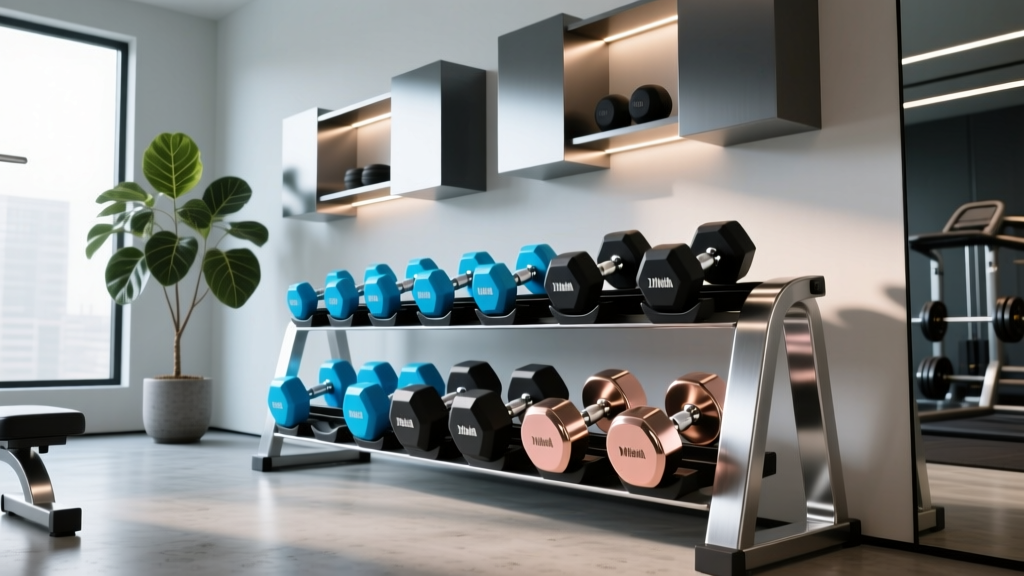
Optimize Your Dumbbell Schedule Workout: 2026 Rack & Storage Trends

Best Dumbbell Racks for a Safe Dumbbell Single Leg RDL Setup (2026)

Power Rack vs Squat Rack vs Squat Stand: Setup for Dumbbell Slams

Barbell Collar and Clamp Types Comparison: Beyond Dumbbell Romanian Lifts
