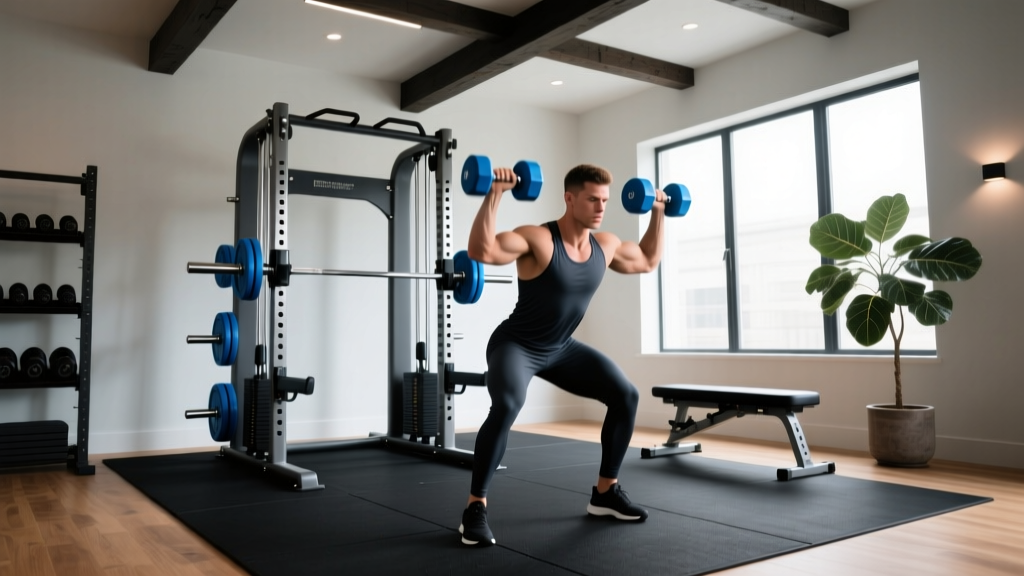
Power Rack vs Squat Stand: Dumbbell Hammer Curl to Press Guide
Compare power racks, half racks, and squat stands for heavy squats and the dumbbell hammer curl to press. Expert 2026 buying guide with exact specs.

The Home Gym Footprint Dilemma in 2026
Designing a comprehensive home gym requires balancing structural safety with spatial versatility. While most buyers focus exclusively on heavy barbell movements like back squats and bench presses, a truly functional rig must also accommodate complex, multi-joint dumbbell exercises. One of the most demanding movements for spatial clearance is the dumbbell hammer curl to press. This compound exercise requires seamless transition from a neutral-grip curl into an overhead press, demanding precise bench positioning and vertical clearance.
In this head-to-head comparison, we evaluate the three primary categories of lifting rigs—the Power Rack (Full Cage), the Squat Rack (Half Rack), and the Squat Stand. We will break down exact 2026 pricing, steel gauge specifications, and real-world failure modes to help you choose the setup that safely handles both your one-rep max squats and your high-clearance dumbbell work.
Contender Breakdown: Cages, Half Racks, and Stands
1. The Power Rack (Full Cage)
The power rack is the gold standard for safety, utilizing four to six uprights to create an enclosed lifting environment. In 2026, the market leaders remain the Rep Fitness PR-4000 and the Rogue R-3 Power Rack.
- Specifications: Typically constructed from 3x3-inch 11-gauge steel with 1-inch Westside hole spacing in the benching zone.
- Pricing: Base models start around $1,199, but fully rigged cages with spotter arms, pull-up bars, and storage easily exceed $1,800.
- Footprint: Standard 49" x 49" exterior, requiring a minimum of 8x8 feet of dedicated floor space for safe loading and unloading.
- The Catch: Standard ceiling heights (8 to 9 feet) severely limit overhead movements inside the cage. Standard racks are 90 inches tall, leaving the top crossmember at roughly 88 inches.
2. The Squat Rack (Half Rack)
Half racks, such as the Titan T-2 Half Rack or the Rogue HR-2, remove the front uprights, replacing them with extended spotter arms. This creates an open-front lifting environment.
- Specifications: Often utilize 2x3-inch or 3x3-inch uprights. The extended base provides stability without requiring the massive footprint of a full cage.
- Pricing: Highly competitive, ranging from $599 to $899 depending on the brand and attachment ecosystem.
- Advantage: The open top and front allow for unrestricted overhead pressing and easy maneuvering of adjustable benches.
3. The Squat Stand
Squat stands are the minimalist solution, consisting of two independent uprights. The Rogue SML-2C Squat Stand 2.0 and the Titan T-35 Folding Stand are top sellers for garage gyms with severe space constraints.
- Specifications: Usually 2x2-inch or 3x3-inch steel. They must be bolted to a concrete slab or heavily weighted at the base to prevent tipping.
- Pricing: $295 to $450.
- The Catch: Zero integrated safety for barbell movements unless heavy-duty spotter arms are attached and the base is secured. Furthermore, they lack integrated dumbbell storage.
The Versatility Test: Executing the Dumbbell Hammer Curl to Press
To truly test the versatility of these rigs, we must look at how they handle the dumbbell hammer curl to press. According to the American Council on Exercise (ACE), compound dumbbell movements require strict biomechanical alignment and unrestricted range of motion. The hammer curl to press targets the brachioradialis, biceps, anterior deltoids, and triceps in one fluid sequence.
Biomechanical Setup Requirement: Performing this movement seated requires a Flat/Incline/Decline (FID) bench set to a 75-to-85-degree incline. Setting the bench to a perfect 90-degree vertical angle causes shoulder impingement during the overhead pressing phase. Therefore, the lifter needs significant vertical and lateral clearance.How the Power Rack Handles It
If you are taller than 5'8", performing the dumbbell hammer curl to press inside a standard 90-inch power rack is a biomechanical nightmare. When seated on an 80-degree incline bench, your arms will fully extend at roughly 84 to 86 inches above the floor. This leaves less than 4 inches of clearance before your heavy dumbbells smash into the steel crossmember or pull-up bar. Solution: You must drag your FID bench outside the cage to perform the movement, negating the convenience of the rack's footprint.
How the Half Rack Handles It
The half rack is the undisputed winner for this specific exercise. Because the front is open and the top is unobstructed, you can position your incline bench directly between or just behind the uprights. This allows for full overhead extension without hitting steel. Additionally, half racks often feature weight storage horns on the rear of the uprights, keeping your heavy dumbbells within arm's reach for easy pickup and drop-off.
How the Squat Stand Handles It
Squat stands offer infinite overhead clearance, making them excellent for standing or seated presses. However, the failure mode here is storage and stability. Squat stands do not have built-in dumbbell tiers. If you are curling and pressing 60-pound dumbbells, you will need a separate floor rack. Furthermore, aggressively picking up or dropping heavy dumbbells near the base of an unbolted squat stand can shift its center of gravity, creating a tipping hazard.
Head-to-Head Specification Matrix
| Feature | Power Rack (Rep PR-4000) | Half Rack (Titan T-2) | Squat Stand (Rogue SML-2C) |
|---|---|---|---|
| 2026 Base Price | $1,199 | $599 | $395 |
| Upright Steel | 3x3" 11-Gauge | 2x3" 11-Gauge | 3x3" 11-Gauge |
| Overhead Clearance | Restricted (88") | Unrestricted | Unrestricted |
| Dumbbell Storage | Optional Attachments | Rear Horns Included | None (Separate Rack Needed) |
| Safety Rating | Maximum (Enclosed) | High (Extended Arms) | Low (Requires Bolting) |
Safety Margins and Real-World Failure Modes
When evaluating expert-tested squat stands and racks, safety must dictate your final purchase. The most common failure mode in home gyms is the tipping of independent squat stands. If you attempt to re-rack a heavy barbell forward, or if you aggressively set down heavy dumbbells on the base stabilizer, the fulcrum point can shift. The National Strength and Conditioning Association (NSCA) strictly recommends that any lifting apparatus not enclosed in a 4-post cage must be mechanically fastened to the floor or heavily counter-weighted to prevent catastrophic tipping.
Another critical detail is the J-cup lining. In 2026, you should never purchase a rack that uses bare metal J-cups. Look for UHMW (Ultra-High Molecular Weight) plastic liners. Bare metal will chew through the knurling of your barbells and degrade the structural integrity of the cup's weld over time. Both the Rep PR-4000 and Rogue SML-2C feature sandwich-style J-cups with UHMW protection, ensuring your equipment survives years of heavy use.
Final Verdict: Which Setup Should You Buy?
Your choice ultimately depends on your ceiling height, floor space, and exercise selection.
- Choose the Power Rack if: You have 10-foot ceilings, prioritize maximum safety for heavy solo barbell squats, and have the budget ($1,500+) and space (8x10 feet) to accommodate a full cage. You will, however, need to move your bench outside the cage for the dumbbell hammer curl to press.
- Choose the Half Rack if: You want the perfect middle ground. It offers excellent safety via extended spotter arms, provides unrestricted overhead clearance for seated dumbbell presses, and keeps your heavy dumbbells stored directly on the rig. This is the most versatile option for hybrid barbell and dumbbell lifters.
- Choose the Squat Stand if: You are renting, have a massive concrete slab to bolt into, or need to fold the equipment away against a wall. Just remember to budget an extra $150 for a dedicated, heavy-duty dumbbell tier rack to safely support your pressing movements.
Pro-Tip for 2026 Buyers: If you opt for a squat stand to maximize overhead clearance for movements like the dumbbell hammer curl to press, invest in strap safeties rather than pin-pipe spotter arms. Strap safeties catch dropped dumbbells and barbells silently and are much easier to adjust between the narrow widths required for dumbbell work.
More gear to consider
All reviews
How to Use Dumbbells Correctly: Top Neoprene Sets Compared

Bumper vs Iron Plates: Optimizing the Dumbbell RFE Split Squat
EZ Bar vs Straight Bar: Care & Dumbbell Row Benefits

Barbell Collar Types Comparison & Incline Dumbbell Press GIF Guide

Dumbbell Bench Press Machine Setup & Barbell Collar Guide
