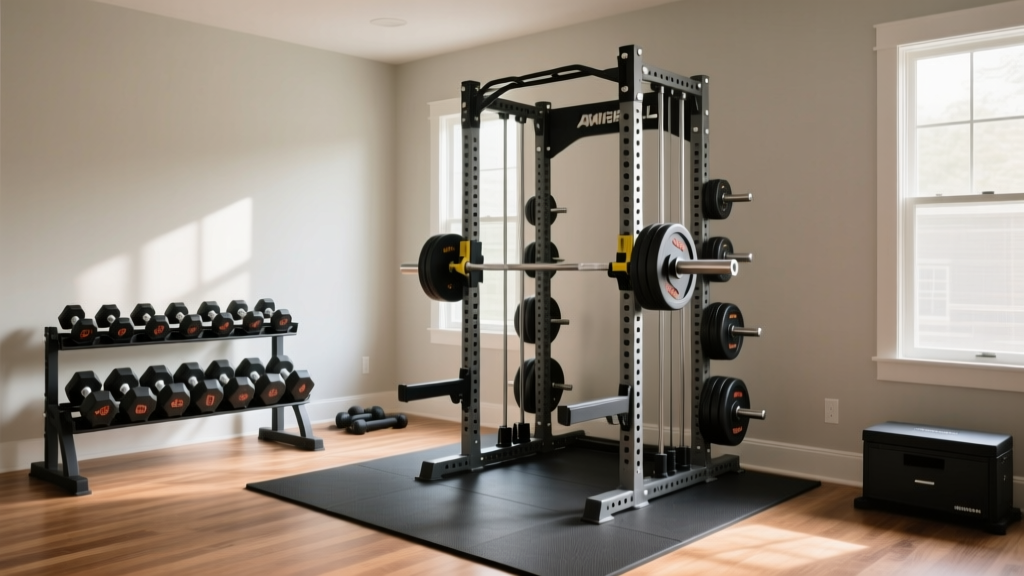
Power Rack vs Squat Stand: American Barbell Dumbbell Layout Mistakes
Avoid costly home gym layout mistakes. Learn how to troubleshoot power rack, squat rack, and squat stand clearances for your American Barbell dumbbell set.

The #1 Home Gym Planning Mistake: Buying Racks in a Vacuum
When designing a home gym in 2026, most lifters obsess over the barbell path but completely ignore the dumbbell ecosystem. You measure the ceiling height for pull-ups and the depth for bench pressing, but fail to account for the spatial geometry of your free weight storage. This oversight leads to dangerous pinch points, damaged flooring, and compromised lifting mechanics. The issue compounds exponentially when you invest in premium, commercial-grade gear. For instance, housing a full 5-50 lb American Barbell dumbbell set requires a heavy-duty 3-tier rack that fundamentally alters your room's traffic flow. Choosing between a power rack, squat rack, and squat stand isn't just about the barbell; it is about how that structure coexists with your heavy dumbbell zones.
⚠️ Troubleshooting Warning: The National Strength and Conditioning Association (NSCA) mandates a minimum of 36 inches of clear aisle space between any lifting station and free weight storage. Failing to account for this when placing a power rack next to a dumbbell tier rack is a leading cause of home gym tripping hazards and equipment damage.Diagnostic Matrix: Rack Types vs. Dumbbell Storage Realities
Before we troubleshoot specific layout failures, we must establish the baseline footprints of the three primary rack categories and how they interact with a standard 10-pair American Barbell Urethane Hex dumbbell rack (which measures approximately 47' W x 28' D x 31' H).
| Rack Category | Avg. Footprint (W x D) | DB Rack Placement Strategy | 2026 Avg. Cost |
|---|---|---|---|
| Power Rack (Full Cage) | 49' x 49' | Must be placed parallel; end-cap placement blocks lat pulldowns. | $1,200 - $1,800 |
| Squat Rack (Half Rack) | 48' x 24' | Can be placed perpendicular; utilizes uprights for minor DB storage. | $600 - $950 |
| Squat Stand (Minimalist) | 49' x 49' (Base) | Highly flexible, but baseplates create severe DB drop hazards. | $350 - $550 |
Troubleshooting the Power Rack: The 'Pinch Point' Failure
The full power rack (e.g., the Rogue R-3 Power Rack or Rep Fitness PR-4000) is the gold standard for safety. However, its sheer depth is where most layout mistakes occur.
Mistake: Blocking the Weight Horn Access
Lifters often push the power rack flush against a wall or place the American Barbell dumbbell rack directly behind the cage to 'save space.' If your power rack features rear-mounted weight storage horns or a lat pulldown attachment, a 28-inch deep dumbbell rack will completely block your access to loading plates or changing cables. The Fix: You must maintain a 24-inch service gap behind the rack, meaning your total depth requirement is actually 73 inches (49' rack + 24' gap), not just the rack's footprint.
Mistake: The Dumbbell Swing Zone Collision
When performing heavy dumbbell floor presses or chest flyes inside the cage, the uprights become an immediate hazard. American Barbell Pro-Style dumbbells have a large, contoured handle and wide bell diameter. If you are using a rack with 24-inch interior depth, a 100 lb dumbbell swing will strike the rear uprights. The Fix: If your routine heavily features internal cage dumbbell work, you must upgrade to a 30-inch deep rack model or shift your DB work outside the cage, requiring the aforementioned 36-inch egress aisle.
Troubleshooting the Squat Rack: The Illusion of Upright Storage
Half racks and wall-mounted folding racks (like the Titan T-2 or Bells of Steel foldable models) are popular for garage gyms. The most common mistake here is assuming the rack's uprights can double as your primary dumbbell storage.
Mistake: Overloading Upright Pegs with Commercial DBs
Many lifters buy 2-inch diameter storage pegs to slide their dumbbells onto the squat rack uprights to avoid buying a dedicated tier rack. This is a catastrophic error when using premium gear. An American Barbell dumbbell set features solid steel handles and dense urethane heads; a 10-pair set easily exceeds 800 lbs. Standard upright pegs are rated for bumper plates (which distribute weight evenly across a 2-inch sleeve), not the concentrated, off-center leverage of a hex dumbbell. Over time, this will bend your uprights and warp the rack's structural integrity. The Fix: Use the half-rack strictly for barbell work and invest in a dedicated, floor-bolted 3-tier dumbbell rack positioned at a 90-degree angle to the lifting platform.
'Facility layout must account for the dynamic movement envelope of the athlete, not just the static footprint of the equipment. A lifter racking a 120 lb dumbbell requires lateral clearance that static blueprints often ignore.'
— Adapted from NSCA Facility Design Guidelines
Troubleshooting the Squat Stand: Baseplate and Deflection Hazards
Squat stands (like the Rogue SML-2C) offer the smallest visual footprint, making them ideal for multi-use spaces like living rooms or small apartments. However, they introduce severe troubleshooting issues regarding heavy dumbbell drops.
Mistake: The Baseplate Trip Hazard
Squat stands rely on massive, heavy-gauge steel baseplates (often 9' x 9' or larger) to prevent tipping. Lifters frequently place their dumbbell rack parallel to the stands, leaving only 12 inches of walking space. When fatigued after a heavy set of American Barbell dumbbell lunges or goblet squats, lifters instinctively drop the weights or step laterally. Catching a heel on a 1-inch thick steel baseplate while holding 80 lb dumbbells is a fast track to an ankle sprain. The Fix: If using squat stands, your dumbbell rack must be placed entirely outside the 'drop zone'—a 4-foot radius around the center of the barbell path. Never place a DB rack between the two squat stand baseplates.
Mistake: Flooring Deflection and Calibration
Because squat stands have a small physical footprint, the PSI (pounds per square inch) exerted on the floor is immense. If you drop a heavy American Barbell dumbbell near the stand's footplate, the localized shockwave on standard 3/8-inch rubber horse stall mats can cause the stand to 'walk' or shift by a fraction of an inch. Over months of use, the stands will drift out of alignment, making racking a barbell dangerous. The Fix: You must bolt squat stands to a wooden platform or use a continuous 3/4-inch thick rubber flooring layer that spans under both the stands and the adjacent dumbbell rack to unify the floor's deflection rate.
Step-by-Step Layout Troubleshooting Checklist
Before finalizing your equipment order, run your floor plan through this diagnostic checklist:
- Map the Drop Zone: Draw a 4-foot circle around your primary lifting area. Ensure no part of your American Barbell dumbbell rack intersects this circle.
- Verify the 36-Inch Rule: Measure the walking path between the rack and the DB storage. If it is less than 36 inches, downgrade your rack depth or move the DB rack to an adjacent wall.
- Check Attachment Clearance: If your rack has a dip station, lat pulldown, or weight horns, ensure the DB rack height (usually 31 inches) does not block the mechanical path of these attachments.
- Calculate Total Static Load: Ensure your floor joists (if on a second floor or above a basement) can support the combined point-load of a 600 lb power rack, 800 lbs of dumbbells, and the dynamic force of drops.
Frequently Asked Questions (FAQ)
Can I store my American Barbell dumbbells inside the power rack?
Only if you purchase a rack with a 30-inch or deeper interior and utilize specialized low-profile dumbbell shelves that mount to the lower crossmembers. However, this severely limits your leg clearance for barbell squats and is generally not recommended for sets heavier than 50 lbs.
Do I need to bolt my dumbbell rack to the floor?
Yes. Commercial-grade urethane dumbbells have a high center of gravity when placed on the top tier of a 3-tier rack. If a lifter bumps the rack while maneuvering around a squat stand, an unanchored rack can tip. Always use masonry anchors for concrete or lag bolts for wooden platforms.
What is the best rack type for a 10x10 foot room with a full dumbbell set?
A wall-mounted folding squat rack is your best option. When folded, it protrudes only 4 to 6 inches from the wall, allowing you to place your American Barbell dumbbell rack against the opposite wall while maintaining the required 36+ inches of central clearance for safe movement.
More gear to consider
All reviews
Master the One Leg RDL Dumbbell: Power Rack vs Squat Rack vs Stand

Space-Saving Dumbbell Racks: Layouts for the Dumbbell Chop

EZ vs Straight Bar: Budget Latissimus Dorsi Dumbbell Workout Guide

Dumbbell Bench Press to Barbell Conversion: Loadable Dumbbell Guide

Power Rack vs Squat Rack vs Stand: Zottman Curl Dumbbells Layouts
