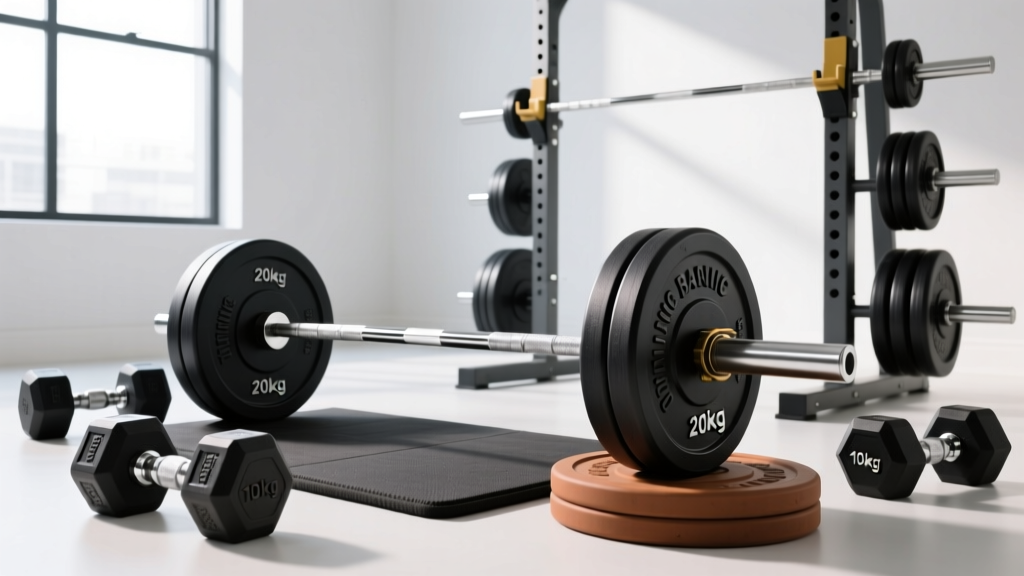
Olympic Barbell Guide: Weight, Knurling & Standing Dumbbell Flyes
Master your home gym setup with our beginner step-by-step guide to Olympic barbell weight, knurling types, and pairing compounds with isolation.

The Foundation of Strength: Your First Olympic Barbell
Building a home gym or stepping into a commercial weight room for the first time can be overwhelming. The centerpiece of any serious strength program is the Olympic barbell. Unlike fixed-weight machines, a high-quality barbell demands technical proficiency, offers limitless progressive overload, and serves as the primary tool for building foundational muscle and central nervous system (CNS) adaptation. However, not all barbells are created equal. In 2026, the market is flooded with options ranging from $150 budget imports to $1,200+ competition-grade steel.
This beginner-friendly, step-by-step guide will walk you through the exact specifications you need to understand—specifically weight tolerances and knurling patterns—so you can make an informed purchase. We will also explore how to bridge your heavy barbell compound lifts with targeted accessory movements to ensure balanced muscular development.
Beginner Tip: Never buy a barbell based solely on price. A cheap barbell with poor tensile strength (under 165,000 PSI) can permanently bend under heavy squats or deadlifts, and low-quality knurling will tear your calluses. Aim for a minimum of 190,000 PSI tensile strength for multi-purpose use.Step 1: Demystifying Olympic Barbell Weight Standards
When you load a 45-pound plate onto each side of an Olympic barbell, you need to know exactly what the math dictates. The term 'Olympic' refers to the 2-inch (50mm) diameter of the rotating sleeves, which accommodate standard Olympic plates. However, the weight of the shaft itself varies slightly depending on the manufacturing standard.
IWF vs. IPF Weight Specifications
According to the International Powerlifting Federation (IPF) and the International Weightlifting Federation (IWF), a standard men's Olympic barbell must weigh exactly 20 kilograms (44.09 pounds). Many US-based manufacturers round this up and market their bars as 45 lbs (20.4 kg). For a beginner, this 0.9 lb difference is negligible, but if you plan to compete or follow precise metric-based programming, you must verify the exact calibration.
- Men's Standard: 20 kg / 44-45 lbs, 2200mm total length, 28-29mm shaft diameter.
- Women's Standard: 15 kg / 33 lbs, 2010mm total length, 25mm shaft diameter.
- Technique/Youth Bars: 10 kg to 15 kg, shorter sleeves, ideal for learning form.
Step 2: Decoding the Knurling Matrix
Knurling is the cross-hatched pattern machined into the steel shaft of the barbell. It is the single most important factor in how the bar 'feels' in your hands. The depth, width, and shape of the knurl dictate your grip security and skin integrity. In modern metallurgy, knurling is generally categorized into three distinct profiles:
| Knurl Type | Profile Shape | Best For | Aggression Level |
|---|---|---|---|
| Hill | Wide, rounded peaks with shallow valleys | High-rep Olympic lifting, beginners | Mild / Passive |
| Mountain | Sharp, narrow peaks with deep valleys | Heavy deadlifts, powerlifting | High / Aggressive |
| Volcano | Sharp rim with a small crater in the center | Multi-purpose, all-around training | Medium / Optimal |
For 90% of beginners and intermediate lifters building a home gym in 2026, the Volcano knurl is the undisputed champion. It provides immense grip security by creating four distinct contact points per 'diamond' machined into the steel, yet the flattened crater prevents the sharp edges from tearing your hands during high-volume hypertrophy work. You can see this executed perfectly on the Rogue Ohio Bar, which remains a benchmark for multi-purpose knurling.
Step 3: Center Knurl and Shaft Markings
Look closely at the shaft, and you will notice smooth rings etched into the steel. These are the knurl marks.
- Single Marks (810mm apart): Dictated by powerlifting standards to ensure legal bench press grip widths.
- Dual Marks (910mm and 810mm): Found on multi-purpose bars, accommodating both powerlifting and Olympic weightlifting snatch grips.
Additionally, consider the center knurl. Powerlifters prefer an aggressive center knurl to grip the back of their t-shirts during low-bar squats. Olympic weightlifters and general fitness enthusiasts often prefer a smooth center or a very passive center knurl to avoid scraping the chest during barbell cleans and front squats.
Step 4: Bridging Barbell Compounds with Accessory Isolation
A common mistake beginners make is relying exclusively on the barbell for every movement pattern. While the barbell is unmatched for systemic loading and CNS recruitment, it locks your wrists and elbows into a fixed, bilateral path. To build a complete, injury-resistant physique, you must pair heavy barbell compounds with unilateral or free-moving accessory isolation.
Consider the transition from a heavy barbell bench press to chest isolation. The barbell's volcano knurl locks your hands in for heavy loads, but targeted pec development requires movements that allow for a deep stretch and peak contraction without tricep dominance. This is where exercises like dumbbell flyes standing come into play as a highly effective, albeit unconventional, accessory pairing.
Biomechanics: Barbell Press vs. Standing Flyes
When you perform dumbbell flyes standing (typically utilizing cable columns or specialized adjustable resistance bands that mimic the flye arc from an upright posture), you completely remove the stability of the bench. This forces the anterior deltoids, serratus anterior, and core stabilizers to work overtime to maintain an upright torso while the pectorals execute horizontal adduction.
Furthermore, the grip mechanics shift dramatically. You transition from wrapping your fingers around a heavily knurled 28.5mm steel shaft to managing the ergonomics of a 32mm+ dumbbell handle or cable attachment. This variation in grip diameter and knurl texture prevents overuse injuries in the forearm flexors and wrist joints, a common complaint among lifters who only use barbells.
Step 5: 2026 Beginner Buying Recommendations
Based on current market pricing, tensile strength, and knurl quality, here are the top two barbells for a beginner-to-intermediate lifter setting up a garage gym.
| Model | Knurl Type | Tensile Strength | Approx. Price (2026) |
|---|---|---|---|
| Rep Fitness AB-4100 | Deep Volcano | 190,000 PSI | $329 |
| Rogue Ohio Bar (Stainless) | Medium Volcano | 190,000 PSI | $395 |
Both options utilize bronze bushings, which provide a smooth, controlled spin ideal for heavy squats, bench presses, and deadlifts, unlike the hyper-fast needle bearings found in dedicated Olympic weightlifting bars that can feel unstable during slow power movements.
Frequently Asked Questions
Do I need a center knurl as a beginner?
For most beginners focusing on general fitness, hypertrophy, and basic strength, a passive center knurl or no center knurl is preferable. It prevents skin irritation during front squats and cleans while still offering a slight tactile cue for back squats.
How do I maintain my barbell's knurling?
Chalk and dead skin will pack into the knurl valleys, reducing grip over time. Use a stiff nylon brush (never wire, as it can damage the finish) and a light spray of 3-in-1 oil or specialized barbell cleaner once a month to keep the knurl sharp and rust-free.
Can I use a power bar for Olympic lifts?
It is not recommended. Power bars are typically 29mm thick with very stiff shafts and aggressive mountain knurls. The lack of 'whip' (shaft flex) and the thicker diameter will make catching heavy cleans and snatches uncomfortable and potentially dangerous for your wrists. Stick to a 28.5mm multi-purpose bar with a volcano knurl for the best of both worlds.
By understanding the nuances of barbell weight, knurl geometry, and how to properly program accessories like standing variations of isolation movements, you are setting yourself up for decades of safe, progressive, and effective training.
More gear to consider
All reviews
Best Dumbbell Storage for Leaning Dumbbell Lateral Raise Workouts
Beyond the Little Dumbbell: Adjustable Dumbbell Mistakes & Fixes

Power Rack vs Squat Rack: Space for Standing Dumbbell Lat Raises

Isometric Dumbbell Row Hold: Loadable Dumbbell Budget Guide

Cast Iron Kettlebell vs Competition: The Iron Dumbbell Alternative
