
Quiet Treadmill Workouts to Lose Belly Fat: Noise Guide & Routine
Discover how to do quiet treadmill workouts to lose belly fat. Compare cardio machine noise levels and follow our beginner step-by-step fat-burning guide.

Living in an apartment, sharing a home with light sleepers, or working out in a multi-story building shouldn't force you to compromise your fitness goals. For many beginners, the desire to start treadmill workouts to lose belly fat is immediately derailed by the fear of noise complaints. The heavy thud of footfalls and the whine of a cheap motor can easily penetrate walls and floors.
However, with the right equipment knowledge, acoustic dampening techniques, and low-impact walking protocols, you can burn visceral fat effectively without waking the house. In this beginner-friendly, step-by-step guide, we will conduct a comprehensive cardio machine noise level comparison, reveal how to soundproof your setup, and walk you through a highly effective, quiet treadmill routine designed specifically for fat loss.
Cardio Machine Noise Level Comparison: The Decibel Breakdown
Before diving into the treadmill routine, it is crucial to understand how treadmills compare to other popular cardio machines regarding noise. Sound is measured in decibels (dB), where normal conversation is about 60 dB and a vacuum cleaner is around 75 dB. When evaluating fitness equipment, we must separate airborne noise (the motor and fan) from impact noise (footfalls transmitting through the floor joists).
| Machine Type | Airborne Noise (Motor/Mechanics) | Impact Noise (Footfall/Usage) | Neighbor Disruption Risk |
|---|---|---|---|
| Standard Treadmill | 55 - 65 dB (Belt & Motor) | 75 - 85 dB (Heavy heel strikes) | High (without dampening) |
| Walking Pad (Under-desk) | 50 - 60 dB (Small BLDC motor) | 60 - 70 dB (Low-impact walking) | Low to Moderate |
| Elliptical Cross-Trainer | 45 - 55 dB (Magnetic resistance) | 0 - 10 dB (Zero foot impact) | Very Low |
| Air Bike (Assault/Echo) | 75 - 85 dB (Chain & Fan blade) | 20 - 30 dB (Pedaling vibration) | Moderate (Airborne noise) |
| Rowing Machine (Magnetic) | 50 - 60 dB (Track rollers) | 15 - 25 dB (Seat rail vibration) | Low |
Step 1: Choosing and Soundproofing Your Treadmill
To perform quiet treadmill workouts to lose belly fat, you need a machine with a continuous duty motor that doesn't strain (and whine) at lower speeds, paired with proper acoustic isolation.
Top Quiet Treadmill Picks for 2026
- Sole F80 (Approx. $999): Features a 3.5 CHP motor and a heavy 135lb frame. The mass of the frame absorbs micro-vibrations, and the cushioned flex deck reduces footfall impact noise by up to 40% compared to outdoor asphalt.
- Horizon T101 (Approx. $599): A budget-friendly option with a 2.5 CHP motor. It is relatively quiet for walking and light jogging, though the lighter frame requires a high-quality mat to prevent floor rattling.
- WalkingPad R2 (Approx. $499): If you are strictly walking, this folding pad uses a brushless DC motor that operates at roughly 55 dB. It lacks an incline, meaning you must walk longer durations to achieve the same caloric expenditure as an inclined standard treadmill.
The Mandatory Soundproofing Setup
- Purchase a 3/8-Inch Vulcanized Rubber Mat: Do not use cheap PVC foam mats. You need dense, vulcanized rubber (often sold as horse stall mats or premium treadmill mats) that costs between $60 and $120. This decouples the machine from the floor.
- Use Anti-Vibration Pucks: Place four rubber anti-vibration isolation pads (like those used for washing machines) under the corners of your rubber mat for an extra layer of low-frequency absorption.
- Leave a 2-Inch Wall Gap: Never push the treadmill flush against a drywall partition. Leave a 2-inch air gap to prevent bass vibrations from transferring directly into the wall studs.
Step 2: The 'Silent Stride' Beginner Belly Fat Workout
Now that your environment is optimized, we can focus on the workout. According to the Cleveland Clinic, visceral fat (the dangerous fat stored deep in the abdomen around your organs) is highly metabolically active and responds exceptionally well to consistent aerobic exercise. You do not need to sprint and pound the deck to burn it; Low-Intensity Steady State (LISS) cardio on an incline is highly effective and significantly quieter.
"You cannot spot-reduce belly fat through crunches alone, but a caloric deficit driven by consistent, low-impact treadmill walking will systematically reduce visceral fat stores over time."
The 8-2.5-30 Incline Protocol (Quiet Edition)
This is a modification of the viral '12-3-30' workout, adjusted for beginners and optimized to minimize the loud 'slapping' sound of foot strikes.
- The Warm-Up (5 Minutes): Set the incline to 0% and the speed to 2.0 mph. Focus on rolling your feet from heel to toe smoothly. This lubricates the joints and warms up the treadmill belt.
- The Incline Climb (25 Minutes): Raise the incline to 8% and the speed to 2.5 mph.
- The Silent Stride Technique: Do not strike the belt with your heel. Instead, aim for a mid-foot strike directly under your center of gravity. Keep your steps short and quick. This eliminates the loud 'thud' of heel striking and engages your glutes and hamstrings, which are massive muscle groups that demand high oxygen and burn more calories.
- Posture: Do not hold onto the handrails. Leaning on the rails reduces the metabolic demand by up to 20%. Pump your arms quietly by your sides.
- The Cool Down (5 Minutes): Drop the incline to 0% and the speed to 1.5 mph. Allow your heart rate to gradually return to baseline.
Step 3: Real-World Troubleshooting for Squeaks and Thuds
Even the best treadmill workouts to lose belly fat will be ruined if your machine starts squeaking six months in. Here is how to maintain a silent machine:
- Belt Lubrication: Every 150 miles (or every 3 months), lift the belt and apply 100% pure silicone treadmill lubricant. Never use WD-40 or petroleum-based oils, as these will destroy the PVC deck and cause the motor to overwork and whine.
- Belt Tensioning: If you hear a rhythmic 'slapping' sound that isn't your feet, the belt is too loose. Use the provided Allen wrench to turn the rear roller bolts exactly one-quarter turn clockwise on both sides. Test the belt; repeat only if necessary. Overtightening will cause the motor to strain and generate a high-pitched whine.
- Motor Hood Dusting: Once a year, unplug the machine, remove the plastic motor hood, and use compressed air to blow dust out of the motor fan and electronics board. Dust buildup causes motors to run hot and loud.
Frequently Asked Questions
Can I really lose belly fat just by walking on a treadmill?
Yes, provided you are in a caloric deficit. The Harvard T.H. Chan School of Public Health notes that aerobic exercise is one of the most effective ways to reduce abdominal obesity. Walking on an incline elevates your heart rate into the fat-burning zone (roughly 60-70% of your maximum heart rate) without the joint degradation and noise associated with running.
Are walking pads loud enough to bother neighbors in an apartment?
Walking pads are generally very quiet regarding motor noise (often under 60 dB). However, because they lack the heavy, vibration-absorbing frames of full-sized treadmills, the impact noise of your footsteps can easily transfer through the floor. Using a dense 3/8-inch rubber mat underneath a walking pad is absolutely mandatory for apartment dwellers.
How long does it take to see results in belly fat reduction?
Visceral fat is often the first fat to go when you begin a consistent cardio and diet regimen. According to the Mayo Clinic, committing to at least 150 minutes of moderate aerobic activity a week can yield noticeable changes in waist circumference and metabolic health within 4 to 8 weeks.
By combining a strategic cardio machine noise level comparison with smart equipment choices and low-impact incline walking, you can achieve your body composition goals in peace. Consistency is the ultimate driver of fat loss—so set up your mat, queue up your favorite podcast, and start walking.
More gear to consider
All reviews
Walking Pad Setup Guide & Treadmill Incline Chart Review
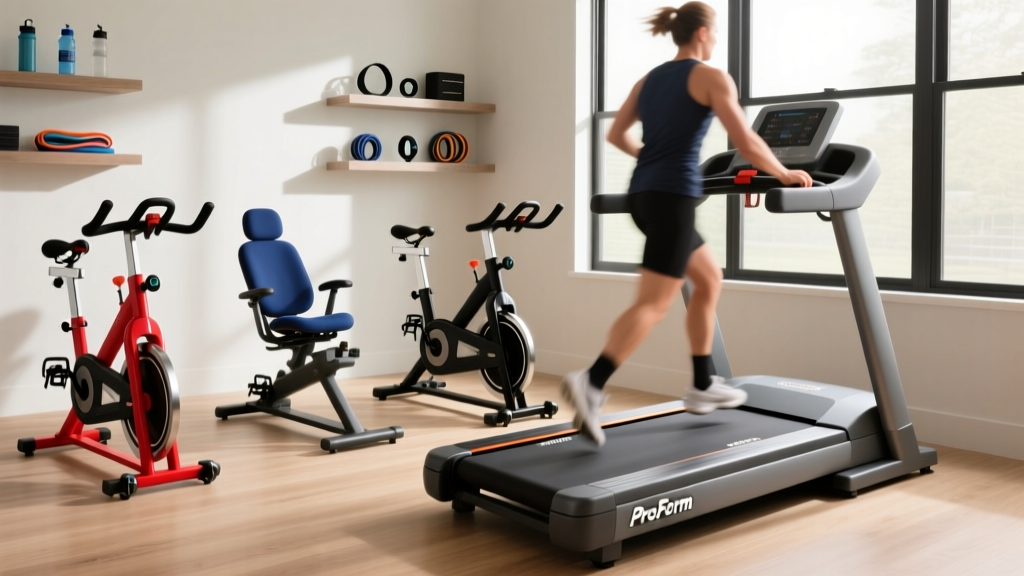
Stationary Bike Types vs ProForm Treadmill 5000: 2026 Budget Breakdown

2026 Under Desk Treadmill Review: Treadmill Exercises for Weight Loss

Rowing Machine Guide: Technique & Horizon 7.0 Treadmill Review

Belt Maintenance for Your Daily Treadmill Walking Workout Routine
