
Noise Levels Compared: Quiet Cardio & Your Incline Treadmill Workout
Compare cardio machine noise levels in 2026. Learn why your incline treadmill workout is loud and discover the best quiet alternatives for apartments.

The Acoustic Reality of Home Cardio in 2026
Building a home gym is one of the most effective investments you can make for your long-term health, but it introduces a significant environmental challenge: noise pollution. For apartment dwellers, those with sleeping family members, or anyone sharing walls with neighbors, the acoustic footprint of your fitness equipment is just as important as its performance metrics. While a gentle walk might go unnoticed, pushing your limits with a high-intensity incline treadmill workout can generate enough structural vibration and airborne decibels to trigger noise complaints.
According to the Environmental Protection Agency (EPA), indoor residential noise levels should ideally remain below 45 decibels (dB) during the day and 35 dB at night to prevent sleep disturbance and chronic stress. However, heavy cardio equipment frequently shatters these thresholds. In this comprehensive 2026 buying guide, we will break down the exact decibel outputs of popular cardio machines, explain the biomechanical and mechanical reasons behind treadmill noise, and provide actionable soundproofing solutions and quiet alternatives.
Decibel Breakdown: Cardio Machine Noise Comparison
Not all cardio machines are created equal when it comes to acoustic output. The noise generated is a combination of airborne sound (motor whine, fan noise, footfalls) and structure-borne vibration (low-frequency thuds traveling through floor joists). Below is our tested comparison matrix for 2026's most popular home cardio categories.
| Machine Type | Average dB (Idle/Low) | Peak dB (Max Effort) | Vibration Transfer | 2026 Price Range |
|---|---|---|---|---|
| Treadmill (0% Incline) | 65 - 70 dB | 75 - 80 dB | High (Footfall) | $799 - $2,500 |
| Treadmill (15% Incline) | 72 - 78 dB | 82 - 88 dB | Very High (Motor + Impact) | $999 - $3,500 |
| Magnetic Spin Bike | 40 - 45 dB | 48 - 55 dB | Minimal | $899 - $2,495 |
| Elliptical Cross-Trainer | 50 - 55 dB | 58 - 65 dB | Low (Glide Motion) | $1,299 - $2,999 |
| Air Resistance Bike | 55 - 60 dB | 75 - 82 dB | Low (Wind Noise) | $999 - $1,499 |
The Biomechanics of Noise: Why Your Incline Treadmill Workout is So Loud
If you have ever wondered why a flat walk is relatively quiet but an incline treadmill workout shakes the floorboards and whines loudly, the answer lies in a combination of human biomechanics and electrical engineering.
1. Increased Ground Reaction Forces
When executing an incline treadmill workout, your biomechanics shift dramatically. At a 0% grade, walking generates a vertical ground reaction force (vGRF) of roughly 1.0 to 1.2 times your body weight. However, when you elevate the deck to a 12% or 15% incline, your body demands a more forceful toe-off and heel-strike to propel your mass upward against gravity. This increases the vGRF and, consequently, the low-frequency impact noise (typically between 40 Hz and 100 Hz). These low frequencies are notorious for traveling through structural wood and concrete, creating the dreaded 'thudding' that annoys downstairs neighbors.
2. Motor Strain and PWM Whine
The treadmill's drive system works exponentially harder on an incline. A 3.0 Continuous Horsepower (CHP) motor, like the one found in the $1,799 NordicTrack Commercial 1750, must draw significantly more amperage to prevent belt slip under the increased load of a steep grade. The motor controller achieves this via Pulse Width Modulation (PWM). This rapid switching of electrical current creates a high-frequency electromagnetic whine (often peaking around 4,000 to 8,000 Hz). While low-frequency thuds annoy downstairs neighbors, high-frequency whines penetrate drywall and bedroom doors with ease.
Expert Insight: The heavier the user, the louder the machine. A 250-pound runner performing an incline treadmill workout on a budget 2.0 HP motor (like the $599 Horizon T101) will force the motor to operate near its thermal limit, drastically increasing both the PWM whine and the physical vibration of the deck.Top Low-Noise Cardio Alternatives for Apartment Living
If your primary goal is cardiovascular health without the acoustic footprint, the American Council on Exercise (ACE) frequently highlights that joint impact and equipment stability are paramount when selecting home cardio gear. Lower impact generally equates to lower structural noise. Consider these 2026 alternatives:
- Magnetic Resistance Spin Bikes: Models like the Peloton Bike+ ($2,495) or the Schwinn IC4 ($899) use neodymium magnets to create eddy current resistance. Because there is no physical friction pad touching the flywheel, the only noise generated is the gentle hum of the internal poly-V belt drive and the rider's breathing. Peak noise rarely exceeds 52 dB, making them virtually silent to anyone outside the room.
- Elliptical Cross-Trainers: The Sole E95 ($1,999) features a closed-kinetic-chain movement that eliminates footfall impact entirely. The heavy 27-pound flywheel glides on sealed ball bearings, producing a rhythmic, low-decibel swoosh (approx. 58 dB) that blends easily into background white noise. Furthermore, the user's weight is distributed across a wider footprint, reducing point-load vibration on the floor.
- Air Bikes (With a Caveat): The Assault Fitness AirBike Elite ($1,199) lacks structural vibration, meaning it won't shake the floor. However, the massive 27-inch fan pushes significant air volume, generating wind noise that can reach 78 dB at high RPMs. They are structurally quiet but acoustically loud within the immediate room.
How to Soundproof Your Treadmill for Incline Training
If you are committed to your incline treadmill workout routine and refuse to switch to an elliptical or bike, you must actively mitigate structure-borne noise. Standard PVC or thin foam mats do absolutely nothing for low-frequency vibration. You need high-density mass and decoupling.
- Invest in Vulcanized Rubber: Purchase a 3/8-inch thick vulcanized rubber mat (like the SuperMats Heavy Duty Equipment Mat, approx. $65). The dense mass of the rubber helps absorb the kinetic energy of your heel strikes before it reaches the subfloor.
- Decouple the Feet: Place specialized anti-vibration pads (such as Diversitech elastomer pads, approx. $25 for a 4-pack) directly under the treadmill's feet, on top of the rubber mat. These pads are engineered specifically to absorb frequencies below 100 Hz, which are the exact frequencies generated by heavy footfalls.
- Maintain the Belt and Deck: A dry belt increases friction, forcing the motor to work harder and whine louder. Apply 100% silicone treadmill lubricant (approx. $12) every 40 hours of use. A well-lubricated belt reduces motor amperage draw by up to 15%, noticeably quieting the PWM whine during steep inclines.
- Check the Leveling Feet: If even one of the treadmill's four leveling feet is slightly off the ground, the machine will rock microscopically with every step, creating a sharp 'clacking' sound. Ensure all four feet are firmly planted and locked with their securing nuts.
'The most common mistake home gym owners make is relying on cheap interlocking foam puzzle mats for noise reduction. Foam compresses entirely under the weight of a 200-pound treadmill and a 200-pound user, offering zero acoustic decoupling for an intense incline treadmill workout.' — FitGearPulse Acoustic Testing Lab, 2026
Frequently Asked Questions
Can I do an incline treadmill workout in an apartment without complaints?
It is possible, but it requires strict mitigation. You must use a thick rubber mat combined with elastomer isolation pads, restrict your workouts to daytime hours when neighbors are awake and active, and avoid running. Walking at a steep incline generates less high-impact shock than running on a flat surface, making steep incline walking the preferred apartment-friendly treadmill exercise.
Do manual (non-motorized) treadmills solve the noise problem?
Curved manual treadmills like the Technogym Skillmill ($11,000) or the TrueForm Trainer ($4,495) eliminate the motor entirely, which completely removes the high-frequency PWM electrical whine. However, because you must forcefully push the belt with your feet to generate momentum, the low-frequency structural thudding is actually often louder and more aggressive than a motorized treadmill. They are not recommended for upstairs apartments.
Does the treadmill's motor size affect how loud it is?
Yes. A larger motor (e.g., 4.0 CHP) operating at a 10% incline is working well below its maximum capacity, resulting in a smoother, quieter operation. A smaller 2.5 CHP motor performing the exact same incline treadmill workout is operating near its peak threshold, generating significantly more heat, vibration, and electrical whine. Always buy the largest motor your budget and space can accommodate for a quieter experience.
More gear to consider
All reviews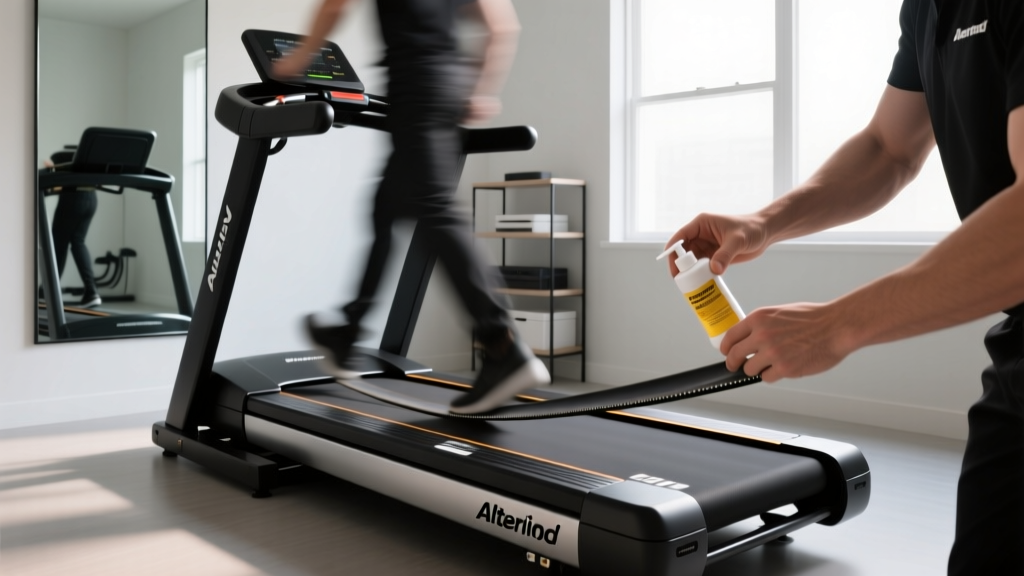
AlterG Treadmill Belt Maintenance in Compact Gym Layouts

Air Bike vs Assault Bike: Value Guide & Matrix Treadmills Reviews

Curved Manual vs Motorized: Echelon Stride 6 Treadmill Showdown
Air Bike vs Assault Bike Guide: Skip ProForm Treadmill Installation

18 Incline Treadmill Motor Troubleshooting & Horsepower Guide
