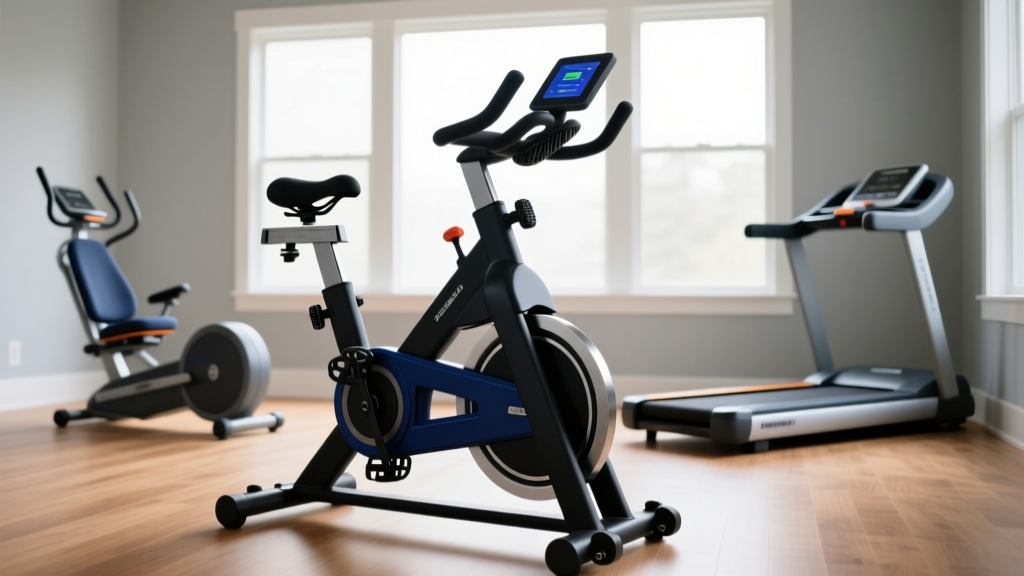
ProForm Pro 9000 Treadmill Belt Maintenance & Space Layout
Learn how to maintain and lubricate your ProForm Pro 9000 treadmill belt while optimizing your home gym layout for proper clearance and airflow.

The Intersection of Home Gym Layout and Treadmill Longevity
The ProForm Pro 9000 treadmill, featuring a reliable 3.0 CHP motor and a spacious 20-inch by 60-inch running deck, remains a staple in many home gyms. However, as urban living spaces shrink and home gym layouts become more compact in 2026, a critical conflict has emerged: space optimization versus maintenance accessibility. When you tuck a heavy, foldable cardio machine into a tight alcove or flush against a wall, you inadvertently create an environment that accelerates belt wear, traps heat, and complicates routine lubrication.
Treadmill belt maintenance is not just about applying silicone; it is fundamentally tied to how the machine interacts with its physical environment. Poor spatial planning leads to asymmetric dust accumulation, restricted motor ventilation, and uneven floor loading—all of which destroy the ProForm Pro 9000’s walking belt and deck prematurely. This guide bridges the gap between interior layout design and mechanical upkeep, ensuring your equipment survives the realities of a space-constrained home gym.
⚠️ Critical Heat Warning: The ProForm Pro 9000 generates significant thermal output during high-incline workouts. If placed in a corner with less than 12 inches of lateral clearance, ambient heat recirculates into the motor hood. This bakes the belt lubricant, turning it into a gritty paste that shreds the underside of the belt within months.ProForm Pro 9000 Spatial Requirements for Maintenance
According to American Council on Exercise (ACE) guidelines for home gym safety and equipment care, adequate clearance is non-negotiable. While the ProForm Pro 9000 folds up to save floor space, its operational and maintenance footprint requires specific dimensions. If your layout does not accommodate these clearances, you will struggle to perform the bi-annual belt lubrication and tensioning required to keep the machine running smoothly.
| Zone | Minimum Clearance | Maintenance Purpose |
|---|---|---|
| Rear (Behind Belt) | 24 Inches | Safety fall zone; access to rear roller 5mm Allen bolts for belt centering. |
| Left & Right Sides | 18 Inches | Access to motor hood screws; reaching under the belt edge for silicone application. |
| Top (When Folded) | 8 Inches | Hydraulic lift clearance; prevents drywall scuffing during deck engagement. |
| Front (Console) | 36 Inches | Airflow intake for the motor fan; user mounting space. |
The 100% Silicone Lubrication Protocol in Tight Quarters
The ProForm Pro 9000 utilizes a pre-lubricated deck, but over time, friction depletes the silicone layer. When your layout restricts you from pulling the 200+ pound machine away from the wall, you must adapt your lubrication technique. Never use WD-40, petroleum-based oils, or household cleaners, as these will dissolve the belt backing and void your warranty. You must use a 100% silicone treadmill lubricant (typically costing $10 to $15 per bottle).
Step-by-Step Application for Space-Restricted Layouts
- Power Down and Unplug: Always disconnect the machine from the wall. In tight spaces, ensure the power cord is not pinched between the frame and the baseboard.
- Loosen the Belt (Optional but Recommended): If you lack the lateral space to slide your arm under the belt, use a 5mm Allen wrench to turn both rear roller bolts counter-clockwise by exactly two full turns. This creates a slack gap.
- Apply the Silicone: Lift the edge of the belt as far as the wall clearance allows. Squeeze exactly 0.5 ounces (half a standard bottle) of 100% silicone in a zig-zag pattern directly onto the wooden deck beneath the belt. Use a flexible applicator wand to reach the center if the wall blocks your arm.
- Retension and Distribute: Tighten the rear bolts clockwise by two turns to return to the baseline tension. Plug the machine in, stand on the side rails, and run the belt at 2.0 MPH for three minutes to distribute the silicone evenly across the deck.
Deck Alignment, Floor Leveling, and Spatial Dynamics
A common mistake in space-optimized home gyms is placing the ProForm Pro 9000 directly over the transition line between two flooring types (e.g., carpet and hardwood) or on an uneven rug to define the 'workout zone'. This introduces a torsional twist to the frame. When the frame twists, the front and rear rollers are no longer perfectly parallel, causing the belt to track aggressively to the left or right.
"A treadmill frame is only as rigid as the floor beneath it. In compact rooms where furniture pads or thick area rugs are used to dampen sound, the resulting uneven compression forces the belt off-center, leading to edge fraying within weeks."
— Equipment Maintenance Insights, Consumer Reports
The Layout Solution: Always place the ProForm Pro 9000 on a dedicated, high-density 3/16-inch EVA foam equipment mat (approximate cost: $40-$60). The mat must extend at least 6 inches beyond the machine's footprint on all sides. This not only protects your floor but provides a uniform, non-compressible surface that keeps the frame square, drastically reducing the need to adjust the belt tracking bolts.
Troubleshooting Layout-Induced Belt Wear
When spatial constraints dictate your machine's placement, specific failure modes emerge. Use this diagnostic matrix to identify how your room's layout is impacting your ProForm Pro 9000's belt health.
| Symptom | Layout-Related Cause | Corrective Action |
|---|---|---|
| Belt slips when foot strikes | Machine pushed flush against a wall, trapping heat and baking the silicone into a glaze. | Pull machine out 18 inches; clean deck with mild degreaser; re-apply fresh 100% silicone. |
| Left edge fraying or curling | Placed against a wall where dust bunnies accumulate on one side, acting as an abrasive. | Improve room ventilation; vacuum under the motor hood and belt edges monthly. |
| Squeaking from the rear | Rear clearance is too tight, causing the power cord to rub against the wall or baseboard during deck flex. | Re-route the power cord through the frame's designated cable channel; ensure 24-inch rear gap. |
Optimizing Airflow for Motor and Belt Preservation
The ProForm Pro 9000 relies on a front-mounted fan to pull cool air over the motor controller and drive belt. In space-optimized layouts, users often place the treadmill facing a wall or a piece of furniture to watch TV. If the console is within 18 inches of a wall, the motor ingests its own exhaust heat. This thermal stress transfers down the drive belt to the walking belt, increasing friction and accelerating the degradation of the deck's wax/silicone coating.
To maintain peak performance in 2026's compact home gyms, orient the treadmill so the front motor hood faces the room's primary air vent or an open window. If the layout strictly requires the machine to face a wall, install a small, wall-mounted oscillating fan directed at the floor beneath the console to force ambient air exchange. For comprehensive engineering specifications and replacement parts, always refer to the official ProForm Fitness support portal.
Final Thoughts on Spatial Maintenance
Designing a home gym around the ProForm Pro 9000 treadmill requires a dual mindset: you must optimize for human movement while simultaneously optimizing for mechanical access. By respecting the 18-inch lateral and 24-inch rear clearance zones, utilizing high-density EVA matting to prevent frame torsion, and adhering to a strict 100% silicone lubrication schedule, you can easily extend the life of your walking belt and deck by several years, regardless of how compact your room may be.
More gear to consider
All reviews
Space-Saving Bike Types & Why Do I Run Faster Outside Than on the Treadmill

Best Step Beginner: A Practical, Data-Driven Guide to Choosing Your First Automotive Step Stool
Spirit Fitness XT685 Treadmill Noise & Cardio Machine Sound Guide
Treadmill Belt Maintenance & Pace Conversion Chart Guide

Rowing Technique & Buying Guide for ProForm Pro 1000 Treadmill Users