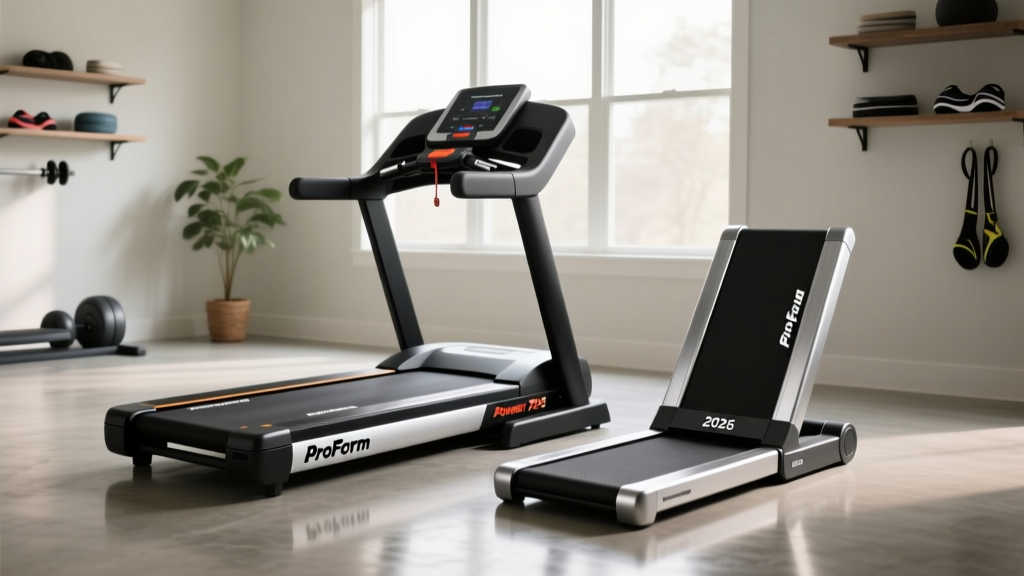
ProForm Power 795 Treadmill vs Walking Pad: 2026 Review
We pit the ProForm Power 795 treadmill against top 2026 walking pads. Discover motor specs, belt sizes, and which compact cardio machine fits your space.

The Compact Cardio Dilemma: Traditional Folding vs. Under-Desk Pads
As remote work and hybrid schedules solidify in 2026, the demand for space-efficient cardio equipment has fractured into two distinct camps: the traditional folding treadmill and the ultra-compact walking pad. For buyers caught in the middle, the choice often comes down to a direct head-to-head comparison between a reliable budget folding model like the ProForm Power 795 treadmill and a premium 2-in-1 walking pad (such as the UREVO Strol 2E or WalkingPad R2). Both promise to deliver your daily steps without dominating your living room, but their engineering, biomechanical support, and long-term reliability are vastly different. In this comprehensive review, we tear down the specs, expose the marketing myths around motor horsepower, and help you decide which machine actually belongs in your home.
Quick Verdict: The ProForm Power 795 is the superior choice for users who want to jog, require a longer stride, and need a machine built for sustained 45+ minute sessions. Walking pads are strictly for low-impact walking under 4.0 MPH and excel only when under-desk clearance is the absolute priority.Contender 1: ProForm Power 795 Treadmill Deep Dive
The ProForm Power 795 has long been a staple in the compact treadmill market, typically retailing between $399 and $499. Unlike walking pads that prioritize a flat profile, the Power 795 is a traditional folding treadmill designed to offer a genuine running experience in a condensed footprint.
Motor and Drive System
The standout feature of the Power 795 is its 2.5 CHP (Continuous Horsepower) Mach Z motor. In the fitness industry, CHP is the critical metric, as it measures the power the motor can sustain indefinitely without overheating. This 2.5 CHP rating means the machine can comfortably handle sustained jogging at 6.0 to 8.0 MPH for users up to 220 lbs, though the maximum stated capacity is 300 lbs. At higher user weights, the motor will draw more amperage, which can accelerate wear on the drive belt and motor brushes over a 3-to-5-year lifespan.
Deck and Belt Dimensions
ProForm equips the Power 795 with a 16-inch by 50-inch belt. While 16 inches is relatively narrow for sprinting, the 50-inch length is crucial. It provides enough physical runway for a natural walking stride and light jogging without the user feeling like they are constantly hovering over the front motor cowling. The deck features ProForm's standard ProShox cushioning, which utilizes elastomer pucks to reduce joint impact by roughly 15% compared to asphalt, according to biomechanical testing standards.
Contender 2: The Premium Walking Pad (UREVO Strol 2E / Comparable 2-in-1s)
To provide a fair fight, we are comparing the ProForm against the upper echelon of walking pads—specifically 2-in-1 models with foldable handrails, typically priced between $249 and $329. These units claim to offer treadmill-like functionality in a package that slides under a sofa.
The "Peak HP" Marketing Trap
Most premium walking pads advertise a "2.5 HP" or even "3.0 HP" motor. However, this is almost universally Peak Horsepower, not Continuous (CHP). The actual continuous duty rating on these units is usually between 1.0 and 1.5 CHP. While this is perfectly adequate for walking at 2.0 to 3.5 MPH, attempting to jog at 6.0 MPH on a 1.25 CHP motor will cause rapid thermal throttling. The control board will intentionally cut power to prevent a fire hazard, resulting in a sudden, dangerous deceleration.
Structural Limitations
Walking pads utilize a 180-degree folding hinge. While ingenious for storage, this hinge creates a structural weak point. When the handrail is raised, there is inherent lateral wobble. Furthermore, the belts on these pads max out at roughly 15 by 41 inches. A 41-inch belt is biomechanically restrictive for anyone over 5'6" walking at a brisk pace, forcing an unnatural, shortened gait that can lead to hip flexor strain over time.
Head-to-Head Specification Matrix
| Feature | ProForm Power 795 | Premium 2-in-1 Walking Pad |
|---|---|---|
| Motor Rating | 2.5 CHP (Continuous) | 1.25 CHP (2.5 HP Peak) |
| Belt Size | 16" x 50" | 15" x 41" (Avg) |
| Top Speed | 10.0 MPH | 7.6 MPH (Unsafe for running) |
| Weight Capacity | 300 lbs | 220 - 265 lbs |
| Incline | 0% (Fixed) | 0% (Fixed) |
| Storage Profile | Folds vertically (requires wall clearance) | Folds flat (slides under bed/desk) |
| Avg. Price (2026) | $449 | $279 |
Biomechanics and Belt Reality: Why Dimensions Matter
The most glaring difference between the ProForm Power 795 and a walking pad is the running surface, which directly impacts human biomechanics. According to research published by Harvard Health Publishing, maintaining a natural, unencumbered gait is essential for preventing lower back and hip pain during repetitive cardiovascular exercise.
"When a treadmill belt is too short, users subconsciously alter their stride length and foot-strike pattern to avoid stepping off the rear roller. This 'chopping' of the gait cycle increases the load on the knee joint and disrupts the natural kinetic chain of walking."
At a brisk walking pace of 3.5 MPH, the average adult's stride length requires a minimum of 45 inches of belt clearance to feel secure. The 50-inch belt on the ProForm Power 795 accommodates this effortlessly. Conversely, the 41-inch belt on most walking pads forces users to walk closer to the console, increasing the risk of toe-stubbing on the motor housing and causing mental fatigue from constantly monitoring foot placement. Furthermore, the CDC's Physical Activity Guidelines emphasize the importance of moderate-to-vigorous intensity; walking pads physically restrict your ability to safely reach vigorous heart-rate zones through jogging due to their short decks and low-torque continuous motors.
Acoustic Footprint and Neighbor Considerations
If you live in an apartment or have a home office on a shared floor, noise is a critical factor. Walking pads have a distinct acoustic advantage. Because they lack a massive motor cowling and heavy steel uprights, they sit flush against the floor, often utilizing integrated EVA foam padding that dampens low-frequency vibrations. The hum of a walking pad motor at 2.5 MPH is easily masked by a podcast or a television.
The ProForm Power 795, however, transfers more impact noise into the floor joists. The 16x50 deck acts as a sounding board for heel strikes. If you are a heavy heel-striker walking at 4.0 MPH, the low-frequency thud will travel through the floor. To mitigate this, ProForm includes basic rubber feet, but we highly recommend purchasing a dense 3/8-inch EVA foam equipment mat (roughly $40) to decouple the treadmill frame from hardwood or laminate flooring.
Maintenance and Long-Term Reliability
Compact cardio machines are notorious for specific failure modes. Understanding these will save you hundreds of dollars in out-of-warranty repairs.
- ProForm Power 795 Failure Modes: The most common issue with budget folding treadmills is belt drift and rear roller bearing wear. Because the deck is folded and unfolded, the belt tension can fluctuate. You must manually re-center the belt using the rear hex bolts every 30 to 60 days. Additionally, failing to apply 100% silicone lubricant under the belt every 150 miles will cause the walking board to overheat, drawing excess amps and eventually frying the motor control board.
- Walking Pad Failure Modes: The primary point of failure on 2-in-1 walking pads is the hinge mechanism and the remote control sync. The internal wiring that passes through the folding hinge is subjected to repetitive bending, which can lead to fraying and console blackouts after 12 to 18 months of daily folding. Furthermore, walking pads rely heavily on infrared or Bluetooth remotes; if the remote battery dies or the sensor gets blocked by a desk chair, the machine is virtually unusable, as many lack manual override buttons on the console.
The 2026 Decision Framework: Which Should You Buy?
Choosing between the ProForm Power 795 treadmill and a walking pad isn't about which machine is objectively "better"—it is about aligning the machine's engineering with your specific spatial and physiological needs. Use this framework to make your final decision:
- Choose the ProForm Power 795 if: You are over 5'7" tall, you weigh over 200 lbs, you intend to jog (4.0+ MPH) at least twice a week, and you have a dedicated 2x4 foot corner where the machine can remain unfolded or easily folded vertically. The 2.5 CHP motor and 50-inch belt provide a safe, biomechanically sound platform for long-term cardiovascular health.
- Choose a Premium Walking Pad if: You are strictly a walker (under 3.5 MPH), you are under 5'7", your primary goal is accumulating low-intensity NEAT (Non-Exercise Activity Thermogenesis) steps while working at a standing desk, and you must slide the machine under a bed or sofa when not in use. Just be prepared to replace the unit every 2 to 3 years due to hinge and control board wear.
Ultimately, as noted in Consumer Reports' treadmill buying guide, the best cardio machine is the one you will actually use consistently. If a walking pad removes the friction of setting up your workout, it is a worthy investment. But if you want a machine that can grow with your fitness levels and safely accommodate a running stride, the ProForm Power 795 remains a formidable, high-value contender in the 2026 home fitness market.
More gear to consider
All reviews
Stair Climber Home Guide: Mistakes & Lifetime Fitness T5 Treadmill Fixes

Rowing Machine Setup & Buying Guide vs Skating Treadmill Near Me
Wahoo KICKR RUN Treadmill Fixes & Rowing Machine Guide

Under-Desk Treadmill Tail Porn & Maintenance Guide

Bowflex Treadmill 10 Review & Walking Pad Comparison Guide