
Prison Treadmill vs Stationary Bike Types: 2026 Market Analysis
A 2026 market analysis comparing the rugged prison treadmill segment with stationary bike types (upright, recumbent, spin) for commercial and institutional procurement.

The Institutional Baseline: Defining the 'Prison Treadmill' Segment
In the commercial and institutional fitness equipment market of 2026, the term prison treadmill has evolved far beyond its historical roots. Today, procurement officers and facility managers use it as industry shorthand for ultra-rugged, non-motorized curved treadmills engineered for 24/7 abuse in correctional facilities, tactical military bases, and high-volume functional fitness gyms. Unlike traditional motorized treadmills that rely on fragile drive motors and sensitive electronic consoles, the modern 'prison' manual treadmill is a masterclass in indestructible biomechanics.
Models like the TrueForm Runner and the AssaultRunner Elite dominate this space. Priced between $4,500 and $5,800, these machines feature vulcanized rubber slat belts, sealed cartridge bearings, and zero electronic components. The failure mode of a standard motorized treadmill (like the Life Fitness TRM 731, priced at $9,200) in an unmonitored or dusty environment is notoriously high; drive motors burn out from belt friction, and consoles short-circuit from sweat ingress. In contrast, the annual maintenance cost for a manual curved treadmill is typically under $50, limited only to occasional belt lubrication and bearing inspections. For correctional and tactical facilities where equipment vandalism and constant use are guaranteed, this low-tech, high-durability approach is the undisputed standard.
Market Share Shift: Stationary Bike Types Taking Over Commercial Floors
While the manual treadmill segment secures the heavy-duty institutional niche, the broader commercial and consumer cardio market is undergoing a massive shift toward stationary bike types. According to the CDC's physical activity guidelines, low-impact cardiovascular exercise is critical for joint longevity, driving a surge in demand for cycling equipment that accommodates diverse demographics. In 2026, the stationary bike market is strictly segmented into three distinct categories: Spin, Recumbent, and Upright.
1. Spin Bikes (Indoor Cycling)
The indoor cycling segment remains the highest revenue generator for boutique and commercial gyms. The market leader, the Keiser M3i (retailing around $2,895), utilizes eddy current magnetic resistance and a rear-mounted flywheel to eliminate sweat corrosion—the primary failure mode of front-flywheel spin bikes. The M3i's Bluetooth FTMS connectivity allows seamless integration with 2026's dominant third-party training apps. Furthermore, the shift to FTMS (Fitness Machine Service) Bluetooth protocols in 2026 means that older ANT+ only spin bikes are now considered obsolete for commercial studios that rely on gamified leaderboards. Procurement officers must verify that the bike's console supports simultaneous Bluetooth and ANT+ broadcasting to accommodate all user wearables. Facility managers must also monitor pedal thread wear and crank arm bearings, which require replacement every 18 to 24 months in high-turnover class environments.
2. Recumbent Bikes
With the 65+ demographic now comprising a significant portion of health club memberships, recumbent bikes are experiencing a renaissance. The Matrix Fitness R50 Recumbent ($3,999) features a self-generating power system and an ultra-low step-through height of just 9 inches. This design drastically reduces hip flexor and lumbar strain. From a biomechanical standpoint, the 135-degree seat-to-pedal angle on premium recumbents minimizes shear force on the anterior cruciate ligament (ACL), making them mandatory for post-operative orthopedic rehab centers. Buyers should specifically look for models with micro-adjustable seat sliders that lock every half-inch, rather than the standard one-inch increments, to ensure precise knee-angle calibration for physical therapy patients. The most common edge-case failure in recumbent models is the accumulation of dust and grease on the seat adjustment rail, which can cause the locking pin to jam. Regular silicone-spray maintenance on the rail is mandatory to prevent costly ergonomic complaints.
3. Upright Bikes
Upright bikes, such as the Life Fitness Integrity Series Upright ($3,400), represent the traditional middle ground. They offer a smaller footprint than recumbent models and a more natural cycling posture than spin bikes. However, market analysis shows a 14% decline in upright bike procurement for new commercial builds in 2026, as facilities reallocate floor space toward immersive spin studios and expansive recumbent rehab zones.
Comparative Matrix: Heavy-Duty Treadmills vs. Stationary Bikes
To contextualize the procurement landscape, the following matrix breaks down the critical data points for facility buyers comparing the 'prison' manual treadmill against the three primary stationary bike types.
| Equipment Type | Avg. Commercial Price (2026) | Annual Maintenance Cost | Footprint (L x W) | Primary Demographic / Use Case |
|---|---|---|---|---|
| Manual 'Prison' Treadmill | $4,500 - $5,800 | < $50 | 70' x 32' | Tactical, Correctional, HIIT |
| Spin Bike (Magnetic) | $2,200 - $3,100 | $120 - $180 | 48' x 26' | Group Fitness, Boutique, Athletes |
| Recumbent Bike | $3,200 - $4,500 | $80 - $110 | 63' x 26' | Seniors, Rehab, Low-Impact |
| Upright Bike | $2,800 - $3,800 | $90 - $130 | 42' x 24' | General Pop, Warm-ups |
2026 Procurement Framework: What Should Facilities Buy?
Strategic Callout: The 'Vandalism & Dust' Factor
When outfitting unmonitored spaces (apartment complexes, corporate breakrooms, or correctional yards), never procure motorized treadmills or screen-heavy spin bikes. The 'prison treadmill' aesthetic—meaning zero screens, manual drive, and heavy-gauge steel—is the only financially viable option. For monitored, climate-controlled commercial floors, prioritize Keiser M3i spin bikes for ROI via class bookings, and Matrix R50 recumbents for member retention in the 50+ demographic.
For facility managers and home gym builders navigating the 2026 equipment landscape, consider the following actionable decision framework:
- For High-Intensity Functional Training (HIFT): Pair a TrueForm Runner manual treadmill with a fleet of Assault AirBikes. The manual treadmill forces the user to generate 100% of the belt momentum, spiking heart rates 20-30% faster than motorized alternatives without the risk of motor burnout from interval stopping/starting.
- For Clinical and Active Aging Spaces: Allocate 60% of the cardio budget to recumbent bikes with self-generating power. The elimination of power cords reduces trip hazards, a critical compliance metric for physical therapy clinics.
- For Space-Constrained Home Gyms: Skip the upright bike entirely. The footprint difference between an upright and a spin bike is negligible, but the resale value and third-party app integration of a magnetic spin bike (like the Schwinn IC Pro) far outpace traditional uprights.
- Warranty Edge Cases: When buying manual treadmills for commercial spaces, read the fine print regarding 'institutional use.' Many manufacturers void the standard 5-year frame warranty if the machine is placed in a correctional or 24/7 unmonitored facility. You must explicitly negotiate an institutional warranty rider, which typically adds 8-12% to the unit cost but covers the sealed bearings against environmental dust ingress.
Final Market Outlook
The bifurcation of the cardio market is complete. On one side, the prison treadmill segment proves that stripping away technology in favor of raw, biomechanical durability is the ultimate solution for high-abuse environments. On the other side, the stationary bike market continues to hyper-specialize, with recumbent bikes capturing the aging population and magnetic spin bikes dominating the connected fitness space. As noted by industry experts at ACE Fitness, the most successful facilities in 2026 are those that stop buying 'general purpose' cardio equipment and start procuring highly specialized tools tailored to their exact demographic and environmental constraints. Whether you are outfitting a maximum-security recreation yard or a luxury boutique studio, understanding the mechanical realities and market trajectories of these distinct equipment types is the key to maximizing ROI and minimizing downtime.
More gear to consider
All reviews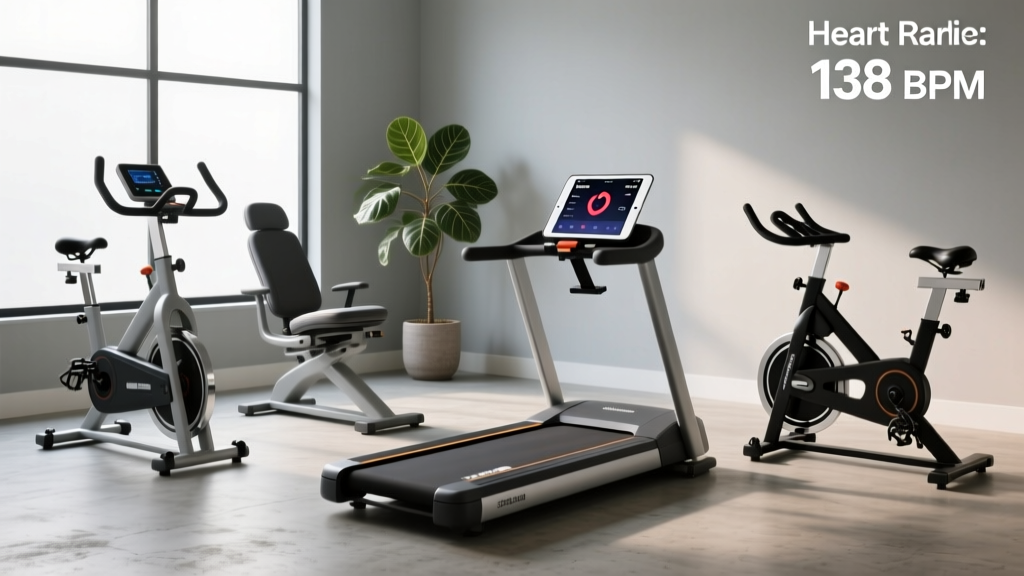
Upright, Recumbent, Spin Bikes & iPad Stand for Treadmill Mounts

Compact Portable Cardio Equipment Options: Skip Lubricating Oil for Treadmill Belt
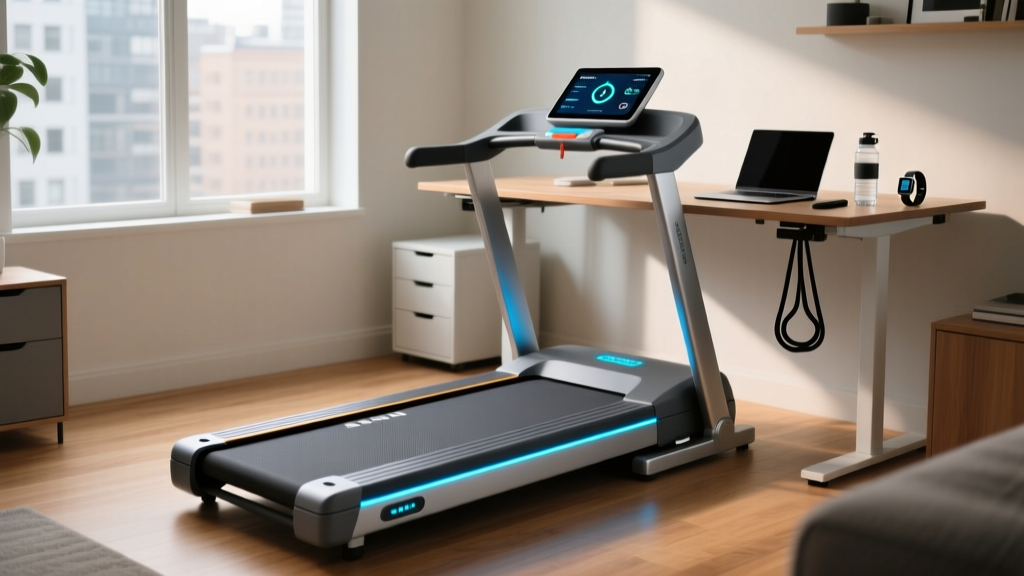
Shrimp on a Treadmill Video vs Real Office Cardio: 2026 Desk Review

Air Bike vs Assault Bike Guide: NordicTrack C970 Pro Treadmill Value

Air Bike vs Assault Bike Guide: Plus What is Speed 4 on a Treadmill
