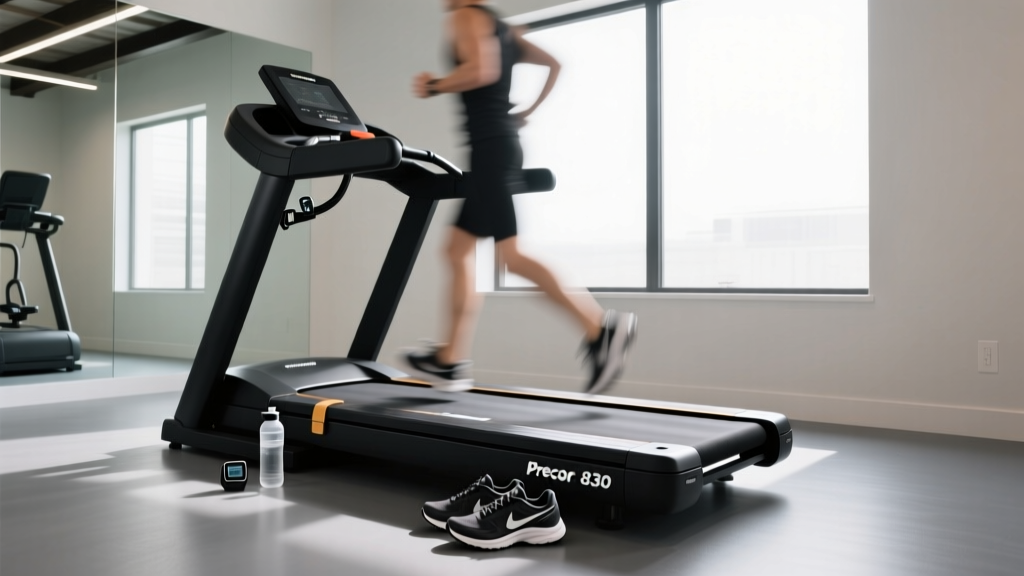
Precor TRM 835 Treadmill: Step-by-Step Cardio Noise Comparison Guide
Learn how to evaluate home gym acoustics with our step-by-step cardio noise comparison, using the Precor TRM 835 treadmill as the premium benchmark.

Why Cardio Machine Noise Matters for Home Gyms
Building a home gym is an incredible investment in your health, but one of the most overlooked factors by beginners is acoustic impact. A loud cardio machine can disrupt your household, agitate neighbors in multi-story dwellings, and ultimately lead to a machine that gathers dust because you feel guilty using it. When evaluating fitness equipment, understanding the acoustic footprint is just as critical as checking the weight capacity or console features.
In this step-by-step guide, we will walk you through a comprehensive cardio machine noise level comparison. To give you a true gold standard for premium acoustic engineering, we will use the Precor TRM 835 treadmill as our benchmark. By understanding why commercial-grade machines like the Precor TRM 835 operate so quietly, you will learn exactly what to look for—and what to avoid—when shopping for your own home cardio equipment.
Step 1: Decode the Decibel (dB) Scale for Fitness Gear
Before comparing machines, you must understand how noise is measured. The decibel (dB) scale is logarithmic, not linear. According to the American Speech-Language-Hearing Association (ASHA), an increase of just 10 dB means the sound is perceived as roughly twice as loud to the human ear.
- 40-50 dB: Quiet library, whisper (Ideal for late-night workouts)
- 60-70 dB: Normal conversation, humming refrigerator (Acceptable for shared living spaces)
- 75-85 dB: Vacuum cleaner, heavy traffic (Disruptive, requires isolation)
- 90+ dB: Lawnmower, motorcycle (Potential for hearing fatigue over long sessions)
When evaluating cardio gear, we must also distinguish between airborne noise (motor whine, fan blades, belt slap) and structure-borne noise (vibrations traveling through the floor joists into the room below). Budget machines often fail on both fronts.
Step 2: Analyze the Precor TRM 835 Treadmill Acoustic Profile
Why use the Precor TRM 835 treadmill as our benchmark? In the commercial fitness industry, the TRM 835 is renowned for its durability and exceptionally smooth, quiet operation. While a new unit can cost upwards of $9,000 (with refurbished 2026 models hovering around $4,500), its engineering provides a masterclass in noise reduction.
The AC vs. DC Motor Difference
Most budget home treadmills (under $1,500) use Direct Current (DC) motors. DC motors rely on carbon brushes that create physical friction, resulting in a high-pitched whine that worsens as the brushes wear down. The Precor TRM 835 utilizes a 3.0 HP Continuous Duty AC Motor. AC motors do not use brushes; they rely on electromagnetic induction. This eliminates brush friction entirely, resulting in a deep, low-frequency hum rather than a piercing whine, keeping airborne noise well below 70 dB even at 8.0 mph.
Ground Effects Impact Control (GFI)
Structure-borne noise from footstrikes is the primary complaint in apartment gyms. The Precor TRM 835 features the Ground Effects Impact Control system. This isn't just about joint health; the specialized elastomer cushions absorb the kinetic energy of your footfall before it can transfer into the steel frame and down into the floor. This drastically reduces the low-frequency 'thudding' that plagues cheaper treadmills.
Beginner Tip: When shopping for a treadmill, always check the motor type. If you live in an apartment or have a bedroom directly below your gym, prioritize an AC motor or a high-quality brushless DC motor to minimize high-frequency airborne noise.Step 3: Cardio Machine Noise Level Comparison Matrix
Not all cardio machines are created equal. The drive system and resistance type dictate the acoustic output. Below is a data matrix comparing the average noise levels of popular cardio categories under a moderate workload (e.g., a 180 lb user at a moderate pace).
| Machine Category | Drive / Resistance System | Avg. dB (Under Load) | Primary Noise Type |
|---|---|---|---|
| Budget Treadmill | Brushed DC Motor | 75 - 85 dB | Motor whine, belt slap, heavy thud |
| Commercial Treadmill (Precor TRM 835) | Brushless AC Motor + GFI | 65 - 72 dB | Low hum, muffled footfall |
| Front-Drive Elliptical | Magnetic / Belt Drive | 55 - 65 dB | Bearing roll, minor joint creak |
| Air Bike (e.g., Assault, Echo) | Fan / Wind Resistance | 70 - 82 dB | Wind shear, chain/belt drive |
| Magnetic Spin Bike | Magnetic / Belt Drive | 45 - 55 dB | Near silent, faint flywheel hum |
| Water Rower | Water Impeller | 60 - 70 dB | Water rushing, chain clatter |
Step 4: How to Test and Measure Noise Before Buying
Do not rely solely on manufacturer claims or YouTube reviews, as smartphone microphones compress audio and fail to capture low-frequency vibrations. Follow this step-by-step testing protocol recommended by acoustic guidelines from the CDC National Institute for Occupational Safety and Health (NIOSH).
- Download a Calibrated App: Install the free NIOSH Sound Level Meter app (iOS) or a highly-rated decibel meter app on your smartphone.
- Establish a Baseline: Measure the ambient room noise with the machine turned off. A quiet room should read between 35-45 dB.
- Test Airborne Noise: Turn the machine on and simulate your workout. Hold the phone at ear height, roughly 2 feet away from the motor housing. Record the peak and average dB.
- Test Structure-Borne Noise: This is the most critical step for multi-story homes. Place your smartphone on the floor in the room directly below the gym. Run the machine at your target pace upstairs. If the reading spikes above 55 dB downstairs, you have a vibration transfer problem.
Step 5: Mitigate Structure-Borne Vibrations
If your cardio machine noise level comparison reveals that your equipment is transferring too much vibration, you must decouple the machine from the floor. Throwing down a cheap $20 PVC yoga mat will not solve the issue; PVC compresses entirely under the 300+ lb dynamic load of a treadmill, rendering it useless for acoustic dampening.
The 3/8-Inch Vulcanized Rubber Rule
For heavy cardio machines like treadmills and ellipticals, you need a high-density, vulcanized rubber mat that is at least 3/8-inch (9.5mm) thick. Vulcanized rubber has a closed-cell structure that absorbs kinetic energy and prevents it from entering the subfloor. For ultimate isolation, place specialized Sorbothane or neoprene anti-vibration pads directly under the machine's leveling feet, then rest the entire setup on the rubber mat.
Warning: Never use interlocking foam puzzle mats under a heavy treadmill. The repetitive impact will permanently compress the foam within weeks, causing the treadmill deck to become unlevel, which leads to premature motor strain and belt tracking issues.Quick Troubleshooting: When Your Machine Suddenly Gets Loud
If your previously quiet cardio machine begins sounding like a freight train, do not immediately assume the motor is dying. Run through this maintenance checklist:
- Belt Friction: A dry treadmill belt creates massive friction, forcing the motor to work harder and generate excess heat and noise. Lift the belt; if it feels dry, apply 100% silicone treadmill lubricant (never use WD-40 or petroleum-based products).
- Debris in the Motor Hood: Dust and pet hair act as thermal insulators. Unplug the machine, remove the motor hood, and use a vacuum with a brush attachment to clean the motor fins and fan blades.
- Flywheel Bearings: On ellipticals and spin bikes, a rhythmic 'grinding' or 'clicking' usually indicates a failing flywheel bearing. If the noise is localized to the front wheel assembly, the sealed bearings likely need professional replacement.
Final Thoughts on Home Gym Acoustics
Understanding the acoustic footprint of your fitness gear is essential for long-term consistency. While a premium commercial unit like the Precor TRM 835 treadmill sets the gold standard for quiet, smooth operation thanks to its AC motor and advanced shock absorption, you can achieve a peaceful home gym environment on any budget. By choosing the right drive systems—like magnetic resistance bikes or belt-driven ellipticals—and properly decoupling your equipment from your home's structure, you can train hard without disrupting the peace.
More gear to consider
All reviews
Elliptical vs Treadmill 2026: ProForm CrossWalk Treadmill 397 Legacy

Does Goodwill Take Treadmills? Care for Upright & Spin Bikes

Top Treadmill Challenge for Weight Loss: Sole F85 vs NordicTrack

Elliptical vs Treadmill Layouts: Space Planning & Km Pace Chart

Space Guide: Matrix T50 Treadmill, Air Bike vs Assault Bike
