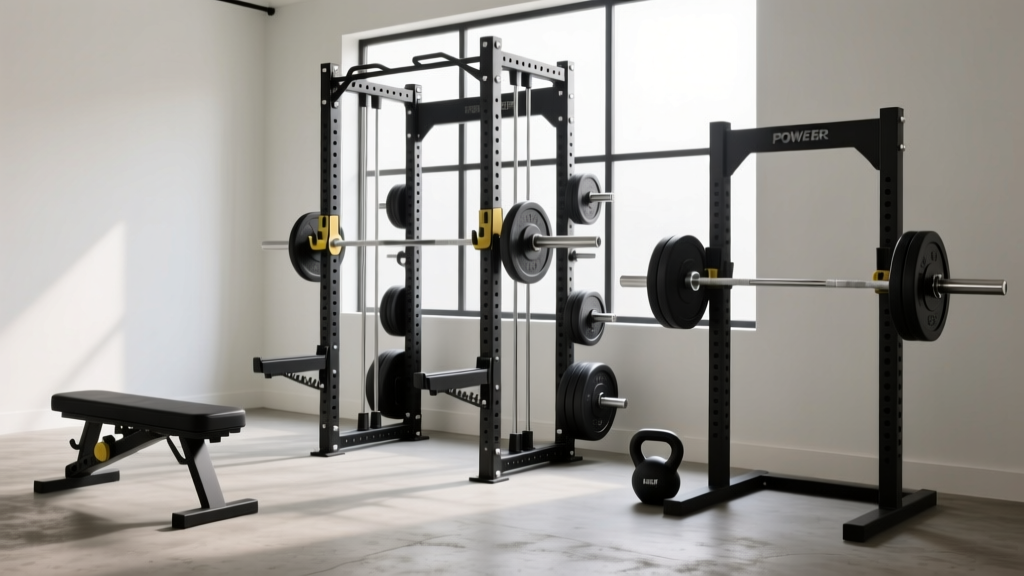
Power Rack vs Squat Rack vs Squat Stand for Goblet Squat Dumbbells
Compare power racks, half racks, and squat stands for your 2026 home gym. Find the best setup for heavy barbell lifts and goblet squat dumbbells.

The Home Gym Dilemma: Space, Budget, and Heavy Dumbbell Storage
Designing a functional garage gym in 2026 requires looking past the barbell. While the back squat and bench press often dominate equipment buying guides, a well-rounded strength and hypertrophy program relies heavily on unilateral work, accessory movements, and heavy dumbbell variations. If your programming frequently incorporates heavy goblet squat dumbbells alongside traditional barbell compounds, your choice of rig dictates your workflow, storage capabilities, and overall safety.
Choosing between a squat stand, a half rack (often called a squat rack), and a full power rack is not just about barbell safety; it is about how the equipment accommodates your entire movement library. Picking up a 70lb or 80lb dumbbell from the floor for a heavy goblet squat places immense shear force on the lumbar spine if done improperly. A well-configured rack with integrated shelving or crossmembers can completely alter the ergonomics of your dumbbell training. Below, we break down the structural differences, attachment ecosystems, and real-world pricing to help you choose the right rig.
Squat Stands: The Minimalist Footprint
Squat stands are essentially two independent uprights designed to hold a barbell. They are the go-to choice for apartment dwellers, tight single-car garages, or lifters on a strict budget. Because they lack a rear upright and crossmembers, they offer an open footprint that makes moving around the rig incredibly easy.
The 2026 Market Leaders
- Titan T-2 Short Power Rack / Stand: Priced around $299, this 2x2-inch 14-gauge steel stand is a budget staple. However, the 2x2 profile limits attachment compatibility.
- Rogue SML-2C Monster Lite Squat Stand: Retailing near $495, this features 3x3-inch 11-gauge steel and 1-inch Westside hole spacing, offering premium durability and compatibility with Rogue's vast attachment ecosystem.
Pros and Cons of Squat Stands
- Pros: Extremely affordable, minimal floor space (often under 4x4 feet), easy to fold or move.
- Cons: Lower weight capacities (usually 500-800 lbs), requires bolting to a concrete slab or using a massive stabilizer flat foot base to prevent tipping during re-racks, zero dumbbell storage.
Half Racks (Squat Racks): The Hybrid Solution
Half racks bridge the gap between the minimalism of squat stands and the enclosure of a full power rack. They typically feature two main front uprights and two shorter rear uprights connected by a heavy-duty crossmember. This design provides a stable base without requiring the ceiling clearance or floor space of a 4-post cage.
Why Half Racks Excel for Dumbbell Workflows
The defining feature of a high-quality half rack is the rear crossmember and the ability to mount accessory shelves. According to Garage Gym Labs' comprehensive rack testing, half racks like the REP PR-4000 (starting around $1,100) offer incredible modularity. You can attach a dedicated dumbbell shelf to the rear or side uprights. This allows you to rest heavy goblet squat dumbbells at roughly knee-to-hip height between sets, saving your lower back from repetitive floor pickups and keeping your workout area free of trip hazards.
Furthermore, half racks often feature extended safety spotter arms that stretch 24 to 30 inches outward. This is crucial if you are performing dumbbell bench presses or lunges outside the primary uprights, providing a safe catch zone that squat stands simply cannot offer.
Full Power Racks: The Ultimate Enclosure
A full power rack (or power cage) features four or six uprights, creating an enclosed 'cage' that allows you to fail a rep safely on any barbell movement without needing a human spotter. In 2026, the gold standard for home gym enthusiasts remains the REP PR-5000 V2 (base price ~$1,399, fully loaded up to $2,500+) and the Rogue RM-6 Monster (exceeding $4,500).
Internal Storage and Attachment Ecosystems
Power racks offer the most robust attachment ecosystems. You can mount lat-pulldown towers, monolifts, belt squat attachments, and multi-tier dumbbell shelves directly inside the cage. When training with heavy goblet squat dumbbells, the internal footprint of a 30-inch or 47-inch deep rack allows you to keep your dumbbells, kettlebells, and barbells all within arm's reach, creating a highly efficient 'superset station'.
"A power rack is not just a barbell holder; it is a complete structural framework for your gym. The ability to mount a landmine inside the cage while keeping your heavy goblet squat dumbbells on an interior shelf transforms a simple cage into a multi-station athletic performance center."
Head-to-Head Comparison Matrix
| Feature | Squat Stands | Half Racks | Full Power Racks |
|---|---|---|---|
| Avg. Price Range | $250 - $550 | $900 - $1,600 | $1,300 - $3,000+ |
| Steel Profile | 2x2 or 2x3 (14ga) | 3x3 (11ga) | 3x3 (11ga) |
| Dumbbell Storage | None (Floor only) | Rear/Side Shelves | Internal Multi-Tier |
| Safety Mechanism | Spotter Arms (Risk of tipping) | Long Spotter Arms / Straps | Enclosed Pins / Straps |
| Footprint | ~16 sq ft | ~24 sq ft | ~35 to 50 sq ft |
The Biomechanics of Heavy Goblet Squats and Rack Ergonomics
Why does rack choice matter for a dumbbell exercise? According to ExRx.net's biomechanical breakdown of the goblet squat, the movement demands significant core bracing, upright torso posture, and deep hip and knee flexion. When you scale up to heavy goblet squat dumbbells (e.g., 60lbs to 100lbs), the initial 'clean' to the chest becomes a limiting factor.
If you are using squat stands, your dumbbells sit on the floor. Bending over with a rounded back to hoist an 80lb dumbbell to your chest before initiating a squat set is a recipe for a lumbar strain. Conversely, a half rack or power rack equipped with a lower crossmember or a dedicated dumbbell shelf positioned at 15 to 20 inches off the floor allows you to 'bump' the dumbbell up using your thighs, or scoop it from an elevated position with a neutral spine. This ergonomic advantage ensures your energy is spent on the working set, not on picking up the weight.
Supersetting and Workflow Efficiency
Advanced hypertrophy blocks often pair barbell movements with dumbbell accessories. Imagine supersetting heavy barbell back squats inside a power rack with heavy goblet squat dumbbells. In a full power rack, your dumbbells are stored on an interior shelf. You unrack the bar, hit your reps, re-rack, and immediately grab the dumbbells from the shelf at chest height to begin your goblet squats. This seamless transition keeps your heart rate elevated and your workout density high—a workflow impossible to achieve efficiently with standalone squat stands.
2026 Buying Framework: How to Choose
When evaluating your space and budget, use this decision framework to finalize your purchase:
- Choose Squat Stands if: You have less than 50 square feet of dedicated space, a budget under $600, and primarily use lighter dumbbells (under 40lbs) that are easy to pick up from the floor. Always opt for models with flat-foot stabilizers if you cannot bolt into concrete.
- Choose a Half Rack if: You want the safety of extended spotter arms and dumbbell shelving for heavy goblet squat dumbbells, but lack the ceiling height (many half racks are 84 inches or shorter) or depth for a full cage. The BarBend editorial team frequently highlights half racks as the best compromise for standard 2-car garages.
- Choose a Full Power Rack if: You train alone, push near your 1-rep max on barbell lifts, and want a unified storage solution for your plates, barbells, and heavy dumbbells. Ensure you select a rack with 3x3-inch uprights and 1-inch hole spacing in the bench zone for micro-adjustability.
Final Verdict
While the barbell remains the king of the home gym, ignoring your dumbbell workflow is a critical mistake. Squat stands offer undeniable value for tight spaces, but they fall short when your programming demands heavy goblet squat dumbbells and complex supersets. For most dedicated lifters in 2026, a 3x3 half rack or a fully enclosed power rack with integrated dumbbell shelving provides the ergonomic safety, attachment versatility, and storage density required to build a truly elite training environment.
More gear to consider
All reviews
Bumper vs Iron Plates: 2026 Trends & Dumbbell Cardio Exercises

Power Rack vs Squat Rack vs Stand for Triceps Pull Down Dumbbell

2026 Trends: EZ Curl Bar vs Straight Bar & Dumbbell Exercises for Legs

Olympic vs Standard Plates: Setup Guide & Dumbbell Pic Layouts

Olympic vs Standard Plates for Stiff Legged Deadlift Dumbbell Setups
