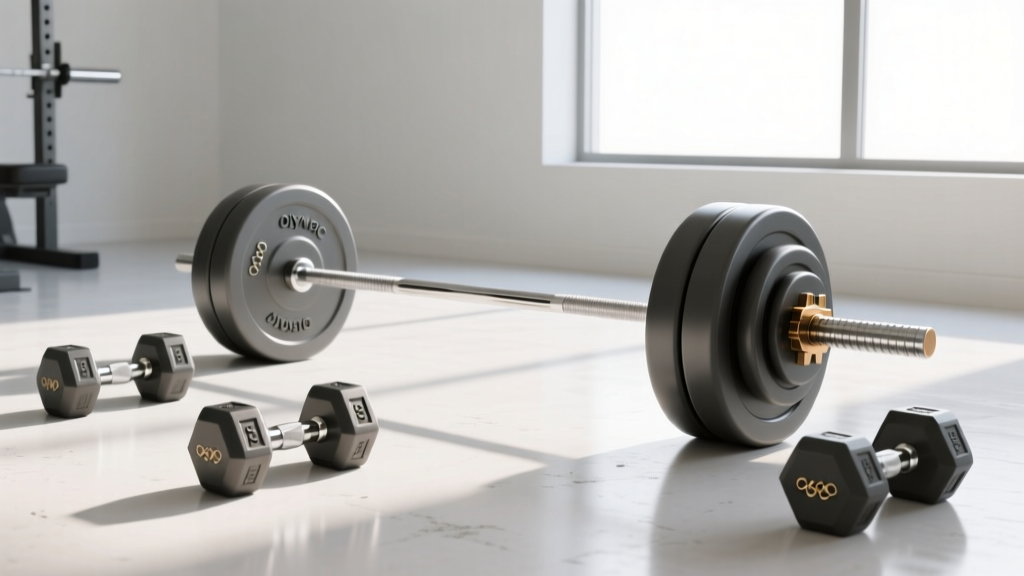
Best Adjustable Dumbbells for a Beginner Dumbbell Leg Workout Routine
Discover the best adjustable dumbbells for beginners and follow our step-by-step dumbbell leg workout routine to build lower-body strength safely at home.

Building a strong lower body at home does not require a massive power rack or a complete set of iron dumbbells taking up your entire garage. For beginners, a high-quality pair of adjustable dumbbells is the ultimate space-saving investment. However, not all adjustable dumbbells are created equal—especially when it comes to lower-body biomechanics. The length of the dumbbell, the grip texture, and the weight increment jumps can make or break your form during squats and deadlifts.
In this guide, we will compare the top adjustable dumbbells on the market specifically through the lens of lower-body training. Then, we will walk you through a complete, beginner-friendly step-by-step dumbbell leg workout routine designed to build muscle, improve mobility, and protect your joints.
Why Dumbbell Dimensions Matter for Leg Day
When reviewing adjustable dumbbells for upper-body work, overall length is rarely an issue. For a dumbbell leg workout routine, however, it is a critical failure point. Exercises like Romanian Deadlifts (RDLs) and reverse lunges require the dumbbells to travel close to the floor. If your adjustable dumbbells are too long (over 15 inches), the ends will scrape the ground before your hips reach full depth, artificially limiting your range of motion and forcing you to compromise your spinal alignment.
Expert Insight: For beginners performing leg workouts, prioritize compact adjustable dumbbells (under 13 inches in length). This ensures you can achieve full depth on lunges and RDLs without the weights clanking against the floor.2026 Adjustable Dumbbell Comparison for Lower Body
We tested the most popular adjustable models to see which pair best supports a beginner leg day. Here is how the top contenders stack up in terms of dimensions, weight increments, and pricing.
| Model | Overall Length | Weight Increments | Approx. Price (Pair) | Leg Day Verdict |
|---|---|---|---|---|
| Nuobell 80lb | 12.5 inches | 5 lbs all the way to 80 lbs | $699 | Best Overall (Compact & Smooth) |
| Bowflex SelectTech 552 | 16.9 inches | 2.5 lbs (up to 25), then 5 lbs | $429 | Poor for RDLs/Lunges (Too Long) |
| PowerBlock Elite USA | 12.0 inches | 2.5 lb micro-adds, 5 lb standard | $359 | Most Durable (Caged Grip) |
| Core Home Fitness | 14.5 inches | 5 lbs increments to 50 lbs | $349 | Good Budget Mid-Size Option |
Top Pick for Leg Day: Nuobell Adjustable Dumbbells
The Nuobell system uses a twist-handle mechanism that closely mimics the feel and dimensions of a traditional fixed hex dumbbell. At just 12.5 inches long, it clears the floor easily during deep reverse lunges. The knurled steel handle provides a secure grip, which is essential when your hands get sweaty during high-rep goblet squats.
The Durability King: PowerBlock Elite
PowerBlocks feature a unique caged, rectangular design. While the enclosed handle takes some getting used to for upper-body pressing, it is incredibly secure for lower-body hinge movements. The solid steel construction means you can safely drop them on a rubber mat after a heavy set of deadlifts without fearing the internal dial mechanisms will shatter—a common failure mode with dial-based competitors.
Step-by-Step Beginner Dumbbell Leg Workout Routine
According to the Centers for Disease Control and Prevention (CDC), adults should engage in muscle-strengthening activities that involve all major muscle groups at least two days a week. This routine targets the quads, hamstrings, glutes, and calves using a manageable, joint-friendly approach.
Workout Parameters:Frequency: 2 times per week (with at least 48 hours of rest between sessions).
Rest Periods: 60 to 90 seconds between sets.
Tempo: 2-1-1 (2 seconds lowering, 1 second pause at the bottom, 1 second lifting).
Step 1: Goblet Squat (Quads & Glutes)
The goblet squat is the ultimate beginner leg builder. Holding the weight in front of your torso acts as a counterbalance, naturally forcing you to keep your chest up and allowing your hips to sink deeper into the squat without your lower back rounding.
- Setup: Select a single dumbbell (start with 15–25 lbs). Hold it vertically against your chest, cupping the top end with both palms.
- Stance: Place your feet slightly wider than shoulder-width, toes pointed out at a 15-degree angle.
- Execution: Initiate the movement by pushing your hips back and bending your knees. Descend until your elbows touch the inside of your knees (or as deep as your mobility allows).
- Volume: 3 sets of 10–12 reps.
Step 2: Dumbbell Romanian Deadlift (Hamstrings & Glutes)
This hinge movement targets the posterior chain. This is where compact dumbbells like the Nuobell or PowerBlock shine, as they allow you to push your hips fully back without the weights dragging on the floor.
- Setup: Hold a dumbbell in each hand (start with 10–20 lbs per hand) resting against your upper thighs. Keep a slight, soft bend in your knees.
- Execution: Push your hips straight back toward the wall behind you. Keep the dumbbells glued to your legs as you slide them down your thighs. Stop when you feel a deep stretch in your hamstrings (usually just below the knee).
- Return: Squeeze your glutes and thrust your hips forward to return to the standing position. Do not hyperextend your lower back at the top.
- Volume: 3 sets of 8–10 reps.
Step 3: Dumbbell Reverse Lunges (Unilateral Stability)
Reverse lunges are significantly easier on the knee joints than forward lunges, making them ideal for beginners. They also heavily recruit the gluteus maximus.
- Setup: Hold a dumbbell in each hand at your sides. Stand tall with your feet hip-width apart.
- Execution: Take a controlled step backward with your right foot. Lower your hips until both knees are bent at approximately 90-degree angles. Your back knee should hover just an inch above the floor.
- Return: Push through the heel of your front (left) foot to return to the starting position.
- Volume: 2 sets of 8–10 reps per leg.
Step 4: Single-Leg Calf Raises (Calves & Ankles)
Calves are often neglected but are vital for ankle stability and overall lower-body aesthetics.
- Setup: Hold one heavy dumbbell in your right hand. Stand on a raised surface (like a thick weight plate or a sturdy step) with your left foot, letting your right heel hang off the edge. Hold a wall or rack with your left hand for balance.
- Execution: Lower your heel toward the floor for a deep stretch, then press up onto your toes as high as possible.
- Volume: 2 sets of 12–15 reps per leg.
Crucial Form & Safety Guardrails
When executing this dumbbell leg workout routine, beginners often fall into a few common traps. Avoid these errors to maximize your results and prevent injury:
- The 'Knee Cave' (Valgus Collapse): During squats and lunges, ensure your knees track directly over your second and third toes. If your knees cave inward, lighten the weight and focus on pushing the floor apart with your feet.
- Spinal Flexion on RDLs: Never round your lower back to get the dumbbells closer to the floor. The range of motion is dictated by your hamstring flexibility, not the floor. Stop when your hips stop moving backward.
- Grip Fatigue: Your grip will likely fail before your legs do on RDLs and lunges. If this happens, consider using basic lifting straps, or simply drop the weight by 5 lbs to ensure your target muscles are fully stimulated.
As noted by Harvard Health Publishing, consistent strength training not only builds muscle but also increases bone density and improves metabolic health. Consistency with proper form will always yield better long-term results than rushing to lift heavier weights with compromised mechanics.
Frequently Asked Questions
Can I build significant leg muscle with just adjustable dumbbells?
Yes, especially as a beginner. Muscle hypertrophy occurs when you apply progressive overload and train close to muscular failure. Once you max out your adjustable dumbbells (e.g., at 50 or 80 lbs), you can increase the difficulty by adding pauses at the bottom of the squat, slowing down the eccentric (lowering) phase, or transitioning to single-leg exercises like Bulgarian split squats.
How do I maintain my adjustable dumbbells?
Never drop dial-based adjustable dumbbells (like the Bowflex or Nuobell) on the floor, as the internal plastic gears can crack. Always set them down gently. Wipe down the handles with a dry cloth after your workout to prevent sweat from corroding the knurling or seizing the adjustment mechanisms.
Should I do this routine before or after cardio?
Always prioritize your dumbbell leg workout routine before cardio. Leg training requires maximum central nervous system (CNS) output and glycogen stores. If you do cardio first, you will fatigue your stabilizers and increase the risk of joint injuries during heavy squats and lunges. For more exercise variations and visual form guides, the ACE Fitness Exercise Library is an excellent, authoritative resource to bookmark.
More gear to consider
All reviews
Single Arm Dumbbell to Barbell: Weight & Knurling Setup

Dumbbell Halos & Barbell Collar Types: A Setup Walkthrough
EZ Curl vs Straight Bar: Space Layout & Dumbbell Image

Rubber vs Urethane: Barbell Row vs Dumbbell Row Care

Bowflex 552 Dumbbell Review: 2026 Adjustable Weight Guide