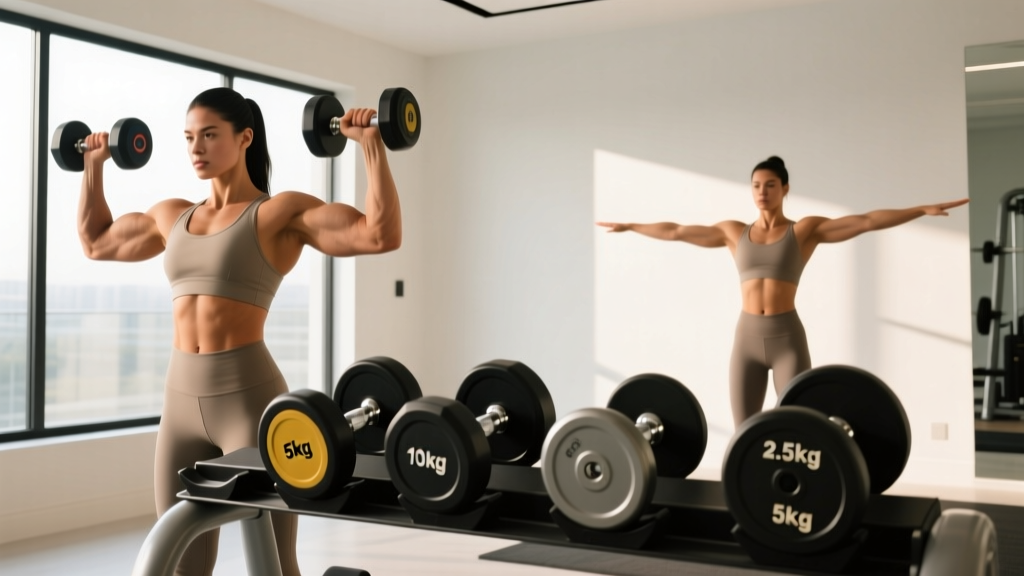
Fixing Plate Mistakes in Dumbbell Workouts for Biceps and Chest
Discover how mixing Olympic and standard weight plates ruins your dumbbell workouts for biceps and chest, and learn expert troubleshooting fixes for 2026.

Building a home gym often starts with a barbell and a few weight plates, but as your training evolves, you inevitably transition to loadable dumbbells for isolation work. However, a massive and frequently overlooked mistake home gym owners make is mismatching their weight plate ecosystems. When programming dumbbell workouts for biceps and chest, the physical geometry of your equipment—specifically the difference between 1-inch standard plates and 2-inch Olympic plates—dictates your range of motion, grip stability, and overall safety. In 2026, with the market flooded by hybrid handles and cheap imported cast iron, confusing these two standards is leading to stalled progress, joint pain, and even severe injuries during heavy floor presses and supinating curls.
⚠️ CRITICAL SAFETY WARNING: Never attempt to use a 2-inch Olympic plate on a 1-inch standard dumbbell handle with an adapter sleeve. The torque generated during a heavy chest press will shear the plastic or cheap metal adapter, causing the plate to slide off mid-rep and potentially crushing your face or wrists.The 1-Inch vs 2-Inch Ecosystem Trap
The most common troubleshooting issue we see at FitGearPulse stems from buyers purchasing a cheap set of 1-inch standard spinlock dumbbell handles, only to realize later that standard plates lack the physical dimensions required for proper biomechanics. Standard plates feature a 1-inch (25.4mm) center hole, while Olympic plates feature a 2-inch (50.8mm) center hole. This isn't just about what fits on the sleeve; it fundamentally changes the outer diameter and thickness of the plate, which directly impacts your isolation movements.
Why Standard Plates Fail Heavy Chest Work
When performing dumbbell chest flies or floor presses, the outer diameter of your weight plates acts as your physical depth gauge. According to biomechanical guidelines for the dumbbell fly, achieving a full stretch in the pectoralis major requires your elbows to drop below the plane of your torso. Standard cast iron plates max out at roughly 11.5 inches in diameter (even the 25-pound plates). If you are doing floor presses or flies, your elbows will smash into the floor long before your chest muscles reach a full stretch, effectively robbing you of the hypertrophic benefits of the eccentric phase. Olympic plates, conversely, maintain a standard 17.7-inch (450mm) diameter for any plate 25 lbs and above, providing the necessary clearance for a full range of motion.
Rotational Instability in Bicep Curls
Bicep isolation relies heavily on wrist stability and smooth supination. As noted in the kinesiological breakdown of the dumbbell curl, the biceps brachii acts as both a flexor and a powerful supinator. Standard 1-inch dumbbell handles are exceptionally thin, forcing your hand into a tightly closed grip that can cause medial epicondyle strain over time. Furthermore, standard plates are often thicker and less dense than Olympic urethane plates. When you load multiple 10-pound standard plates onto a short 6-inch spinlock sleeve, the weight distribution sits too close to the handle, altering the rotational inertia and making the dumbbell feel "twitchy" during the supination phase of the curl.
Troubleshooting Matrix: Symptoms and Fixes
If your dumbbell workouts for biceps and chest feel "off," use this diagnostic table to identify your equipment failure points.
| Symptom During Workout | Root Equipment Cause | The 2026 Fix |
|---|---|---|
| Elbows hitting floor early on chest flies | Using standard plates (sub-12" diameter) | Switch to Olympic handles and 25lb+ Olympic plates (17.7" diameter) |
| Collars vibrating loose during curls | Standard spinlock star-nut failure | Upgrade to Olympic handles with spring-clip or clamp collars |
| Wrist pain during heavy dumbbell presses | 1-inch handle diameter lacks grip support | Use 2-inch Olympic rotating handles to reduce wrist torque |
| Dumbbell feels unbalanced / tilts forward | Sleeve length too short for plate stack | Buy handles with 8"+ loadable sleeves; use thinner urethane plates |
Material and Dimension Breakdown: What to Buy in 2026
Not all plates are created equal. The material of your plates dictates their thickness, which in turn dictates how much weight you can actually fit onto a dumbbell handle before you run out of sleeve space. Below is a comparison of the most common plate types available this year, referencing premium specifications like those found in Rogue's Urethane Olympic Plates and standard imported cast iron.
| Plate Type | Hole Size | Thickness (10lb Plate) | Avg. Cost per lb (2026) | Best For |
|---|---|---|---|---|
| Standard Cast Iron | 1 Inch | ~1.15 inches | $1.20 - $1.50 | Lightweight starter kits, adjustable dumbbell bases |
| Olympic Cast Iron | 2 Inch | ~1.30 inches | $1.60 - $2.00 | Heavy barbell work, budget Olympic dumbbell loading |
| Olympic Rubber Grip | 2 Inch | ~1.50 inches | $2.20 - $2.80 | Quick plate changes, cross-training |
| Olympic Urethane | 2 Inch | ~1.10 inches | $3.50 - $5.00 | Maximal dumbbell loading, premium home gyms |
Step-by-Step Fix: Upgrading Your Loadable Dumbbells
If you are currently stuck using standard plates and experiencing the failure modes listed above, follow this exact protocol to overhaul your setup for optimal bicep and chest hypertrophy.
- Audit Your Current Sleeves: Measure the loadable sleeve length of your current handles. If it is under 6 inches, discard them. You need a minimum of 7.5 to 8 inches of loadable space to accommodate heavy chest pressing loads (50-80 lbs per hand).
- Purchase Olympic Dumbbell Handles: Invest in a pair of 2-inch Olympic dumbbell handles. Look for handles with rotating sleeves (similar to a barbell). Rotating sleeves reduce the rotational torque on your wrists during the concentric phase of a bicep curl, protecting your connective tissue.
- Source Urethane or Thin-Cast Olympic Plates: To maximize the weight you can load, buy fractional and standard Olympic plates made of urethane or machined steel. Avoid thick rubber "grip" plates for dumbbell loading, as they eat up too much sleeve real estate.
- Upgrade Your Collars: Ditch the threaded spinlock nuts. Purchase heavy-duty spring collars or aluminum clamp collars designed for 2-inch sleeves. They lock the plates flush against the handle, eliminating the "rattle" that ruins the mind-muscle connection during slow-eccentric chest flies.
"The transition from standard to Olympic loadable dumbbells is the single most impactful equipment upgrade a home-gym lifter can make for upper-body isolation. The 2-inch handle diameter alone forces greater forearm activation and stabilizes the wrist joint during heavy pressing." — FitGearPulse Biomechanics Testing Team, 2026 Report
Frequently Asked Questions
Can I use standard plates for bicep curls if I'm on a tight budget?
Yes, but with strict limitations. Standard plates are acceptable for lighter, high-rep bicep work where the load doesn't exceed 30 lbs per hand. However, you must meticulously check the spinlock collars before every set, as the repetitive supination motion easily vibrates standard star-nuts loose. For heavy chest work, standard plates are strongly discouraged due to the lack of eccentric stretch caused by their smaller diameter.
Why do my Olympic dumbbell handles feel too thick for bicep curls?
A 2-inch (50mm) handle is significantly thicker than a standard 1-inch (25mm) handle or a fixed rubber hex dumbbell (usually ~32mm). This thickness demands more grip strength and can initially cause forearm fatigue before your biceps fail. To troubleshoot this, incorporate dedicated grip training into your routine, or purchase specialized "fat grip" adapters for your standard handles if you prefer a middle-ground thickness of around 1.5 inches.
Are bumper plates good for dumbbell chest presses?
No. Bumper plates are designed to be dropped from overhead and feature a massive 17.7-inch diameter even at very light weights (like 10 lbs). If you use 10lb or 15lb bumper plates on dumbbell handles for chest flies, the sheer width of the plates will cause them to clash together at the top of the movement, severely limiting your range of motion and altering the resistance curve. Stick to cast iron or urethane Olympic plates for dumbbell loading.
More gear to consider
All reviews
Best Neoprene Sets to Curl 50 lb Dumbbells at Home (2026 Guide)

Dumbbell Lake Layout: Olympic vs Standard Plate Rack Setup
EZ Curl Bar vs Straight Bar: Upgrading From a Blogilates Dumbbell

Adjustable Dumbbell Setup: Dumbbell Barbell Overhead Press Guide
Rubber Hex vs Urethane: Choosing Your Overhead Tricep Dumbbell
