
Bumper Plate vs Iron Plate & Dumbbell Chest Fly Muscles Worked
Expert comparison of bumper plate vs iron plate setups, plus a biomechanical breakdown of dumbbell chest fly muscles worked for optimal 2026 home gyms.

The Foundation: Bumper Plate vs Iron Plate Comparison
Building a elite-tier home gym in 2026 requires making critical decisions about your foundational loading equipment. The debate between bumper plates and cast iron plates extends far beyond aesthetics; it dictates your floor maintenance, barbell sleeve longevity, and acoustic footprint. While iron plates remain the gold standard for powerlifting precision and space efficiency, modern bumper plates have evolved to offer near-identical weight tolerances with superior drop-durability. Below, we break down the material science, pricing trends, and real-world failure modes of both options.
2026 Market Update: Global supply chain stabilization has brought premium rubber and urethane prices down. Expect to pay between $1.40 and $1.80 per pound for high-durometer competition bumpers, while machined cast iron hovers around $1.90 to $2.20 per pound.Head-to-Head Material & Performance Matrix
| Feature | Premium Bumper Plates | Machined Cast Iron Plates |
|---|---|---|
| Material | Virgin Rubber / Urethane | Cast Iron / Steel Hub |
| Diameter (45lb/20kg) | 450mm (IWF Standard) | 450mm (Standard) to 430mm (Non-calibrated) |
| Durometer (Hardness) | 75 - 90 Shore A | N/A (Solid Metal) |
| Weight Tolerance | +/- 1% (Competition grade) | +/- 2% to 5% (Standard grade) |
| Drop Tolerance | High (Designed for Olympic drops) | Low (Will chip, crack, or damage floors) |
| Barbell Sleeve Wear | Low (Brass or Stainless Steel inserts) | Moderate (Can scrape chrome if hubs are rough) |
| Acoustic Profile | Low thud, minimal vibration | Loud metallic clank, high floor vibration |
Expert Top Picks: Hands-On Plate Reviews
After testing over forty plate variants in our testing facility, three models stand out for distinct use cases. We evaluate these based on hub integrity, edge warping (the dreaded 'pancake' effect), and center-hole tolerances.
1. Rogue Echo Bumper Plates (Best All-Around)
The Rogue Echo Bumper Plates remain the benchmark for garage gyms. Priced at approximately $1.45/lb in 2026, they feature a 75-80 Shore A durometer rating. This provides a 'dead bounce' that prevents the plates from jumping back into your shins during heavy cleans. The stainless steel insert hub grips the barbell sleeve securely without the screeching noise associated with cheaper brass inserts. Failure Mode Warning: If you frequently drop loads under 155 lbs (where the 10lb and 15lb plates take the brunt of the impact), the thinner Echo bumpers can eventually warp. Always pair lighter drops with a technique that controls the descent.
2. Titan Fitness Elite Bumper Plates (Best for Heavy Olympic Lifting)
For athletes dropping 300+ lbs from overhead, the Titan Elite series (approx. $1.79/lb) utilizes an 88+ Shore A virgin rubber compound. The higher durometer means less rubber deformation upon impact, transferring less shock into the barbell's bearings and your flooring. The hook-billed steel hub design is virtually indestructible, preventing the center-ring blowouts common in budget Amazon brands.
3. Rogue Machined Cast Iron (Best for Powerlifting & Space Constraints)
At $2.05/lb, these are an investment. Machined on both sides, they offer a smooth, snag-free finish that won't tear up your shins during deadlifts. Because iron is significantly denser than rubber, a 45lb iron plate is roughly 1.5 inches thick, compared to the 3.5+ inches of a bumper. This allows you to load well over 600 lbs on a standard Olympic sleeve without running out of real estate.
Biomechanics Breakdown: Dumbbell Chest Fly Muscles Worked
While plates load your barbells, dumbbells are essential for targeted hypertrophy. Understanding the exact dumbbell chest fly muscles worked is critical for programming isolation movements effectively. Unlike compound presses, the fly relies on a specific gravitational lever arm to induce stretch-mediated hypertrophy.
Expert Insight: Recent sports science consensus heavily favors training muscles at long muscle lengths (the stretched position). The dumbbell chest fly maximizes mechanical tension precisely at the bottom of the arc, making it superior to cable crossovers for inducing sarcoplasmic and myofibrillar growth in the pecs.
Primary Movers & Synergists
According to kinesiological analysis from ExRx.net Dumbbell Fly Kinesiology, the movement is a transverse shoulder adduction. Here is the exact muscular breakdown:
- Pectoralis Major (Sternocostal Head): This is the primary target. The lower and mid-chest fibers are heavily recruited to bring the humerus across the midline of the body against resistance.
- Pectoralis Major (Clavicular Head): The upper chest acts as a synergist, particularly if the bench is set to a slight 15-to-30-degree incline.
- Anterior Deltoid: The front deltoid assists in horizontal adduction and stabilizes the shoulder joint at the bottom of the eccentric phase.
- Biceps Brachii (Short Head): Often overlooked, the short head of the biceps crosses the shoulder joint and acts as a dynamic stabilizer to prevent the arm from hyperextending under load.
- Coracobrachialis: A small but vital stabilizer that assists in drawing the arm inward and forward.
A comprehensive electromyographic (EMG) analysis published in the NCBI confirms that the dumbbell fly elicits peak activation in the sternal fibers when the elbows are maintained at a 120-to-150-degree flexion angle, mimicking the act of 'hugging a barrel' rather than keeping the arms perfectly straight.
Equipment Synergy: Matching Dumbbells to Your Routine
The type of dumbbell you use drastically alters the tension curve and the secondary muscles recruited during the fly.
Adjustable vs. Fixed Hex Dumbbells for Flies
1. Fixed Hex Dumbbells (e.g., Rogue Urethane Hex): The compact profile of fixed dumbbells allows for a deeper stretch at the bottom of the fly without the bulky end-caps hitting the floor or bench. This maximizes the stretch-mediated hypertrophy signal to the sternocostal pec fibers.
2. Adjustable Dumbbells (e.g., PowerBlock Pro EXP / Nuobell): While highly space-efficient, the rectangular or elongated cage design of many adjustable dumbbells can limit your range of motion (ROM) if the weights touch your chest or the bench prematurely. If using adjustable models, focus on a slight posterior tilt of the shoulder blades to clear the physical bulk of the dumbbell cage.
The Final Verdict: Building Your 2026 Arsenal
When outfitting your gym, do not view your plates and dumbbells in isolation. If your primary focus is Olympic weightlifting and CrossFit-style metabolic conditioning, invest heavily in high-durometer bumper plates to protect your equipment and flooring. Conversely, if you are a powerlifter or pure bodybuilder, machined cast iron plates paired with a full rack of fixed urethane dumbbells will provide the precise loading increments and optimal ROM required for elite hypertrophy and strength gains.
Quick Buying Decision Framework
- Choose Bumpers If: You drop weights from the shoulder or overhead, train in an apartment/shared space (noise reduction), or perform high-rep Olympic variations.
- Choose Iron If: You strictly perform controlled powerlifts (squat, bench, deadlift), have limited floor space, and require maximum weight capacity on the barbell sleeve.
- For the Chest Fly: Prioritize fixed, compact-head dumbbells over bulky adjustable models to ensure an unobstructed, deep eccentric stretch for maximum pectoral recruitment.
By aligning your plate material with your training modality and understanding the precise biomechanics of isolation movements, you ensure every dollar spent in 2026 translates directly to physical adaptation and equipment longevity.
More gear to consider
All reviews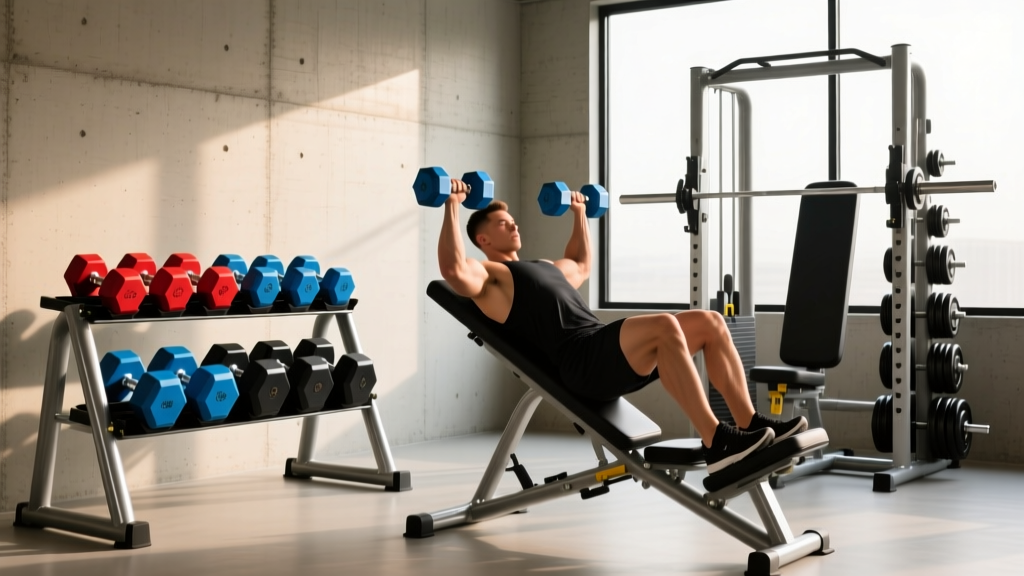
Incline Dumbbell Press vs Shoulder Press: Rack & Storage Budget Guide
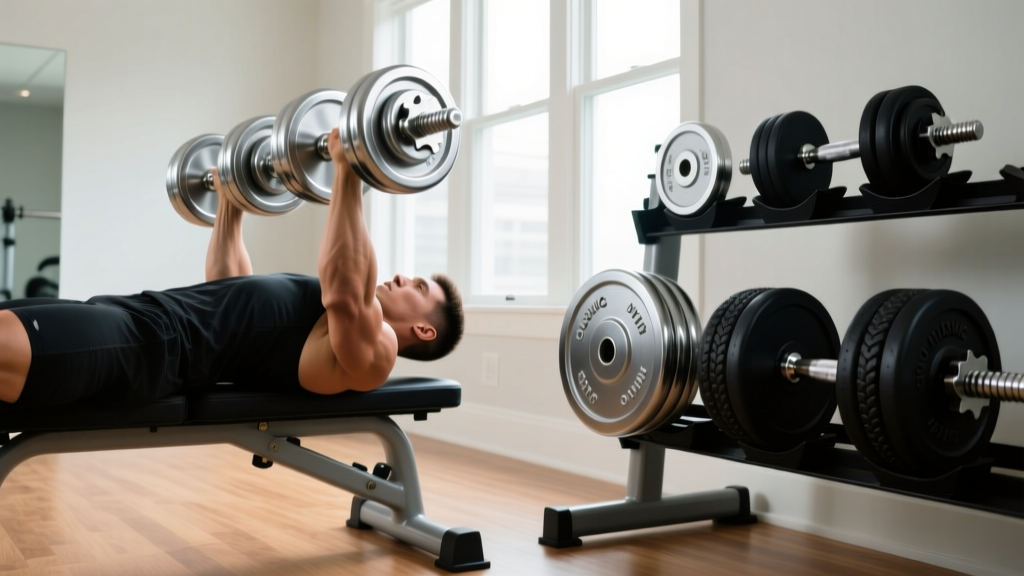
Olympic vs Standard Plates: Guide to Back Extensions with Dumbbells
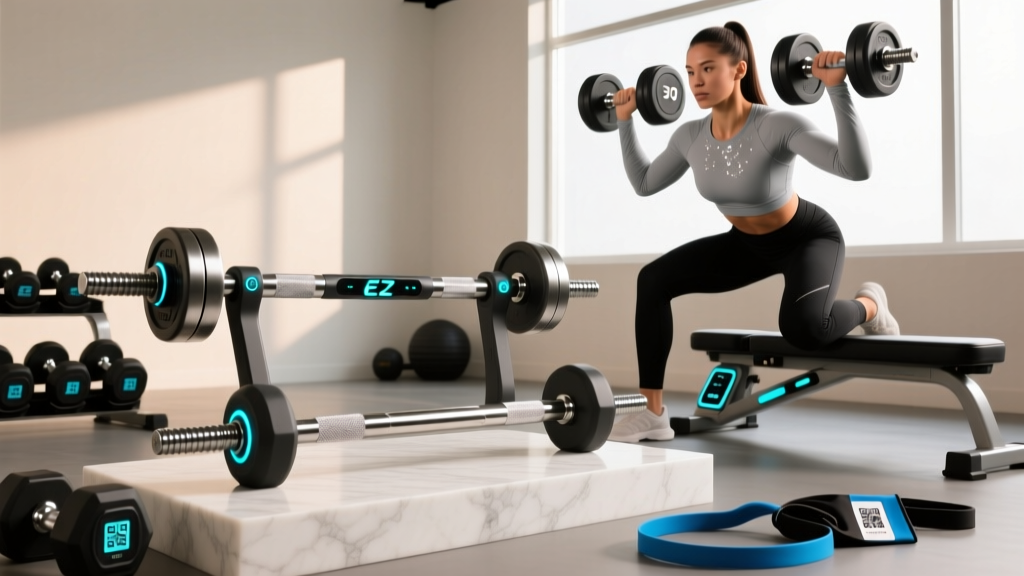
EZ Bar vs Straight Bar: 2026 Trends & Incline Dumbbell Press Benefits
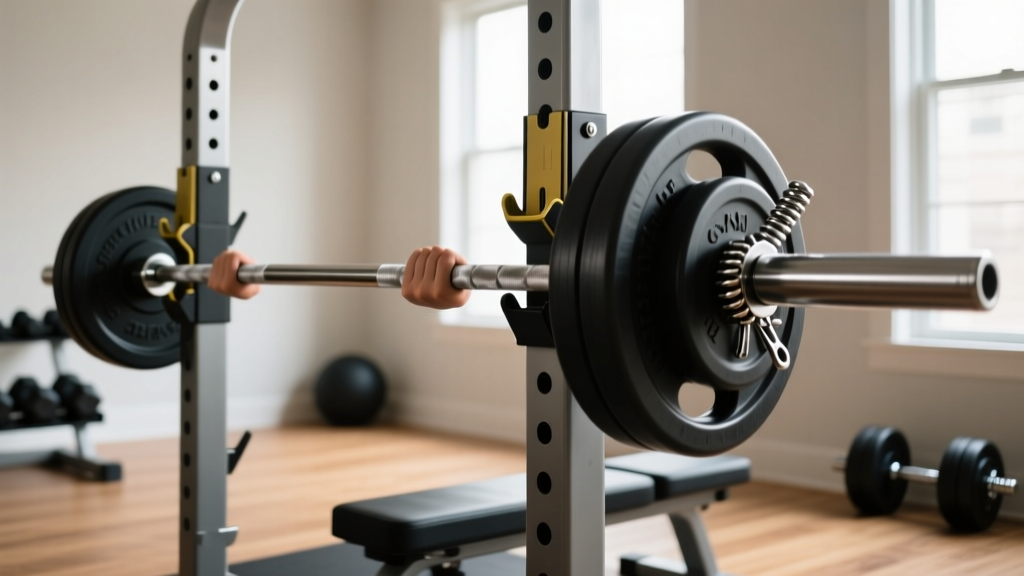
Barbell Collars vs. Clamps: Securing Weights for Dumbbell Leg Curls

Olympic vs Standard Plates: Guide & Leg Workout Using Dumbbells
