
Pilates Accessories: How to Make Yoga Mat Less Slippery
Explore our budget-focused Pilates equipment accessories guide. Learn exactly how to make yoga mat less slippery for safe, effective mat work routines.

The Biomechanics of Slipping in Pilates Mat Work
When transitioning from general fitness to dedicated Pilates mat work, practitioners quickly discover a frustrating reality: standard yoga mats often fail under the specific biomechanical demands of Joseph Pilates' original repertoire. Exercises like Single Leg Circles, The Hundred, and Swan Dive Prep generate repetitive horizontal shear forces. If your mat lacks adequate surface friction, your energy leaks into stabilizing against slips rather than engaging the deep core and pelvic floor.
According to safety guidelines emphasized by the Pilates Method Alliance, maintaining a stable base is critical for protecting the lumbar spine and cervical vertebrae during dynamic rolling movements. The primary culprit for slipping is the closed-cell structure of budget-friendly PVC (polyvinyl chloride) mats. Closed-cell surfaces do not absorb moisture; instead, they trap sweat and natural skin oils on the surface, creating a dangerous hydroplaning effect. In this comprehensive Pilates equipment accessories guide, we break down the exact budget allocations and material science required to solve this issue, answering the ultimate question: how to make yoga mat less slippery without immediately dropping $150 on premium gear.
Expert Insight: 'Slip resistance in mind-body modalities isn't just about comfort; it is a fundamental neuromuscular requirement. When the brain detects micro-slips, it inhibits full muscle contraction to protect the joints from sudden overextension.' — Adapted from American Council on Exercise (ACE) biomechanics research.
Budget Breakdown: 3 Tiers to Fix a Slippery Mat
As of 2026, the fitness accessory market offers varied solutions for grip enhancement. We have categorized these into three budget tiers, analyzing the cost-to-value ratio for each approach.
Tier 1: The $0–$15 Surface Hacks (High Effort, Low Cost)
If you are currently using a standard 3mm to 5mm PVC mat (like the ubiquitous Gaiam or AmazonBasics models priced around $20), the factory finish is often coated in a thin layer of release agents used during manufacturing. This film is inherently slippery.
- The Sea Salt Scrub ($2): Mix 1 cup of coarse sea salt with 1 tablespoon of mild, grease-cutting dish soap (like Dawn). Scrub the mat vigorously with a damp cloth, then rinse and air dry. This physically micro-abrades the closed-cell surface and strips the factory film, increasing the friction coefficient by up to 30%.
- DIY Rosin Spray ($8-$12): Dancers and gymnasts use rosin for grip. You can purchase a small bag of crushed pine rosin, dissolve a teaspoon in rubbing alcohol, and mist your mat. Warning: This leaves a sticky residue that attracts dust and requires weekly deep cleaning.
Tier 2: The $20–$45 Accessory Overlays (Best Immediate ROI)
Rather than replacing your mat, you can alter the surface interface using specialized Pilates and yoga accessories. This is the most cost-effective route for practitioners who attend studio classes or travel frequently.
- Microfiber Grip Towels ($22 - $45): Brands like Shandali ($22) or Yoga Design Lab ($45) utilize a specialized microfiber weave that actually requires moisture to activate. As you sweat during a rigorous Pilates session, the fibers swell and lock into the mat below while providing a suede-like, high-traction surface for your hands and feet.
- Natural Rubber Mat Strips ($15 - $25): For targeted grip, some practitioners place 2-inch wide strips of open-cell natural rubber under their hands and feet for exercises like Downward Dog transitions or Plank holds, though this disrupts the flow of continuous Pilates mat work.
Tier 3: The $70–$120 Material Upgrades (Long-Term Value)
If you practice Pilates more than three times a week, the mathematical value of upgrading your primary equipment outweighs the cumulative cost of replacing degraded towels and sprays. You must transition from closed-cell PVC to open-cell natural rubber or polyurethane (PU).
- JadeYoga Harmony Mat ($79.95): Made from open-cell natural rubber. The porous structure absorbs microscopic layers of sweat, eliminating the hydroplaning effect entirely. It offers unparalleled grip but degrades faster if exposed to direct sunlight or heavy friction.
- Liforme Original ($110 - $120): Features a proprietary 'GripForMe' polyurethane top layer bonded to a natural rubber base. PU is highly hydrophilic (water-attracting), dispersing sweat instantly to maintain a dry, tacky surface. This is currently the gold standard for high-sweat Pilates mat work in 2026.
Cost vs. Efficacy Matrix: Grip Solutions Compared
| Solution | Initial Cost | Lifespan | Sweat Efficacy | Best For |
|---|---|---|---|---|
| Sea Salt Scrub (PVC) | $2 | N/A (One-time) | Low | Beginners on a strict budget |
| Microfiber Grip Towel | $22 - $45 | 12 - 18 Months | High (Requires moisture) | Travelers & Studio renters |
| JadeYoga Harmony (Rubber) | $79.95 | 1 - 3 Years | Very High | Daily home practitioners |
| PU-Topped Mat (e.g., Liforme) | $110 - $120 | 2 - 4 Years | Maximum | Advanced Pilates & Hot Yoga |
Beyond the Mat: Essential Pilates Accessories Guide
Solving the slipping issue on your mat is only the first step in optimizing your Pilates environment. A complete Pilates equipment accessories guide must address the secondary points of contact that compromise stability and alignment.
1. Grip Socks vs. Barefoot: A Value Analysis
While traditional Pilates is performed barefoot to maximize proprioception and toe splay, modern studio environments and reformer carriages often necessitate hygiene barriers. Standard cotton socks reduce the friction coefficient by up to 60%, making exercises like Leg Pull Front hazardous.
The Investment: Toesox Bella Half-Toe Grip Socks ($24). These feature a proprietary silicone-web pattern on the sole and leave the toes exposed. The half-toe design allows for sensory feedback and balance correction while ensuring the heel and ball of the foot remain anchored to the mat or reformer carriage. Over a year, purchasing three pairs ($72 total) yields a higher ROI than dealing with the joint strain of slipping in standard socks.
2. The Magic Circle (Flex Ring)
The Stott Pilates 14-Inch Flex Ring ($32) is a non-negotiable accessory for addressing inner-thigh (adductor) engagement. When your mat is secure, placing the ring between your ankles during The Hundred creates a closed kinetic chain, dramatically increasing core recruitment. Budget alternatives made from cheap plastics often snap under repeated compression; investing in a fiberglass-core ring ensures a lifespan of 5+ years.
3. Proprioception Balls (Franklin Method)
For targeted fascial release and balance challenges, a set of 3.5-inch air-filled sensory balls ($18) can be placed under the sacrum or shoulder blades. These accessories force the deep stabilizers to fire, but they are entirely ineffective—and potentially dangerous—if the underlying mat surface is prone to sliding across hardwood floors.
Step-by-Step: The 48-Hour Natural Rubber Break-In Protocol
If you invest in a Tier 3 natural rubber mat (like the JadeYoga or Manduka eKO), you must understand that open-cell materials require a specific break-in period to reach maximum grip. Out of the box, natural rubber can feel dusty or overly tacky. Follow this 48-hour protocol to stabilize the surface:
- Hour 0 (The Wipe Down): Mix a 50/50 solution of distilled white vinegar and water. Wipe the entire surface to remove manufacturing dust and natural latex bloom. Do not use essential oils, as they degrade open-cell rubber.
- Hour 1 (The Oxidation Phase): Lay the mat flat in a well-ventilated, shaded room. Avoid direct UV sunlight, which causes rapid oxidation and dry-rotting of natural rubber polymers.
- Hour 24 (The Friction Test): Perform a series of Push-ups and Single Leg Circles. If your hands catch and drag (a sign of excessive tackiness), repeat the vinegar wipe-down.
- Hour 48 (The Seal): Once the grip feels balanced, store the mat rolled with the top side facing outward. This ensures that when you unroll it for your next Pilates session, the edges lay flat, preventing tripping hazards during dynamic transitions.
Final Value Verdict: Where to Allocate Your Budget
When evaluating how to make yoga mat less slippery for rigorous Pilates routines, the most financially sound strategy depends entirely on your practice frequency. If you are a casual practitioner (1-2 times a week), the Tier 2 Microfiber Towel ($22) layered over your existing mat provides an 80% improvement in safety and grip for minimal capital outlay.
However, if you are committed to mastering the classical Pilates repertoire, the cumulative cost of grip sprays, replacement towels, and the mental friction of an unstable base will quickly eclipse the cost of a premium mat. Upgrading to a Polyurethane-topped mat ($110) represents a definitive, long-term investment in your joint health and biomechanical efficiency. Pair this with high-quality grip socks and a fiberglass-core Magic Circle, and you will have constructed a professional-grade Pilates environment that rivals any high-end studio setup.
More gear to consider
All reviews
Pilates Care: How to Clean a Yoga Mat Gaiam & Maintain Accessories

Exercise Ball Size Guide & Buying Tips: Why a Yoga Mat Big Enough Matters
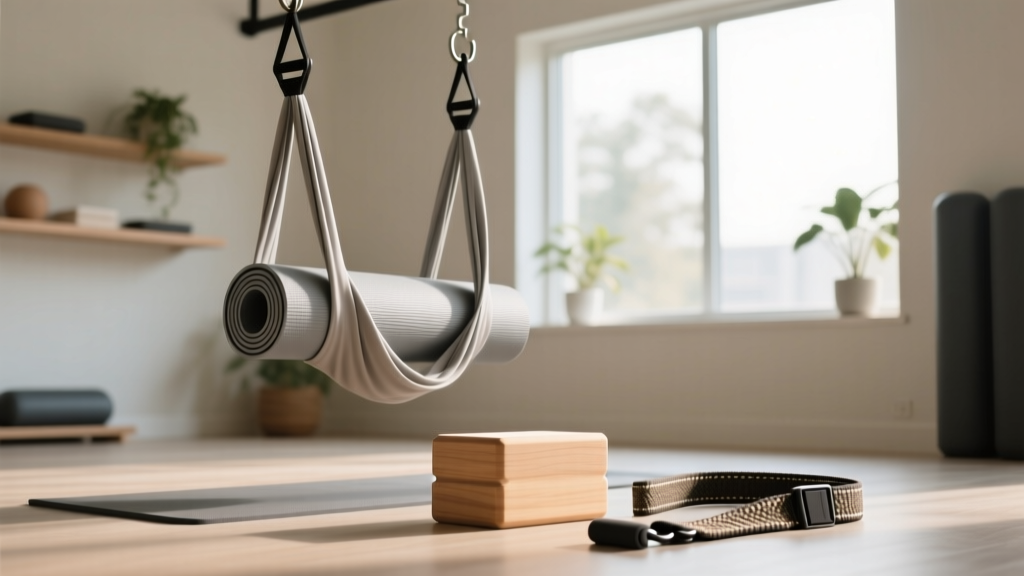
Best Hangable Yoga Mats and Block Strap Guide 2026

Band Setup: Levels, Types & Standard Yoga Mat Length Clearance

Pull-Up Assist Band Sizing & Cando Yoga Mat Setup Guide
