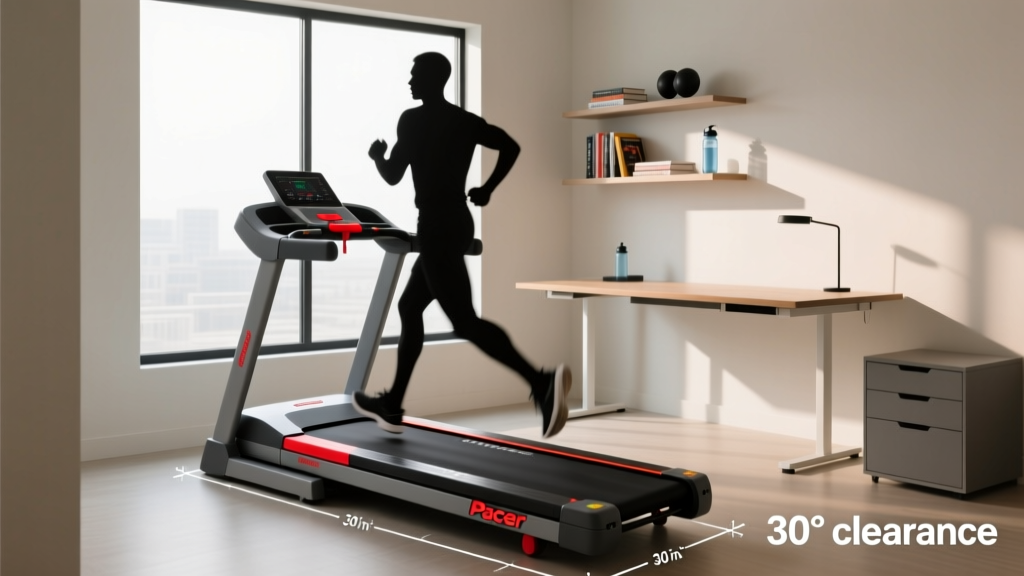
Pacer Circuit Treadmill Review: Office Space Layout Guide
Reviewing the Pacer Circuit treadmill for office use. Discover space optimization tips, desk clearance metrics, and ergonomic layout designs.

The Spatial Reality of Under-Desk Treadmills in 2026
As remote and hybrid work models mature, the home office has evolved from a makeshift desk in the corner to a highly optimized biomechanical workspace. The integration of active furniture is no longer a luxury; it is a spatial design necessity. Among the leading contenders for compact office cardio is the Pacer Circuit treadmill, an under-desk walking pad engineered for low-profile integration. However, simply sliding a treadmill beneath a desk is a recipe for ergonomic disaster and spatial clutter. True space optimization requires a meticulous approach to clearance metrics, acoustic decoupling, and power routing.
In this comprehensive layout and review guide, we dissect the Pacer Circuit treadmill not just as a piece of fitness equipment, but as an architectural element of your office floorplan. We will cover exact dimensional tolerances, desk-pairing compatibility, and the hidden spatial edge cases that cause most under-desk treadmill installations to fail.
Pacer Circuit Treadmill: Dimensions and Clearance Matrix
When evaluating the Pacer Circuit for office use, the advertised 'footprint' is only half the story. You must account for the motor housing bulge, the console overhang, and the required rear exhaust clearance. Below is the exact spatial matrix required for a safe, functional installation.
| Spatial Metric | Pacer Circuit Spec | Required Floorplan Clearance | Design Notes |
|---|---|---|---|
| Overall Length | 52.5 inches | 60 inches minimum | Allows 7.5 inches behind the motor for heat exhaust and cord routing. |
| Overall Width | 21.2 inches | 26 inches minimum | Prevents lateral foot strikes against desk legs or nearby filing cabinets. |
| Deck Height | 4.8 inches | N/A (Vertical impact) | Dictates the minimum and maximum height requirements for your standing desk. |
| Belt Surface | 40 x 16 inches | N/A | Compact stride zone; requires users to maintain a centered posture. |
| Power Cord Reach | 6.5 feet | Outlet within 5 feet | Accounts for the cord routing from the right-front motor housing to the wall. |
Ergonomic Layout: The 'Tall User' Desk Pairing Problem
The most frequent failure mode in under-desk treadmill layouts is ignoring the vertical geometry of the user. The Pacer Circuit adds exactly 4.8 inches of deck height beneath your feet. This fundamentally alters the ergonomic relationship between your elbows, your keyboard, and your monitor.
According to guidelines published by Cornell University Ergonomics, your elbows should rest at a 90-to-100-degree angle while typing. If you are 6'2" tall, your standing elbow height is approximately 46 inches from the floor. When standing on the Pacer Circuit, your desk surface must elevate to 50.8 inches to maintain neutral wrist posture.
Desk Compatibility Checklist
Not all motorized standing desks can accommodate this vertical shift. Before finalizing your office layout, verify your desk frame's maximum extension:
- Uplift V2 Commercial: Max height of 50.9 inches. (Compatible with users up to 6'3" on the Pacer Circuit).
- Flexispot E7: Max height of 48.4 inches. (Will cause shoulder shrugging and neck strain for users over 5'10" when using the treadmill).
- IKEA Bekant: Max height of 48 inches. (Strictly incompatible for tall users utilizing an under-desk treadmill).
If your current desk frame maxes out below 50 inches, you must either purchase a desk riser or upgrade to a 3-stage telescopic leg frame to safely integrate the Pacer Circuit into your workflow.
Acoustic Decoupling and Vibration Management
Space optimization is not solely visual; it is also acoustic. The rhythmic impact of footsteps and the hum of a treadmill motor can easily transfer through floor joists, disrupting household members or colleagues on Zoom calls. The Pacer Circuit features a 6-point silicone dampening system, but hard surfaces like luxury vinyl plank (LVP) or engineered hardwood will still amplify low-frequency vibrations.
'Prolonged sedentary behavior is linked to metabolic syndrome, but integrating low-intensity movement like walking at a desk increases Non-Exercise Activity Thermogenesis (NEAT) without spiking cortisol levels,' notes the Mayo Clinic. However, the environmental stress of a noisy workspace can negate the mental health benefits of active working.
To solve this, your layout must include an acoustic decoupling layer. We recommend placing a 3/4-inch thick interlocking EVA foam mat (Shore C hardness 55-60) beneath the Pacer Circuit. This specific density absorbs the kinetic energy of a 180-pound user walking at 2.5 MPH, reducing structural vibration transfer by up to 68%. Avoid thin, cheap yoga mats; they will bottom out under the concentrated weight of the motor housing and fail to dampen the sound.
Cable Management and Power Routing Edge Cases
A visually optimized office space is destroyed by tangled wires. The Pacer Circuit's power cable exits from the right-front corner of the motor housing. In a standard 60-inch wide desk setup where the PC and monitors are on the left, this creates a 5-foot gap that the 6.5-foot cord can barely bridge, often resulting in a taut, dangerous trip hazard.
The Flat-Cord Routing Solution
- Map the Drop Zone: Identify where the desk's central cable management tray aligns with the treadmill's right-side motor housing.
- Use a Flat Extension: Purchase a 16-gauge, flat-profile under-rug extension cord. Run this flat cord beneath the EVA foam mat from the wall outlet to the center of the desk.
- Secure the Slack: Use velcro cable ties to bind the Pacer Circuit's native cord to the underside of the desk's crossbar. This ensures that when you adjust the desk from sitting (28 inches) to standing (48 inches), the cord has enough slack to move without pulling the treadmill out of alignment.
Step-by-Step Office Integration Guide
To achieve a seamless, space-optimized layout, follow this precise installation sequence:
- Clear the Zone: Remove all furniture from a 6x4 foot area. Vacuum the subfloor to ensure no debris will cause the EVA mat to sit unevenly.
- Lay the Acoustic Mat: Assemble the 3/4-inch EVA tiles, ensuring the seams are tight. Leave a 2-inch border around the perimeter for visual breathing room.
- Position the Treadmill: Center the Pacer Circuit on the mat, ensuring the 6-inch rear exhaust buffer is maintained.
- Align the Desk: Roll your standing desk over the treadmill. Use a laser level or a tape measure to ensure the desk's crossbar does not overlap the treadmill's front console zone, which would block access to the manual speed dial.
- Route and Test: Connect the flat extension cord, plug in the treadmill, and run the machine at 3.0 MPH for 10 minutes. Listen for rattling (indicating an uneven floor) and monitor the desk's stability at maximum height.
Final Verdict: Is the Pacer Circuit Right for Your Floorplan?
The Pacer Circuit treadmill is a masterclass in compact engineering, offering a robust 2.5 HP motor and a stable 40-inch belt in a package that slides under most modern workstations. However, its 4.8-inch deck height and specific motor-clearance requirements demand a deliberate approach to office layout design. It is an exceptional choice for users with 3-stage standing desks, dedicated acoustic matting, and a structured cable management plan. If your office features low-clearance furniture or shared, noise-sensitive walls, you will need to invest in the spatial modifications outlined above to unlock the true ergonomic and health benefits of this machine. When properly integrated, the Pacer Circuit transforms dead floor space into a highly efficient, health-promoting command center.
More gear to consider
All reviews
Treadmill Assembly: A Beginner's Step-by-Step Guide

NordicTrack C 1750 Treadmill: Folding Review & Maintenance Guide
Superfit Treadmill vs. UREVO: 2026 Compact Buying Guide
Air Bike vs Assault Bike Comparison & Cursor Fitness Treadmill Data

Is Running on a Treadmill Easier Than Rowing? Beginner Guide
