Outdoor Setup: Weatherproofing & Home Gym Paint Schemes
Discover how to build a weatherproof outdoor gym. Explore structural prep, climate control, and durable home gym paint schemes for any environment.

The Outdoor Gym Revolution: Why Weatherproofing Matters
Building an outdoor home gym—whether converting a 12x16 timber-frame shed, retrofitting a detached garage, or constructing a custom pavilion—is one of the most effective ways to maximize property space while creating a dedicated training sanctuary. However, exposing fitness equipment and structural materials to the elements introduces severe variables: ultraviolet (UV) degradation, humidity-induced rust, and thermal expansion. According to the Building Science Corporation, managing moisture and thermal dynamics is the single most critical factor in outdoor structural longevity. This complete installation walkthrough will guide you through structural preparation, equipment protection, and selecting the right home gym paint schemes to ensure your outdoor setup survives the elements and keeps you motivated.
Phase 1: Structural Prep and Moisture Management
Before you unroll a single rubber mat or rack a barbell, the shell of your outdoor gym must be fortified against water intrusion and condensation. Failure to address moisture at this stage will result in warped subfloors, mold growth, and rusted cast-iron plates within months.
The Rain Screen and Vapor Retarder Strategy
If you are building a custom wood-frame outdoor gym, implement a rain screen gap (minimum 3/8-inch) behind your exterior siding to allow hydrostatic pressure to equalize and water to drain. Inside the walls, use a Class II vapor retarder (like CertainTeed MemBrain) rather than a polyethylene sheet. This smart membrane adapts to humidity levels, allowing the wall cavity to dry to the interior during winter months while blocking moisture drive during humid summers.
Critical Warning: Never install an interior polyethylene vapor barrier in a mixed-humidity climate. When you generate sweat and heat during a workout, interior moisture will become trapped against the cold exterior sheathing, leading to catastrophic rot and black mold inside your gym walls.Phase 2: Selecting Exterior and Interior Home Gym Paint Schemes
When architects and fitness enthusiasts collaborate on home gym paint schemes for outdoor structures, the primary adversary is ultraviolet (UV) degradation and high humidity. Standard interior latex paints will blister and peel within a single season when subjected to the temperature fluctuations of an outdoor shed or garage.
Chemical Composition: What Survives the Elements?
For the exterior shell, you need 100% acrylic latex paints fortified with ceramic microspheres or advanced resin technologies that resist dirt pickup and UV fading. In 2026, premium exterior acrylics like Sherwin-Williams Emerald® Rain Refresh (averaging $92 to $105 per gallon) offer self-cleaning properties that shed dirt and resist mildew. For the interior, where humidity spikes during intense cardio or heavy lifting sessions, utilize a moisture-resistant, mildew-proof coating like Zinsser Perma-White ($35 to $42 per gallon). This self-priming, semi-gloss paint creates an impermeable shell that withstands constant condensation.
Color Psychology for Outdoor Training
Your paint scheme should bridge the gap between environmental durability and psychological arousal. Outdoor spaces naturally absorb more ambient light, meaning you can utilize deeper, more saturated tones without making the space feel claustrophobic.
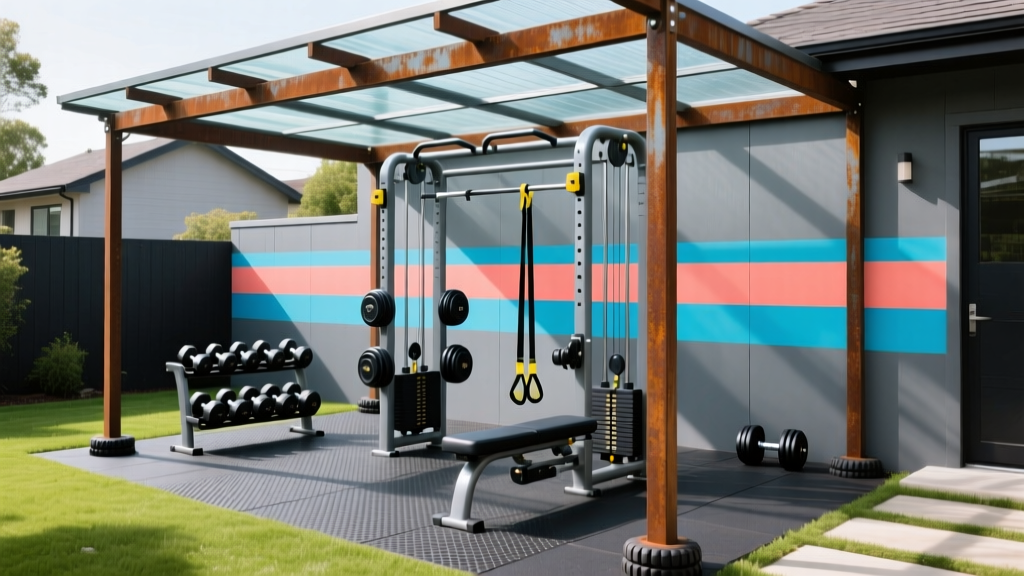
- High-Arousal Zones (Power Racks, Platforms): Use high-contrast accent walls in 'Safety Orange' or 'Crimson Red'. These colors are proven to elevate heart rate and perceived energy. To prevent UV fading on exterior-facing accent walls, ensure the paint contains inorganic iron-oxide pigments rather than organic dyes.
- Recovery and Mobility Zones: Paint these areas in 'Slate Gray' or 'Sage Green'. These cool, neutral tones lower cognitive load and promote focus during stretching or yoga.
- Ceiling and Trusses: Paint exposed outdoor pavilion trusses in matte black or charcoal. This hides dust, cobwebs, and pollen, while drawing the eye downward to the training floor.
Phase 3: Coating and Paint Comparison Matrix
Not all coatings are created equal. Use the table below to select the correct chemical composition for specific zones of your outdoor home gym.
| Coating Type | Best Application | UV & Moisture Resistance | Est. Cost (2026) |
|---|---|---|---|
| 100% Acrylic Latex (Exterior) | Wood/Composite Siding | Excellent UV, Good Moisture | $85 - $105 / gal |
| Epoxy Polyamide (2-Part) | Concrete Subfloors | Poor UV, Excellent Moisture | $120 - $150 / kit |
| Mildew-Resistant Acrylic (Interior) | Drywall / Cement Board | Poor UV, Excellent Condensation | $35 - $45 / gal |
| Elastomeric Masonry Coating | Stucco / CMU Block Walls | Excellent UV & Waterproofing | $60 - $80 / gal |
Phase 4: Flooring, Rust Prevention, and Equipment Anchoring
Outdoor temperature fluctuations cause materials to expand and contract. If you lay rubber flooring directly against the walls of an outdoor shed in the spring, the summer heat will cause the rubber to buckle and bubble.
The Thermal Expansion Protocol
When installing 3/4-inch vulcanized rubber mats (such as Rogue Fitness Horse Stall Mats or equivalent heavy-duty flooring), you must leave a 1/4-inch expansion gap for every 8 linear feet of flooring. Use a color-matched, flexible polyurethane caulk to seal the perimeter gap. This prevents moisture from seeping under the mats while accommodating thermal expansion during 90°F+ summer days.
Equipment Rust Prevention
Even in a weatherproofed outdoor gym, ambient humidity will destroy standard cast-iron weight plates and untreated steel power racks. Never buy bare cast iron or black oxide steel for an outdoor setup. Instead, invest in urethane-coated dumbbells and Cerakote-finished barbells. Cerakote, a ceramic-polymer composite, provides a corrosion resistance rating that outlasts standard zinc plating by over 700 hours in salt-spray testing. For existing iron plates, apply a coat of fluid film or a lanolin-based rust inhibitor twice a year (spring and fall).
Phase 5: Climate Control and Ventilation Walkthrough
An outdoor gym can quickly become a dangerous heat trap. The Centers for Disease Control and Prevention (CDC) warns that exercising in high-heat, poorly ventilated environments drastically increases the risk of exertional heat stroke. You must engineer active and passive airflow into your setup.
"Cross-ventilation is non-negotiable in outdoor fitness structures. Relying solely on a portable fan in a sealed 12x16 shed will simply recirculate 95-degree air and spike indoor humidity from sweat evaporation."
Step-by-Step Ventilation Installation
- Install Gable Vents: Cut two 12x18-inch gable vents on opposite ends of the structure to create a natural wind tunnel effect.
- Mount an Exhaust Fan: Install a 24-inch industrial shutter exhaust fan (rated for at least 5,000 CFM) high on the rear wall. Heat rises; extracting it from the peak of the roof line is crucial.
- Intake Louvers: Mount motorized intake louvers near the floor on the opposite wall. When the exhaust fan triggers via a smart thermostat (set to 78°F), the louvers open, pulling cool air across the floor and over your body before exhausting the hot air.
- Dehumidification: In humid climates, integrate a commercial-grade dehumidifier (capable of extracting 70+ pints per day) tied to a dedicated 20-amp circuit to protect your electronics and steel rigging.
Final Walkthrough and Maintenance Checklist
Completing your outdoor home gym setup is not a one-time event; it requires seasonal maintenance to preserve your investment. Before every summer, inspect the exterior acrylic paint for micro-cracking, re-caulk the perimeter flooring gaps, and apply a fresh coat of rust-inhibitor to any exposed metal hardware. By meticulously planning your structural moisture barriers, selecting scientifically backed home gym paint schemes, and engineering robust climate control, your outdoor training space will remain a durable, high-performance environment for years to come.
More gear to consider
All reviews
Building a Home Gym: How Much Weight You Actually Need

Good Flooring for Home Gym: 2026 Shared Setup Review

Shared Gym Setup: Using Bowflex Home Gym Older Models for Couples

Syedee Home Gym Reviews: How Much Weight You Need

Home Gym Black Walls Setup: Floor Plans & Expert Top Picks