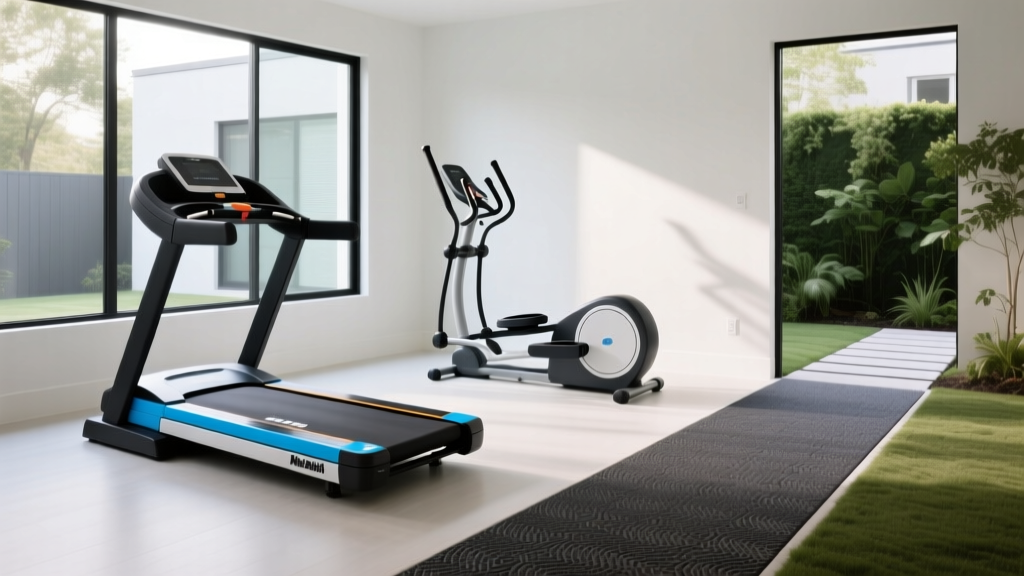
Is Walking Outside Better Than Walking on a Treadmill or Elliptical?
We analyze if outdoor walking beats treadmills and ellipticals for home cardio, focusing on spatial footprints, layout design, and acoustic optimization.

Designing a home gym in 2026 requires more than just selecting the highest-rated cardio machine; it demands a rigorous analysis of spatial geometry, acoustic transfer, and structural load. When homeowners and interior fitness designers evaluate cardio zones, a fundamental question inevitably arises: is walking outside better than walking on a treadmill or an elliptical when square footage is at a premium? The answer extends far beyond simple calorie expenditure. It hinges on ceiling clearances, vibration decoupling, and the physical footprint required for safe biomechanical operation.
In this guide, we dissect the elliptical vs. treadmill debate strictly through the lens of space optimization and layout design, helping you determine whether to reclaim your living space for outdoor walking or how to properly integrate a machine into a multi-use room.
The Spatial Footprint: Treadmill vs. Elliptical Dimensions
The most common mistake in home gym layout design is measuring only the machine's physical footprint while ignoring the operational clearance zone. According to ergonomic safety standards, you must account for the user's stride length, mounting/dismounting pathways, and emergency fall zones.
| Machine Type | 2026 Model Example | Physical Footprint (L x W) | Total Clearance Zone | Ceiling Requirement |
|---|---|---|---|---|
| Motorized Treadmill | Sole F63 | 80" x 32" (17.7 sq ft) | 104" x 56" (40.5 sq ft) | 63" + 6" safety buffer |
| Front-Drive Elliptical | Sole E35 | 70" x 28" (13.6 sq ft) | 94" x 52" (34.1 sq ft) | User Height + 15" |
| Compact Walking Pad | KingSmith X21 | 57" x 22" (8.7 sq ft) | 70" x 35" (17.0 sq ft) | N/A (Low profile) |
Is Walking Outside Better Than Walking on a Treadmill for Space Optimization?
From a purely spatial perspective, outdoor walking offers a zero-footprint advantage. If you are designing a home in a high-density urban environment or a micro-apartment, eliminating indoor cardio equipment frees up 30 to 45 square feet of valuable floor space. However, the decision to rely on outdoor walking vs. indoor machines must factor in environmental reliability and layout versatility.
The 'Zero-Footprint' Advantage of Outdoor Walking
Choosing the outdoors means zero acoustic decoupling mats, zero dedicated 20-amp electrical circuits, and zero visual clutter. Research published by Harvard Health Publishing indicates that walking outdoors on uneven terrain engages stabilizing muscles and burns roughly 5-10% more calories than walking on a motorized treadmill at the same speed, due to wind resistance and ground variability. Spatially, the 'gym' is outsourced entirely to the environment.
When Indoor Cardio is Non-Negotiable
Outdoor walking fails the space-optimization test when climate, safety, or schedule constraints force you indoors. If you live in regions with extreme seasonal shifts, dedicating 40 square feet to a treadmill or elliptical becomes a necessary spatial investment. In these cases, the layout must shift from 'eliminating equipment' to 'integrating equipment seamlessly.'
'The best home gym layout doesn't hide the equipment; it respects the room's primary function. A treadmill in a living room requires visual and acoustic softening, whereas an elliptical can be positioned as a sculptural focal point due to its verticality.' — 2026 Residential Fitness Design Guidelines
Acoustic Layout and Vibration Transfer
Space optimization isn't just about square footage; it's about usable square footage. A machine that generates excessive noise renders adjacent rooms unusable during workouts. The biomechanics of treadmills vs. ellipticals dictate vastly different acoustic layouts.
- Treadmill Impact Loading: A 180-lb runner striking a treadmill deck generates up to 2.5 times their body weight in impact force. This translates to 75–85 dB of airborne noise and severe low-frequency structural vibration. Layout Rule: Treadmills must never be placed on second-story floors with standard joist spacing without a 3/4-inch thick vulcanized rubber acoustic mat (costing roughly $150-$250) and should be kept away from shared bedroom walls.
- Elliptical Glide Mechanics: Because the feet never leave the pedals, ellipticals eliminate impact loading. The Cleveland Clinic notes this makes ellipticals vastly superior for joint preservation, but it also makes them acoustically superior for multi-story homes. They generate only 55–65 dB of mechanical hum. Layout Rule: Ellipticals can be safely placed on upper floors and adjacent to quiet zones like home offices, requiring only a thin PVC equipment mat to protect hardwood finishes.
2026 Layout Blueprints for Small Rooms (10x10 or Smaller)
When integrating cardio into a 100-square-foot spare room or a converted garage corner, follow this step-by-step spatial flow to maximize utility without creating a claustrophobic environment.
- Map the Window Proximity: Place the machine facing a window or at a 45-degree angle to it. Staring at a blank wall 20 inches away during a 45-minute treadmill session increases perceived exertion and mental fatigue.
- Establish the 'Dismount Zone': Leave a minimum of 24 inches of clear space on the right side of a treadmill (or both sides of an elliptical). This is the emergency egress path. Never wedge a treadmill into a corner where the user must step backward off the moving belt.
- Conceal the Power Draw: Treadmills like the NordicTrack T Series 10 draw up to 15 amps under heavy incline loads. Route power cables along baseboards using paintable cord channels to maintain clean sightlines and prevent tripping hazards in tight spaces.
- Utilize Vertical Storage: If opting for a folding treadmill, ensure the ceiling height accommodates the folded deck (often 70+ inches vertically). Install a heavy-duty wall-mounted bungee retention system to secure the deck, preventing accidental deployment in tight quarters.
Decision Matrix: Matching Machine to Room Geometry
Use this framework to finalize your cardio equipment choice based on your specific spatial constraints.
Choose Outdoor Walking If:
- Your dedicated room is under 60 sq ft.
- Ceiling heights are below 8 feet (basements/attics).
- Floor joists cannot support 300+ lbs of dynamic point-load.
- You prioritize core stabilization and varied terrain.
Choose an Elliptical If:
- You have upper-floor rooms (minimizing impact noise).
- You have 35 sq ft of floor space and 9+ ft ceilings.
- Joint preservation is a primary medical requirement.
- You prefer a smaller physical footprint than a standard treadmill.
Choose a Treadmill If:
- You have a ground-floor, concrete-slab space (garage or basement with high ceilings).
- You have 40+ sq ft of unobstructed floor space for safe clearance.
- Running or high-speed incline walking is non-negotiable for your training regimen.
- You can install a dedicated 20-amp electrical circuit to prevent breaker trips.
Final Thoughts on Spatial Cardio Design
Ultimately, asking if walking outside is better than walking on a treadmill is a question of environmental vs. spatial trade-offs. Outdoor walking remains the undisputed champion of space optimization, demanding zero square footage and zero structural modifications. However, when climate or schedule dictates indoor training, the elliptical offers a highly efficient, low-impact, and acoustically friendly footprint for multi-story homes and tight spaces. Reserve the motorized treadmill for ground-floor layouts where its substantial clearance zones and dynamic vibration profiles can be properly managed. By treating your cardio equipment as an architectural element rather than just a fitness tool, you ensure your home gym enhances, rather than compromises, your living space.
More gear to consider
All reviews
Gold Gym 450 Treadmill Troubleshooting: Curved Manual vs Motorized
Rent to Own Treadmill No Credit Check? Try Stationary Bike Types
Buying a Meta Quest 3 Treadmill: Step-by-Step Feature Comparison
Best Under Desk Treadmills With Smart Treadmill Programs (2026)

Stair Climber Guide: Proper Running Form on Treadmill Compared
