Weatherproofing Your Outdoor All Black Home Gym Setup
Learn how to protect your outdoor all black home gym from UV damage, rust, and heat. Expert maintenance tips for racks, barbells, and flooring.

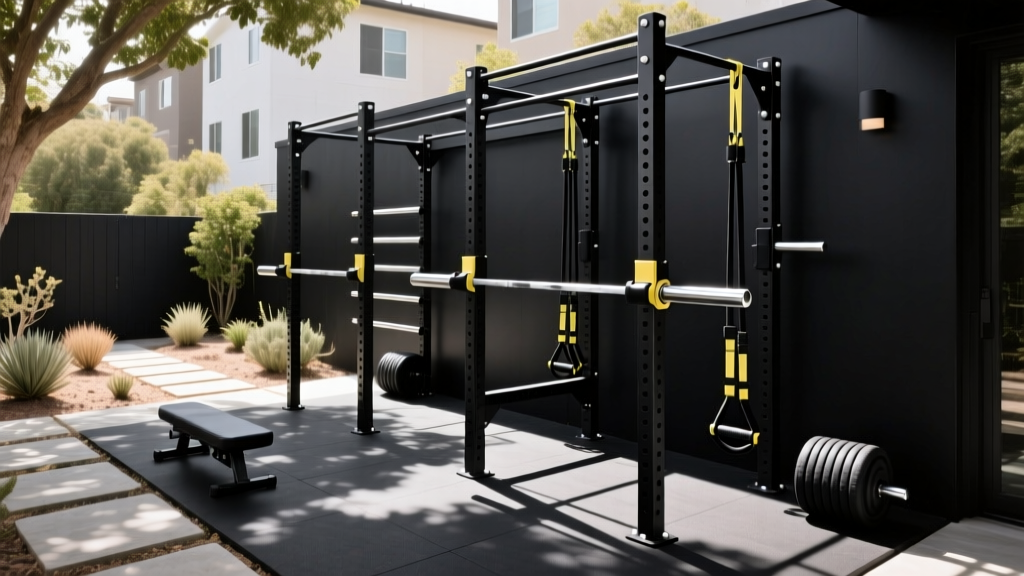
Building an all black home gym outdoors is the ultimate flex in fitness aesthetics. The sleek, matte-black finish on power racks, barbells, and bumper plates looks undeniably premium against a backyard or patio backdrop. However, taking this specific monochromatic aesthetic outside introduces severe environmental vulnerabilities. Black surfaces absorb maximum solar radiation, standard black finishes hide destructive micro-rust until it is too late, and black rubber flooring degrades rapidly under ultraviolet (UV) exposure.
If you are committed to the stealthy, blackout look for your outdoor training space, you cannot rely on indoor maintenance routines. This guide breaks down the exact material science, failure modes, and seasonal protocols required to keep your outdoor all black home gym pristine and functional for decades.
The Thermal Challenge: Heat Absorption and Equipment Warping
The most immediate threat to an outdoor black gym is thermal expansion. Black surfaces absorb up to 90% of visible light, converting it directly into thermal energy. On a standard 85°F (29°C) summer afternoon, a matte black steel power rack in direct sunlight can easily exceed 140°F (60°C) on its surface.
Data Highlight: Thermal Expansion RisksWhen a black-coated barbell shaft reaches 130°F+, the steel expands at a different rate than the bronze or composite bushings inside the sleeves. This differential expansion causes the sleeves to seize, resulting in a barbell that no longer spins smoothly during Olympic lifts or heavy bench presses.
Mitigation Strategies for Thermal Stress
- Strategic Shade Sails: Install a high-density polyethylene (HDPE) shade sail rated for 85% UV block. A 12x12 foot commercial-grade sail costs between $150 and $250 and can drop ambient equipment temperatures by up to 30°F.
- Barbell Storage: Never leave black barbells on the floor or in a rack outdoors. Store them vertically in a UV-protected, ventilated PVC pipe tube or an indoor closet to prevent shaft warping and bushing seizure.
Moisture, Rust, and the 'Black Oxide' Trap
The 'all black' aesthetic relies heavily on specific metal finishes. Unfortunately, the most common black finish used on budget-friendly barbells and rack attachments—black oxide—is catastrophically unsuited for outdoor environments. According to Corrosionpedia, black oxide is a conversion coating that provides only mild corrosion resistance and relies entirely on a supplementary layer of oil or wax to repel moisture.
When outdoor humidity, morning dew, or rain strips this oil layer, black oxide steel will develop 'rust blooms' within 48 hours. Because the rust is dark brown and black, it blends into the equipment until the pitting becomes structural.
Finish Comparison Matrix for Outdoor Black Equipment
| Finish Type | UV Resistance | Moisture Resistance | Best Use Case |
|---|---|---|---|
| Black Oxide | N/A (Metal) | Very Poor | Indoor only; avoid outdoors. |
| Standard Black Powder Coat | Moderate (Fades/Chalks) | Good (Until chipped) | Covered patios; rack uprights. |
| Cerakote (Ceramic) | Excellent | Exceptional | Fully exposed barbells and racks. |
| Black Zinc | Poor (Fades to gray) | Moderate | Budget outdoor barbells. |
Expert Recommendation: If you are ordering a custom rack (like the Rep Fitness PR-5000 or Rogue Monster series) for an exposed outdoor space, pay the $150 to $300 upcharge for a Cerakote finish in Tungsten or Armor Black. As noted by the Powder Coating Institute, while modern powder coatings are durable, ceramic-based finishes like Cerakote offer superior resistance to UV-induced chalking and micro-chipping from dropped knurled bars.
UV Breakdown in Black Rubber Flooring
The foundation of any all black home gym is the flooring. Most lifters default to 4x6 foot, 3/4-inch thick black horse stall mats ($50 to $80 each). While excellent for indoor garages, these recycled rubber mats contain sulfur and volatile organic compounds (VOCs) that react violently to direct sunlight.
The 'Chalking' Failure Mode
Within 6 to 12 months of UV exposure, the surface of standard black stall mats will undergo photo-oxidation. The rubber will dry out, turn a dusty gray, and begin to flake. This black dust will track into your house and ruin the aesthetic of your patio. Furthermore, the mats will thermally expand and buckle at the seams in the summer heat, creating a tripping hazard.
The Solution: For an outdoor black gym, you must use UV-stabilized thermoplastic vulcanizate (TPV) or PVC tiles. Products like StayLock Perforated Outdoor Tiles (approx. $7.50 per sq. ft.) are engineered with UV inhibitors that prevent the black pigment from breaking down. The perforated design also allows rain to drain through, preventing the stagnant, mosquito-breeding puddles that form under solid black rubber mats.
Step-by-Step Seasonal Maintenance Protocol
Maintaining black equipment outdoors requires a stricter, more frequent regimen than indoor gear. Follow this 3-2-1 protocol to ensure longevity.
- Daily (3 Minutes): Wipe and Re-oil. After your workout, use a dry microfiber cloth to wipe sweat and humidity off your black barbell. Apply 3 to 5 drops of mineral oil or a specialized barbell oil (avoid WD-40, which strips existing protectants) to the shaft and brush it into the knurling with a nylon brush.
- Monthly (20 Minutes): Chalk Eradication. Gym chalk (magnesium carbonate) is highly hygroscopic, meaning it pulls moisture directly from the humid outdoor air and holds it against your black steel. Use a stiff brass brush on the barbell knurling, and wipe down your black powder-coated rack uprights with a 50/50 mix of distilled white vinegar and water to dissolve chalk dust without damaging the finish.
- Seasonally (1 Hour): Hardware and Bushing Check. Temperature fluctuations cause metal to expand and contract, loosening rack bolts. Go over every bolt on your power rack with a torque wrench. For black barbells, apply a drop of 3-in-One silicone oil directly into the sleeve bushings to prevent seizing caused by thermal expansion.
The Chalk and Dust Dilemma
The undeniable downside of an all black home gym is that it acts as a magnet for visual clutter. White gym chalk, dead skin, and environmental dust show up instantly on matte black surfaces. Outdoors, windblown pollen and dirt compound this issue.
'If you are training outdoors in a black gym, switch to liquid chalk. Traditional block chalk creates a cloud of white dust that settles into the micro-pores of matte black powder coating, eventually giving your expensive rack a permanent, hazy gray tint that is nearly impossible to buff out.'
To maintain the stealth look, keep a dedicated detailing brush (like a horsehair shoe shine brush) near your rig. A quick 10-second sweep of the bench pad and J-cups between sets keeps the black surfaces looking sharp and prevents abrasive dirt from grinding into your equipment's finish over time.
Final Thoughts on Outdoor Longevity
An outdoor all black home gym is a stunning architectural and functional achievement, but it demands respect for material science. By investing in UV-stable finishes like Cerakote, avoiding the black oxide trap, upgrading to UV-inhibited flooring, and adhering to a strict moisture-management protocol, your setup will remain a pristine, intimidating training sanctuary for years to come.
More gear to consider
All reviews
How Much Does a Home Gym Cost? 2 Sub-$500 Setups Compared

Compact Luxury Home Gym Trends 2026: Mirror & Lighting Budget Guide

Weight Selection Guide for a Nice Home Gym Layout
Remodeling for the Marcy MWM 988 Multifunction Steel Home Gym

Bowflex Ultimate 2 Home Gym vs 2026 Zero-Damage Apartment Trends