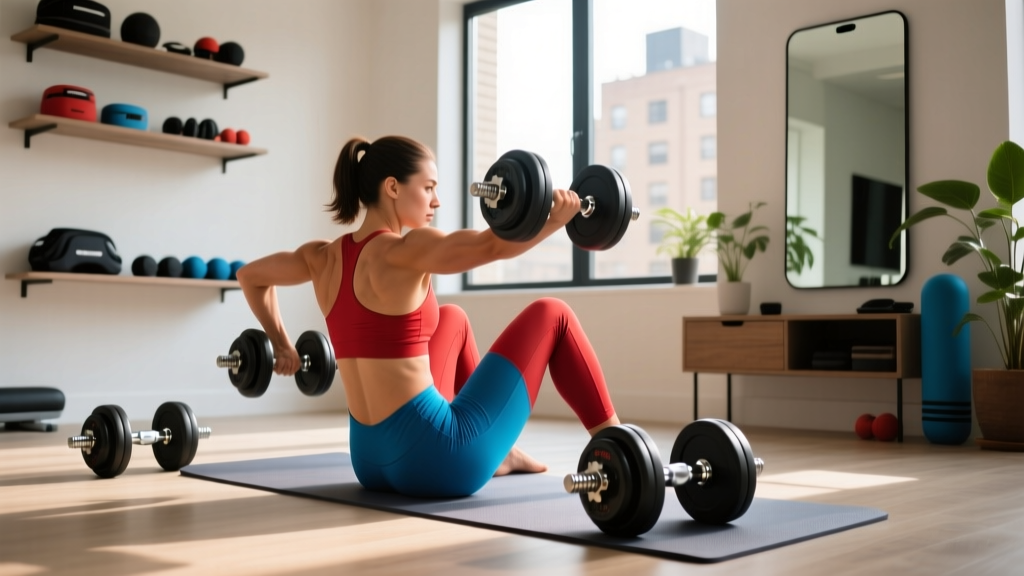
One-Arm Dumbbell Row: Loadable Dumbbell Value & Cost Breakdown
Discover the true cost of building a loadable dumbbell setup for the one-arm dumbbell row. We break down plate-loaded vs. fixed dumbbell value.

The Economics of the One Arm Dumbbell Row
The one arm dumbbell row is a foundational movement for latissimus dorsi hypertrophy and upper-back thickness. However, as you progress beyond the 60-pound mark, the cost of purchasing fixed hex or urethane dumbbells scales exponentially. A commercial-grade 100-pound fixed dumbbell can easily cost between $300 and $450 as a standalone piece. If you want to build a complete rack from 50 to 120 pounds in 10-pound increments, you are looking at a capital expenditure exceeding $3,500.
This is where the loadable dumbbell with interchangeable plates enters the conversation. By utilizing a plate-loaded handle, you decouple the cost of the handle from the cost of the weight. But is a loadable setup truly the most cost-effective and biomechanically sound choice for heavy bent-over rows? In this 2026 value analysis, we break down the exact mathematics, hardware specifications, and hidden failure modes of using loadable dumbbells for the one-arm dumbbell row.
Cost Comparison: Fixed vs. Loadable Setups
To understand the value proposition, we must compare the cost-per-pound of fixed commercial dumbbells against a high-quality loadable handle paired with varying plate types. The table below illustrates the investment required to achieve a single 100-pound dumbbell for unilateral rowing.
| Equipment Type | Component Cost | Total Cost (100 lbs) | Cost Per Pound |
|---|---|---|---|
| Fixed Rubber Hex Dumbbell | $350 (single) | $350.00 | $3.50 / lb |
| Olympic Loadable Handle + Cast Iron | $85 (handle) + $135 (plates) | $220.00 | $2.20 / lb |
| Olympic Loadable Handle + Urethane | $85 (handle) + $280 (plates) | $365.00 | $3.65 / lb |
| Standard 1" Spin-Lock + Cast Iron | $30 (handle) + $110 (plates) | $140.00 | $1.40 / lb |
As the data demonstrates, pairing an Olympic loadable handle with economy cast iron plates yields a massive 37% savings compared to fixed rubber hex dumbbells. However, the standard 1-inch spin-lock setup, while the cheapest, introduces severe safety and durability compromises that we will address later.
Handle Anatomy: What Makes a Loadable Dumbbell Row-Ready?
Not all loadable handles are created equal. When performing a heavy one arm dumbbell row, your grip is the primary point of failure. The handle must withstand high axial torque and lateral sway without digging into your calluses or slipping from your chalked hands.
Shaft Diameter and Knurling Depth
Most Olympic loadable dumbbell handles feature a shaft diameter between 1.375 inches and 1.5 inches. For context, a standard Olympic barbell is 28mm (1.1 inches). The thicker shaft of a loadable dumbbell increases grip demand. According to biomechanics analyses published by BarBend, grip fatigue often precedes lat fatigue during heavy unilateral rows.
Expert Recommendation: Look for handles with a 1.375-inch shaft (like the Rogue Loadable Dumbbell, priced around $95) rather than a full 2-inch Olympic sleeve extended into the grip zone. A 2-inch grip will severely limit your ability to hold heavy loads for the 8-12 rep ranges optimal for hypertrophy.
Sleeve Length and Plate Clearance
Sleeve length dictates your maximum loadable capacity, but it also affects the physical footprint of the dumbbell. A standard loadable handle has a 10-inch sleeve. If you are using thick bumper plates, you might max out the sleeve at 80 pounds. To reach 120+ pounds for heavy Kroc-style rows, you must use thin, machined steel or calibrated plates.
⚠️ Biomechanical Warning: The Floor Clearance IssueThe one-arm dumbbell row requires a deep stretch at the bottom of the eccentric phase. If you load your dumbbell with standard 45-pound bumper plates (17.7-inch diameter), the bottom of the dumbbell will sit just 8.85 inches from the center of the handle. If you are using a standard 17-inch high flat bench, the plates will strike the floor before your lats reach a full stretch, effectively robbing you of the most hypertrophic portion of the movement. Solution: Use 10lb and 25lb cast iron plates (which share the same diameter as 45s but are thinner) or specialized fractional steel plates to keep the overall diameter compact while maximizing sleeve space.
Plate Selection: Budgeting for Row-Specific Iron
When building a loadable setup specifically for the one arm dumbbell row, your plate selection must prioritize dimensional compactness over drop-safety. Bumper plates are designed to be dropped from overhead; they are entirely unnecessary and highly detrimental for controlled rowing movements.
- Cast Iron Plates (Economy Choice): Costing roughly $1.25 to $1.75 per pound in 2026, cast iron is the undisputed king of budget loadable dumbbells. The primary drawback is the noise and potential floor damage if you drop the dumbbell after a heavy set of rows.
- Urethane-Coated Iron (Premium Choice): Priced at $2.50 to $3.50 per pound, urethane offers the exact same dimensional profile as bare cast iron but eliminates rust, odor, and reduces noise. This is the optimal choice for commercial or high-end home gyms.
- Calibrated Steel Plates (Niche Choice): At $4.00+ per pound, these are incredibly thin. They allow you to load 150+ pounds onto a standard 10-inch sleeve, but the cost-to-benefit ratio is poor for dumbbell rows unless you are an elite strongman competitor.
Collar Mechanics and Failure Modes During Rows
The most critical point of failure when using interchangeable plates for bent-over rows is the collar. Unlike a bench press or shoulder press where the plates are pushed upward, the one-arm dumbbell row subjects the collar to repetitive downward gravitational pull and violent deceleration forces at the top of the concentric phase.
'I've seen countless home-gym athletes suffer near-miss injuries because they used cheap spring clips on loadable dumbbells during heavy rows. The vibration of the plates clanking together at the top of the row slowly walks the spring clip off the sleeve. Always use screw-down or locking-collar mechanisms for unilateral pulling movements.' — FitGearPulse Equipment Testing Lab, 2025 Safety Report
The Collar Hierarchy for Loadable Rows
- Internal Locking Mechanisms (Safest): Handles like the Ironmaster Quick-Lock or specialized Olympic clamping collars (e.g., Lockjaw Oz, ~$35/pair) use a physical clamp that bites into the sleeve or utilizes a threaded internal rod. These are immune to vibration loosening.
- Spin-Lock Collars (Moderate Risk): Traditional threaded spin-locks are secure if tightened with a wrench, but hand-tightened spin-locks will inevitably loosen over a 4-week training cycle due to the rotational torque applied during the rowing motion.
- Spring Clips / Snap Collars (Danger): Never use these for heavy loadable dumbbell rows. The lateral sway of a 100-pound dumbbell will easily compromise the tension of a standard spring clip.
Maintenance and Long-Term Value
A fixed rubber hex dumbbell requires zero maintenance. You pick it up, you row, you drop it. A loadable dumbbell setup requires a maintenance budget and time investment. To maintain the value of your loadable setup, you must periodically lubricate the sleeve bushings and check the threading on screw-down collars. According to equipment longevity data from Rogue Fitness, a properly maintained machined steel loadable handle will easily outlast a decade of heavy use, whereas the rubber coating on cheap fixed dumbbells often degrades, cracks, and flakes within 3 to 5 years in non-climate-controlled garages.
Furthermore, the versatility of interchangeable plates means your investment is not siloed. The same 100 pounds of cast iron plates you use for your one arm dumbbell row can be instantly transferred to a barbell for deadlifts, loaded onto a dip belt, or used for goblet squats. This cross-compatibility drastically lowers the effective cost-per-exercise in your training regimen.
Final Value Verdict
Is a loadable dumbbell with interchangeable plates the smartest financial move for the one arm dumbbell row? Yes, with caveats.
If your budget is under $300 and your target working weight is between 70 and 110 pounds, purchasing an Olympic loadable handle (approx. $85) and 200 pounds of used or economy cast iron plates (approx. $250) provides unmatched value. You will save hundreds of dollars compared to buying fixed dumbbells, and you gain the ability to micro-load your rows in 2.5-pound increments—a feature rarely found in commercial hex dumbbell sets.
However, you must factor in the hidden costs: purchasing high-quality locking collars ($30-$50) and ensuring you buy plates with a diameter that allows for a full stretch without hitting the gym floor. By avoiding bumper plates and investing in a secure collar system, your loadable dumbbell setup will serve as a cost-effective, lifelong tool for back development.
More gear to consider
All reviews
Dumbbell Chest Exercises Without Bench: Adjustable Dumbbell Reviews & Form Fixes

Beyond the Twist Dumbbell: Cast Iron vs Competition Kettlebells
2026 Dumbbell Racks for Chest Workouts With Dumbbells No Bench

Space Hacks: Dumbbell Workouts at Home Without Bench Using Loadables

Beyond Dumbbell Exercises at Home: Bumper vs Iron Plate 2026 Trends