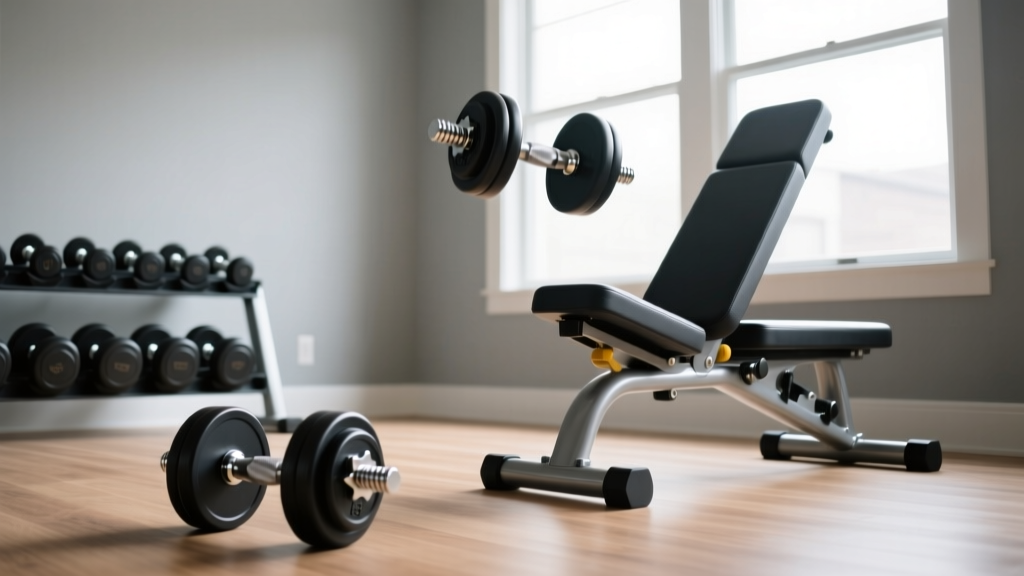
Single Arm Dumbbell Row Setup: Olympic vs Standard Weight Plates
Discover whether Olympic or standard weight plates are best for your single arm dumbbell row setup. We compare loadable handles, grip, and 2026 pricing.

The Biomechanics of the Heavy Single Arm Dumbbell Row
The single arm dumbbell row is a foundational unilateral pulling movement that targets the latissimus dorsi, rhomboids, posterior deltoid, and biceps brachii. According to exercise biomechanics databases like ExRx.net, the unilateral nature of this exercise allows for a deeper stretch and greater thoracic extension than bilateral barbell rows. However, as lifters progress, the required load frequently surpasses 100 pounds per arm.
In 2026, purchasing a single fixed hex dumbbell weighing 120 lbs can cost upwards of $350, assuming you can even find rack space for it. The logical alternative is investing in loadable dumbbell handles. But this introduces a critical fork in the road for your home gym ecosystem: do you build around Standard (1-inch) or Olympic (2-inch) weight plates? The answer drastically alters your grip mechanics, range of motion, and long-term equipment costs.
💡 Biomechanics Callout: The Wrist Supination FactorDuring the concentric phase of the single arm dumbbell row, the wrist naturally wants to pronate or supinate as you drive the elbow toward the hip. If your weight plate sleeve does not rotate independently of the handle, this kinetic torque transfers directly into your elbow joint and grip, leading to premature forearm fatigue or medial epicondylitis.
Standard Weight Plates (1-Inch): The Budget Puller
Standard plates feature a 1-inch (25.4mm) center hole and are typically paired with budget-friendly, solid steel or chrome-plated dumbbell handles (like the ubiquitous 14-inch CAP Barbell standard handle). While the entry cost is low, standard plates present severe mechanical limitations for heavy unilateral rowing.
The "Floor-Strike" Failure Mode
The most glaring issue with standard plates is their physical diameter relative to their weight. Because standard plates are often cast from lower-density iron or filled with cement (in vinyl variants), a 25 lb standard plate measures roughly 11 inches in diameter, and a 50 lb standard plate (if you can find one) spans over 14.5 inches.
When performing the single arm dumbbell row, the eccentric phase requires you to lower the weight until you feel a deep stretch in your lat, often bringing the dumbbell within 1 to 2 inches of the floor. If you load a standard handle with large-diameter plates to achieve a heavy working weight, the plates will strike the floor before your muscle reaches a full stretch. This artificially limits your range of motion and robs you of the most hypertrophic part of the movement.
Knurling and Grip Limitations
Standard 1-inch dumbbell handles rarely feature high-quality knurling. They are often either completely smooth or feature a shallow, stamped grip that becomes slippery once chalk and sweat are introduced. When pulling 80+ lbs in a row, grip failure becomes the limiting factor before your back muscles reach true muscular failure.
Olympic Weight Plates (2-Inch): The Heavy Hitter
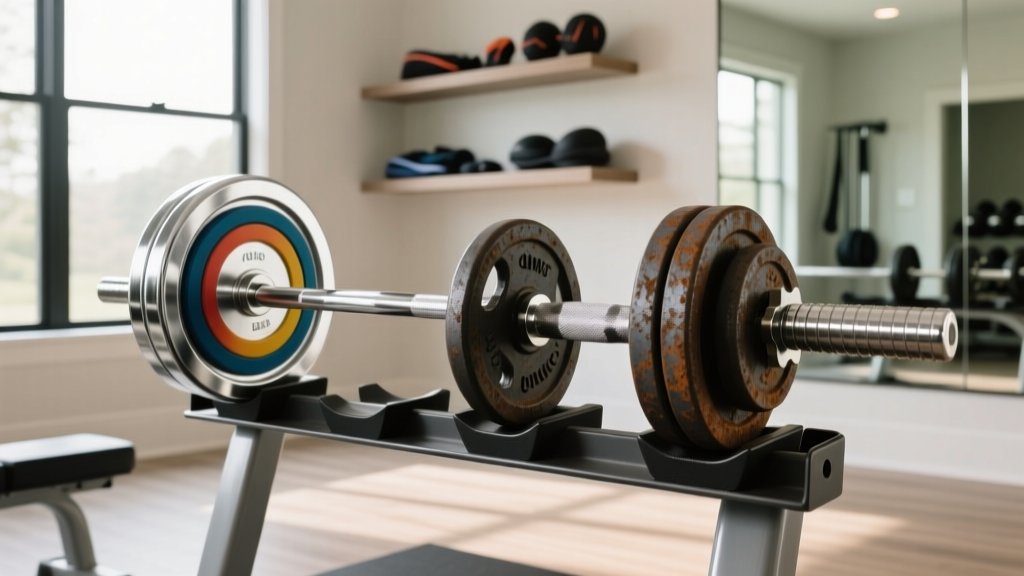
Olympic plates adhere to the global standard of a 2-inch (50mm) center hole, designed to mate with Olympic-spec barbells and high-grade loadable dumbbell handles, such as the Rogue Loadable Dumbbell Handles. This ecosystem is the undisputed king of heavy unilateral training.
Sleeve Rotation and Bushing Mechanics
Premium Olympic loadable handles utilize bronze bushings or needle bearings in the sleeve. This allows the 2-inch sleeve to spin freely around the central shaft. When you execute a heavy single arm dumbbell row, the rotational forces generated by your wrist and the shifting center of mass are absorbed by the spinning sleeve. The result is a dramatically reduced strain on your wrist tendons and a more secure, locked-in grip.
Dense Machining for Maximum Range of Motion
Olympic ecosystems offer access to high-density machined steel plates (like Rogue Fleck or Urethane grip plates). You can stack four 10 lb Olympic steel plates on a compact 6.8-inch sleeve. Because these plates are incredibly dense, their outer diameter remains under 9 inches, even when loaded to 90 lbs. This compact profile ensures that you can achieve a full, floor-level lat stretch during the eccentric phase of the row without the weights prematurely clanking against the ground.
Head-to-Head Comparison Matrix
| Feature | Standard (1-Inch) | Olympic (2-Inch) |
|---|---|---|
| Center Hole | 1 inch (25.4mm) | 2 inches (50mm) |
| Max Practical Load | ~65 lbs (limited by sleeve length) | 120+ lbs (easily stackable) |
| Sleeve Rotation | None (Fixed solid steel) | Yes (Bushings/Bearings) |
| Eccentric ROM | Poor (Plates hit floor early) | Excellent (Compact stacking) |
| Avg. Cost Per Pound (2026) | $1.20 - $1.60 / lb | $2.20 - $4.50 / lb |
Real-World Handle Pairings & Pricing
To understand the true cost of building your single arm dumbbell row station, we must look at the handles themselves.
- The Standard Route: A pair of 14-inch CAP Barbell Standard Handles costs roughly $35. Paired with 100 lbs of standard cast iron plates (~$140), your total investment is under $200. However, the 1-inch shaft is notoriously thin (often 25mm), and the lack of sleeve rotation will punish your wrists during heavy sets of 12-15 reps.
- The Olympic Route: A single Rogue Loadable Dumbbell Handle retails for $95. To build a pair, you are spending $190 just on the handles. Add 160 lbs of Rogue Machined Iron Olympic plates (at roughly $2.50/lb, totaling $400), and your ecosystem costs nearly $600. Yet, the 32mm knurled shaft, zinc plating, and internal bronze bushings provide a commercial-grade experience that mirrors high-end fixed dumbbells.
⚠️ Warning on Handle Length: When buying Olympic loadable handles for rowing, avoid handles longer than 16 inches overall. Excessively long handles will strike your torso or ribs at the top of the rowing contraction when you pull the dumbbell to your hip pocket. Look for an overall length between 14.5" and 15.5" for optimal clearance.
Expert Verdict: Which Ecosystem Wins?
If your primary goal is general fitness, and your single arm dumbbell row working weight will never exceed 60 lbs, the Standard 1-inch ecosystem is a perfectly acceptable, budget-friendly entry point. The limited sleeve space and lack of rotation won't severely impact sub-maximal hypertrophy work.
However, for intermediate to advanced lifters targeting heavy loads (80–120+ lbs), the Olympic 2-inch ecosystem is non-negotiable. The ability to utilize high-density, small-diameter plates preserves your full eccentric range of motion, while the rotating bushings safeguard your elbow joints from rotational torque. The higher upfront cost is offset by the durability of Olympic plates, which can eventually be transferred to a barbell setup as your home gym evolves.
Frequently Asked Questions
Can I use bumper plates for single arm dumbbell rows?
Technically yes, if you are using Olympic loadable handles. However, bumper plates have a universal 17.7-inch diameter. If you load a 10 lb or 25 lb bumper plate onto a dumbbell handle, that massive 17.7-inch diameter will hit the floor almost immediately, completely ruining the bottom stretch of the row. Stick to machined iron or urethane-coated Olympic iron plates for dumbbell movements.
Does the knurling depth matter for pulling movements?
Absolutely. Pushing movements (like presses) benefit from aggressive, deep knurling to lock the bar into the palm. Pulling movements like the single arm dumbbell row require a medium-depth knurl. If the knurl is too sharp (like a power bar), the friction of pulling and releasing the weight will tear your calluses within a few sets. Olympic handles typically offer a more refined, medium knurl compared to standard handles.
How tight should I secure the collars on a loadable dumbbell?
Use spin-lock collars for standard handles and heavy-duty spring clips or aluminum clamp collars for Olympic handles. During the single arm row, the dumbbell is subjected to rapid acceleration and deceleration. Loose plates will shift, altering the center of mass mid-rep and forcing your rotator cuff to compensate for the sudden imbalance. Always ensure plates are flush against the sleeve collar before lifting.
More gear to consider
All reviews
Best Neoprene Dumbbells for the Single Arm Tricep Kickback (2026)
Antique York Dumbbells & Standard vs Olympic Plate Mistakes
Cast Iron vs Competition Kettlebells & Dumbbell and Kettlebell Rack

Barbell Collars vs. Dumbbell Kettlebell Handle Clamps Compared
Cast Iron vs Competition Kettlebells & Leg Press Plate for Smith Machine