
Olympic vs Standard Plates for Weight Training with Dumbbells
Discover the ultimate beginner's guide to choosing between Olympic and standard weight plates for plate-loaded dumbbells. Compare costs, specs, and durability.

The Plate-Loaded Dumbbell Dilemma: Where Do You Start?
When beginning your journey into weight training with dumbbells, plate-loaded handles offer an incredibly cost-effective alternative to buying a full rack of fixed hex or urethane dumbbells. For the price of a single pair of 50-pound fixed dumbbells, you can purchase a set of loadable spinlock handles and enough iron to take you through your first year of progressive overload. However, before you add iron to your cart, you must navigate the most fundamental equipment split in the fitness industry: standard (1-inch) versus Olympic (2-inch) weight plates.
Making the wrong choice in 2026 can result in wasted money, bent bars, and ergonomic nightmares. This step-by-step guide will break down the exact specifications, real-world pricing, and structural failure points of both plate types, ensuring your home gym investment is built on a solid foundation.
Quick Summary for Beginners:- Standard (1-Inch): Best for ultra-tight budgets and light isolation work. Fails under heavy loads.
- Olympic (2-Inch): The undisputed gold standard for durability, grip ergonomics, and long-term weight training with dumbbells.
Step 1: Understand the Core Dimensional Differences
The primary difference between standard and Olympic plates comes down to the center hole diameter, which dictates the type of dumbbell handle or barbell sleeve you must use. According to equipment reviews by Garage Gym Reviews, this single measurement changes the entire physics and durability profile of your equipment.
| Feature | Standard Plates (1-Inch) | Olympic Plates (2-Inch) |
|---|---|---|
| Center Hole | 1 inch (25.4 mm) | 2 inches (50.8 mm) |
| Max Plate Size | Typically caps at 25 or 45 lbs | Ranges from 0.25 lbs to 55+ lbs |
| Handle Grip Diameter | Often 1.25' to 1.5' (Thick/Awkward) | Standard 28mm to 32mm (Optimal) |
| Avg. Cost Per Pound (2026) | $1.00 - $1.50 / lb | $1.80 - $4.50 / lb |
Step 2: Evaluating Standard (1-Inch) Plates for Beginners
Standard plates are the entry-level staple found in big-box sporting goods stores. They are typically made of cast iron or cement-filled vinyl. If you are strictly limited to a budget under $150 and your current strength level maxes out at 30-pound dumbbells, standard plates can serve as a temporary bridge.
Real-World Models and Pricing
Brands like CAP Barbell and Yes4All dominate this space. A 100-pound set of CAP Barbell 1-inch cast iron plates usually retails between $110 and $130. Vinyl-encased options are slightly cheaper but prone to cracking if dropped on concrete garage floors.
The Ergonomic Failure Point
Here is a non-obvious insight that most beginner guides miss: the grip diameter problem. Because a standard dumbbell handle is essentially a 1-inch thick steel rod, the grip area is often uncomfortably thick (1.25 inches or more) or awkwardly contoured to accommodate the spinlock collar. When you engage in serious weight training with dumbbells—such as heavy Romanian deadlifts or dumbbell rows—this thick grip forces your hand open, prematurely fatiguing your forearms before your target muscles (like the hamstrings or lats) reach failure.
Warning: Standard 1-inch dumbbell handles are notorious for bending at the collar weld when loaded asymmetrically or dropped. Never attempt to load a standard 14-inch dumbbell handle past 60 total pounds; the structural integrity of the sleeve simply cannot support it.
Step 3: Evaluating Olympic (2-Inch) Plates for Long-Term Growth
Olympic plates are the universal standard for commercial gyms, competitive weightlifting, and serious home garages. The 2-inch center hole allows for a massive upgrade in equipment engineering, specifically regarding the dumbbell handle itself.
Why Olympic Dominates Serious Dumbbell Training
When you upgrade to Olympic loadable dumbbells (such as the Rogue Loadable Dumbbell or Titan Fitness Olympic Spinlock Handles), the handle is no longer just a straight piece of rebar. Olympic handles feature a dedicated, rotating 2-inch sleeve welded to a separate, ergonomically sized grip shaft (usually 28.5mm to 32mm). This means your hand wraps around a professional-grade grip, while the heavy iron sits securely on the outer sleeve. This separation of grip and load is critical for joint health and wrist stability during heavy presses.
Plate Varieties and 2026 Market Pricing
The Olympic ecosystem offers vastly more variety. According to BarBend's extensive equipment testing, you can choose from several materials based on your noise tolerance and floor type:
- Cast Iron: The most compact and affordable. Expect to pay $1.80 to $2.20 per pound. (e.g., REP Fitness Cast Iron Plates).
- Virgin Rubber / Urethane: Coated iron that protects your floors and reduces noise. Urethane is highly resistant to the UV degradation and odor issues that plagued older rubber plates. Pricing sits around $2.50 to $3.50 per pound.
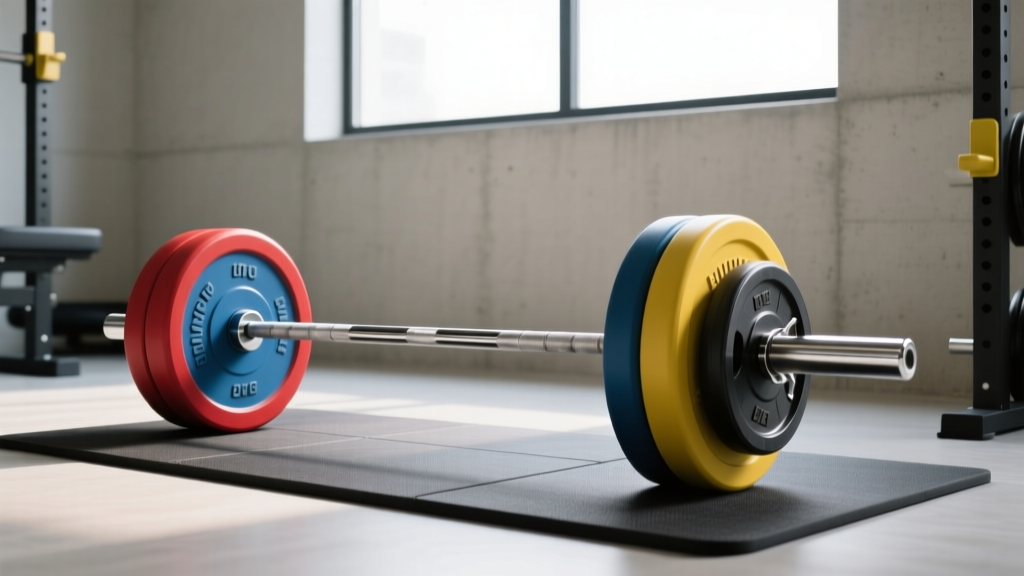
- Bumper Plates: Solid rubber plates with a stainless steel insert, designed to be dropped. While excellent for barbells, thick 10-pound and 15-pound Olympic bumpers can make loading dumbbells cumbersome due to the wide surface area. Best reserved for Olympic barbell work, though 2.5lb and 5lb 'fractional' bumpers are great for dumbbell micro-loading.
Step 4: Your Step-by-Step Buying Decision Framework
Use this actionable framework to determine exactly which plate type you should purchase for your home gym today.
- Assess Your Current 1-Rep Max (or 10-Rep Max): If you are currently pressing less than 35 lbs per hand and curling less than 20 lbs per hand, standard plates will suffice for the next 6 to 12 months.
- Calculate Your Budget: If your total equipment budget (handles + plates) is under $200, buy a pair of 1-inch spinlock handles and 100 lbs of standard cast iron. If your budget is $350+, invest in Olympic.
- Consider Your Space and Flooring: If you are working out in an apartment or on delicate hardwood, skip bare cast iron entirely. Invest in Olympic Urethane plates, which are dense, quiet, and floor-safe.
- Plan for Barbell Integration: If you plan to eventually buy a squat rack and a barbell, only buy Olympic plates. Standard barbells exist, but they are dangerously whippy and unstable under loads exceeding 150 lbs. Buying Olympic plates now ensures your dumbbell iron will seamlessly transfer to your future barbell setup.
Step 5: Essential Accessories for Plate-Loaded Dumbbells
Buying the plates is only half the battle. To maintain safety and efficiency during your workouts, you must pair your plates with the right accessories.
Pro-Tip: Ditch the Spinlock Nuts Traditional threaded spinlock collars take 30-45 seconds to screw on and off, ruining your rest periods during superset-heavy dumbbell routines. In 2026, upgrade to spring clip collars (for 1-inch standard bars) or locking jaw collars (for 2-inch Olympic sleeves). They secure the plates instantly and prevent the loud 'clanking' of iron shifting during a dumbbell chest press.Frequently Asked Questions
Can I use Olympic plates on a standard dumbbell handle?
No. The 2-inch hole of an Olympic plate will slide right off a 1-inch standard handle. While cheap plastic adapter bushings exist to convert Olympic plates to standard bars, they are highly discouraged for dumbbells. The adapters add bulk, shift the center of gravity, and create a dangerous slipping hazard when the dumbbell is tilted overhead.
Are standard plates completely worthless?
Not entirely. Standard plates are excellent for very specific, low-budget isolation work, or for creating DIY cable machine attachments. However, for foundational compound movements like dumbbell bench presses, lunges, and shoulder presses, the ergonomic limitations of standard handles make Olympic equipment the superior choice for long-term progress.
How much weight can a standard 14-inch dumbbell handle hold?
A high-quality 14-inch standard handle can physically fit about 80 to 100 pounds of standard 1-inch plates (using mostly 10lb and 5lb plates to fit the short sleeve). However, the steel rod itself will likely begin to permanently bend or warp at the collar weld around the 70-pound mark. For anything heavier, an Olympic loadable dumbbell is strictly required.
More gear to consider
All reviews
Bumper Plate vs Iron Plate Comparison and Farmer's Carry Dumbbells

Olympic vs Standard Plates & Best Shoulder Workout with Dumbbells

Power Rack vs Squat Rack vs Stand for Dumbbell to Barbell Bench
Beyond the Dumbbell Sketch: Bumper vs Iron Plate Value Analysis

Space-Saving Dumbbell Racks for the Single Dumbbell Bicep Curl
